Kuwait's construction industry faces engineering challenges that differ significantly from those encountered in many other countries due to the nature of its soils, which often contain high concentrations of salts and sulfates, as well as elevated groundwater levels in certain locations. As a result, selecting cement is no longer based solely on price or market availability. Instead, it has become a critical engineering decision directly linked to a building's service life and its future maintenance costs. Sulfate-Resistant Cement (SRC) is considered one of the most effective solutions for projects constructed in aggressive environments because it is specifically engineered to minimize the harmful effects of sulfate attack on concrete while improving long-term durability. In this comprehensive guide, we examine the characteristics, applications, engineering advantages, and practical importance of SRC Cement in protecting foundations and concrete structures throughout Kuwait using real engineering practices, technical expertise, and internationally recognized construction standards.
Sulfate-Resistant Cement SRC
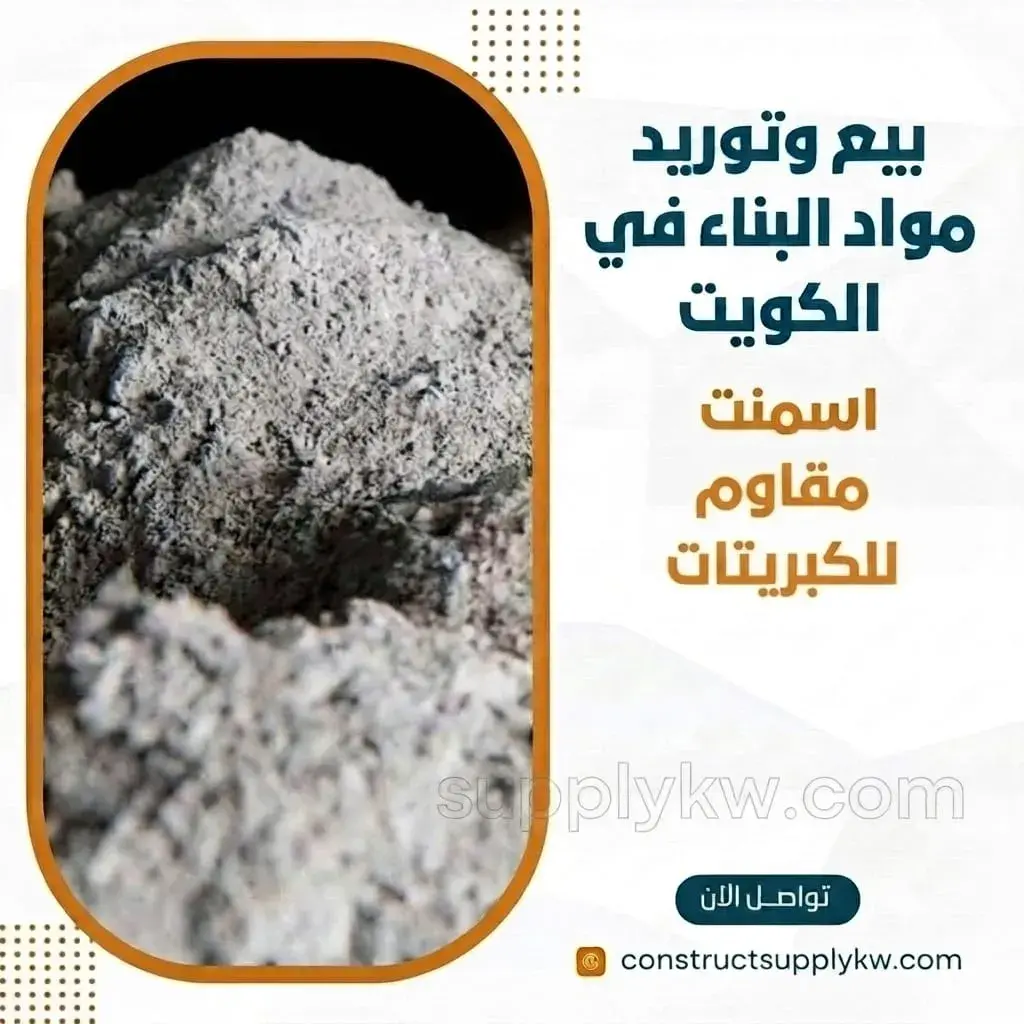
Sulfate-Resistant Cement SRC is one of the most specialized cement types used in projects constructed in environments where sulfate concentrations are high in either soil or groundwater. It is manufactured using a carefully controlled chemical composition that significantly reduces the percentage of tricalcium aluminate (C₃A), the compound responsible for many of the harmful chemical reactions that occur when concrete remains exposed to sulfate ions over extended periods. Because of this modified chemical composition, SRC Cement is far more capable of resisting internal expansion, cracking, and deterioration caused by continuous interaction between concrete and sulfate-rich environments. This makes it the preferred choice for infrastructure developments, government facilities, wastewater treatment plants, reservoirs, marine structures, and projects located in coastal regions or areas with highly saline soils.
In Kuwait, consulting engineers never specify SRC Cement arbitrarily. Instead, they begin by reviewing geotechnical investigation reports together with groundwater analyses to determine the degree of chemical exposure according to engineering codes and recognized construction standards. When laboratory results confirm elevated sulfate concentrations, Sulfate-Resistant Cement becomes an essential component of the building protection strategy rather than merely an optional material upgrade. Engineers combine its use with low-permeability concrete mixtures, carefully controlled water-to-cement ratios, high-quality aggregates, and strict quality-control procedures to produce dense concrete capable of withstanding Kuwait's aggressive environmental conditions for many decades.
Experience gained from numerous construction projects throughout Kuwait consistently demonstrates that many cases of premature foundation deterioration were not caused by structural design errors but rather by selecting cement unsuitable for the site's soil conditions. Consequently, investing in SRC Cement during the early stages of construction can save property owners substantial repair costs in the future, particularly for buildings whose foundations become extremely difficult and expensive to access after construction has been completed.
Certified cement manufacturers also perform continuous laboratory testing to verify compliance with international quality standards, providing engineers with greater confidence that every production batch maintains consistent chemical composition and engineering performance.
-
Specifically engineered to resist sulfate attack in soil and groundwater.
-
Minimizes internal expansion and chemically induced cracking.
-
Intended for projects located in aggressive environments.
-
Selection is based upon geotechnical investigation results.
-
Performs most effectively when combined with low-permeability concrete.
-
Significantly extends the service life of concrete structures.
-
Reduces future maintenance and rehabilitation costs.
-
Particularly suitable for foundations and buried concrete elements.
-
Subjected to comprehensive quality-control testing before distribution.
-
Represents one of the most effective engineering solutions for saline soils.
SRC Cement
SRC Cement, which stands for Sulfate Resistant Cement, is the internationally recognized name for Portland cement specially formulated to provide superior resistance against chemical deterioration caused by sulfate exposure. Unlike Ordinary Portland Cement, SRC differs primarily in its mineralogical composition rather than in its appearance or construction methods. Mixing, placing, and curing procedures remain generally similar, while the true distinction lies in its long-term performance within environments containing elevated sulfate and salt concentrations.
From an engineering perspective, specifying SRC Cement does not automatically make concrete immune to every form of deterioration. Sulfate resistance depends upon an integrated system that includes proper concrete mix design, high-quality aggregates, carefully controlled water content, professional curing practices, and adequate concrete cover protecting reinforcing steel. Consequently, the greatest engineering benefits are achieved when SRC Cement is incorporated into a complete durability strategy instead of being viewed as the sole solution to chemical exposure.
Numerous construction projects throughout Kuwait have demonstrated that using SRC Cement in locations identified by geotechnical investigations substantially reduces long-term deterioration compared with conventional cement used under identical environmental conditions. This is one of the primary reasons why SRC has become a standard specification for many government infrastructure projects and major engineering developments where structures are expected to perform reliably for several decades with minimal maintenance.
Engineering specialists consistently emphasize that cement selection should always be based upon site investigation reports and environmental exposure assessments rather than contractor preferences or material cost alone. Sound engineering decisions made during the design stage have a direct influence on structural durability and the building's overall service life.
-
Internationally known as Sulfate Resistant Cement.
-
Differs from ordinary cement through its chemical composition.
-
Mixed and placed using conventional construction procedures.
-
Provides improved resistance against sulfate attack.
-
Requires full compliance with engineering specifications.
-
Does not replace proper concrete mix design.
-
Selection depends upon geotechnical investigation results.
-
Widely used in infrastructure and civil engineering projects.
-
Delivers excellent long-term performance in saline environments.
-
Represents a valuable engineering investment in structural durability.
Sulfate-Resistant Concrete
.webp)
Sulfate-resistant concrete should be understood as a complete engineering system rather than concrete produced simply by using SRC Cement. Its resistance depends primarily on minimizing concrete permeability so that sulfate ions cannot easily penetrate the concrete mass. Engineers therefore design concrete mixtures with low water-to-cement ratios, clean well-graded aggregates, thorough consolidation, and proper curing to maximize density while minimizing internal porosity. When these engineering principles are combined with Sulfate-Resistant Cement, the resulting concrete becomes significantly more capable of enduring the aggressive environmental conditions found in many regions of Kuwait.
This type of concrete is especially important for deep foundations, underground reservoirs, retaining walls, wastewater treatment facilities, and structures constructed on saline soils or in areas influenced by groundwater. Under these conditions, structural deterioration is caused not only by mechanical loading but also by continuous chemical reactions that gradually reduce concrete durability if appropriate protective measures are not incorporated from the beginning of the project.
Practical engineering experience consistently demonstrates that projects designed with sulfate-resistant concrete from the earliest planning stages achieve greater long-term reliability while requiring substantially fewer major maintenance interventions than projects attempting to solve deterioration problems only after signs of damage have already appeared. Preventive engineering in this situation is not simply an economical decision but a fundamental principle of professional structural design.
Quality-control testing during construction remains indispensable because even the highest-quality cement cannot achieve the required engineering performance unless concrete production, placement, consolidation, and curing all comply fully with recognized construction standards.
-
Depends upon an integrated concrete system rather than cement alone.
-
Minimizes sulfate penetration through reduced permeability.
-
Widely used in foundations, reservoirs, and buried structures.
-
Requires low water-to-cement ratios for maximum density.
-
Relies upon professional consolidation and curing.
-
Increases resistance to long-term chemical deterioration.
-
Reduces lifetime maintenance expenses.
-
Particularly suitable for construction on saline soils.
-
Extends the operational life of concrete structures.
-
Represents the preferred engineering solution for aggressive environments.
Protecting Foundations from Salts
Protecting foundations from salts is one of the most important engineering priorities in Kuwait because foundations remain in continuous contact with surrounding soil and groundwater throughout the building's service life. When these soils contain elevated concentrations of sulfates or chlorides, concrete becomes exposed to continuous chemical attack that may gradually reduce durability and produce microscopic cracks that expand over time if suitable protective measures are not implemented during the design stage. For this reason, engineers do not regard SRC Cement merely as an upgraded material but rather as one component of a comprehensive protection strategy that begins with geotechnical investigations and ends with dense, low-permeability concrete capable of isolating structural elements from harmful environmental conditions.
Foundation protection does not rely exclusively on cement selection. It also includes waterproofing systems where appropriate, optimized water-to-cement ratios, sufficient concrete cover surrounding reinforcing steel, and carefully controlled curing procedures. Each of these factors contributes to reducing the movement of aggressive chemicals through the concrete. Proper curing allows hydration reactions to develop fully, reducing internal porosity and substantially improving the concrete's resistance to salt penetration.
Experience from numerous projects demonstrates that foundations constructed using Sulfate-Resistant Cement together with comprehensive quality-control procedures maintain their structural integrity for considerably longer periods than foundations built with quality materials but poor execution. Preventive engineering therefore begins long before the first cubic meter of concrete is placed rather than after visible deterioration has already developed.
Professional consultation based upon geotechnical investigation reports allows engineers to specify the most suitable protection system before construction begins, preventing costly foundation repairs that are often extremely difficult after the building has been completed.
-
Protection begins with proper soil investigation.
-
SRC Cement minimizes sulfate-related deterioration.
-
Foundations require dense, low-permeability concrete.
-
Adequate concrete cover protects reinforcing steel.
-
Proper curing forms an essential part of foundation protection.
-
Professional construction minimizes early cracking.
-
Waterproofing systems further reduce salt penetration where necessary.
-
Preventive engineering lowers future repair costs.
-
Protection becomes especially important in coastal regions.
-
Success depends upon high-quality execution throughout construction.
Concrete in Saline Soil
.webp)
Concrete in saline soil requires an engineering approach that differs significantly from concrete used in ordinary environments because salts within the ground continue interacting chemically with concrete throughout its service life. Engineers therefore begin every project by reviewing geotechnical reports that determine sulfate and chloride concentrations while classifying environmental exposure according to applicable engineering standards. Based upon these findings, they specify the most appropriate cement type and design a concrete mixture capable of minimizing permeability while maximizing long-term chemical resistance.
Across Kuwait, soil conditions vary considerably from one location to another. Some sites require SRC Cement combined with supplementary cementitious materials that further reduce permeability, while other projects may safely use conventional concrete because sulfate concentrations remain relatively low. Consequently, engineering decisions must always rely upon actual geotechnical testing rather than assumptions or previous experience on nearby projects.
Field experience consistently shows that one of the most serious construction mistakes occurs when contractors ignore geotechnical reports or simply duplicate material specifications from neighboring developments without evaluating the unique characteristics of each construction site. Even within the same city, soil properties can differ dramatically, making every project an independent engineering case requiring detailed technical assessment.
Selecting concrete specifically designed for saline soil not only protects the structure itself but also improves overall reliability while minimizing the need for costly future maintenance that could interrupt building operations.
-
Concrete requirements vary according to soil conditions.
-
Cement selection depends upon geotechnical investigation results.
-
Improved mix design significantly reduces permeability.
-
Supplementary materials may be appropriate for certain projects.
-
Construction solutions should never be generalized across different sites.
-
Saline environments require continuous quality assurance.
-
Appropriate concrete protects structural foundations.
-
Minimizes long-term chemical deterioration.
-
Correct material selection improves structural reliability.
-
Construction quality begins with proper site investigation.
Chloride Resistance
Chloride resistance represents another critical consideration when designing concrete for coastal regions or areas containing high salt concentrations because chloride ions readily penetrate permeable concrete and eventually reach reinforcing steel. Once chlorides reach the steel reinforcement, corrosion begins gradually, causing steel expansion, cracking of the surrounding concrete cover, and progressive deterioration of the structural element. Consequently, chloride resistance depends not solely on cement selection but on the overall quality and density of the concrete system.
It is important to recognize that SRC Cement was primarily developed to improve sulfate resistance rather than serving as a complete solution for chloride attack. Engineers therefore combine suitable cement selection with low-permeability concrete mixtures, adequate concrete cover, carefully controlled water content, and appropriate structural detailing that limits chloride penetration. Additional protective measures may also be incorporated when required by environmental exposure classifications and project specifications.
Construction experience consistently confirms that dense, properly consolidated concrete provides one of the most effective barriers against chloride penetration. High-quality workmanship therefore remains the single most influential factor affecting long-term concrete performance because even superior construction materials cannot compensate for poor mixing, consolidation, curing, or quality control.
Major engineering projects frequently incorporate specialized permeability testing and chloride penetration evaluations to verify that concrete performance satisfies the required service-life objectives established during the design phase.
-
Chloride resistance depends upon concrete density.
-
Cement alone cannot provide complete protection.
-
Reduced permeability limits chloride penetration.
-
Adequate concrete cover protects reinforcing steel.
-
Proper consolidation improves long-term durability.
-
Specialized testing evaluates concrete permeability.
-
Protection requirements vary according to environmental exposure.
-
Especially important in coastal construction.
-
Professional workmanship extends structural service life.
-
Represents an essential component of durable concrete design.
Foundations in Kuwait
.webp)
Foundations in Kuwait represent the true starting point of every successful construction project because the entire building ultimately depends on the foundation's ability to safely transfer structural loads into the supporting soil while maintaining stability for decades despite challenging environmental conditions. Soil characteristics vary considerably across Kuwait. Certain regions contain elevated concentrations of sulfates and salts, while others are influenced by shallow groundwater levels or proximity to the marine environment. For this reason, no single foundation design is suitable for every project. Professional engineering practice always begins with a comprehensive geotechnical investigation to determine soil classification, chemical aggressiveness, groundwater conditions, and bearing capacity before selecting the most appropriate foundation system, concrete specification, and cement type.
Modern engineering projects rely heavily on geotechnical reports to determine whether Sulfate-Resistant Cement is necessary or whether conventional concrete satisfies the project's durability requirements. Engineers also carefully specify concrete cover thickness, water-to-cement ratios, approved admixtures, and curing procedures because these factors work together to protect foundations against both chemical deterioration and structural degradation throughout the building's service life. Properly constructed foundations not only provide sufficient load-bearing capacity but also minimize the likelihood of differential settlement, chemical deterioration, and structural cracking caused by aggressive soil conditions.
Construction experience accumulated across Kuwait consistently demonstrates that the most expensive foundation failures rarely result from inaccurate structural calculations. Instead, they often originate from overlooking soil characteristics or selecting materials that are incompatible with actual site conditions. Consequently, investing in proper material selection during the design stage is substantially less expensive than undertaking foundation strengthening or rehabilitation after the building has already been completed.
Early coordination between geotechnical engineers, structural consultants, contractors, and quality-control laboratories allows informed engineering decisions before construction begins, directly improving overall project quality, durability, and long-term reliability.
-
Foundation quality begins with comprehensive geotechnical investigation.
-
Foundation requirements vary significantly across different regions of Kuwait.
-
Soil reports determine the most appropriate cement selection.
-
Aggressive environments require dense, low-permeability concrete.
-
Proper construction significantly reduces future maintenance.
-
Concrete cover plays an essential protective role.
-
Material quality and workmanship must complement each other.
-
Proper planning minimizes settlement and structural cracking.
-
Close coordination among engineering disciplines improves project outcomes.
-
Foundations represent the most important long-term investment in any building.
Service Life of Concrete
The service life of concrete depends upon numerous interconnected engineering factors and should never be attributed solely to cement selection. Properly designed and constructed concrete can remain structurally sound for many decades, and in some cases well beyond a century. Conversely, premature deterioration may begin within only a few years if construction quality, material selection, or environmental conditions are neglected. Engineers therefore evaluate service life as the combined result of cement selection, concrete mix design, aggregate quality, water content, consolidation, curing, environmental exposure, and ongoing structural maintenance.
In sulfate-rich environments, Sulfate-Resistant Cement contributes significantly to extending the operational life of concrete by reducing the harmful chemical reactions responsible for cracking, expansion, and durability loss. Nevertheless, these advantages cannot be fully realized if the concrete exhibits excessive permeability or if construction defects occur during placement. Modern engineering specifications therefore emphasize that durability begins with concrete design rather than cement selection alone because dense concrete naturally slows the penetration of aggressive substances.
Engineering research consistently shows that relatively small investments made during construction to improve concrete quality often prevent substantial maintenance and rehabilitation expenses later in the structure's life. Consequently, considering service life from the earliest stages of project planning has become one of the fundamental principles of sustainable construction and long-term infrastructure asset management.
Owners of major infrastructure projects frequently implement periodic inspection and testing programs throughout the building's operational life to verify continued structural performance and identify early signs of deterioration before they develop into significant engineering problems.
-
Service life depends upon every stage of construction.
-
Dense concrete substantially improves long-term durability.
-
SRC Cement extends service life in suitable environments.
-
Proper curing reduces premature deterioration.
-
Environmental exposure directly influences structural longevity.
-
Early quality investments reduce future maintenance costs.
-
Important structures benefit from periodic inspection programs.
-
Sustainable construction begins with proper engineering design.
-
Continuous quality assurance preserves long-term performance.
-
Service life represents one of the most important indicators of construction quality.
Concrete Deterioration
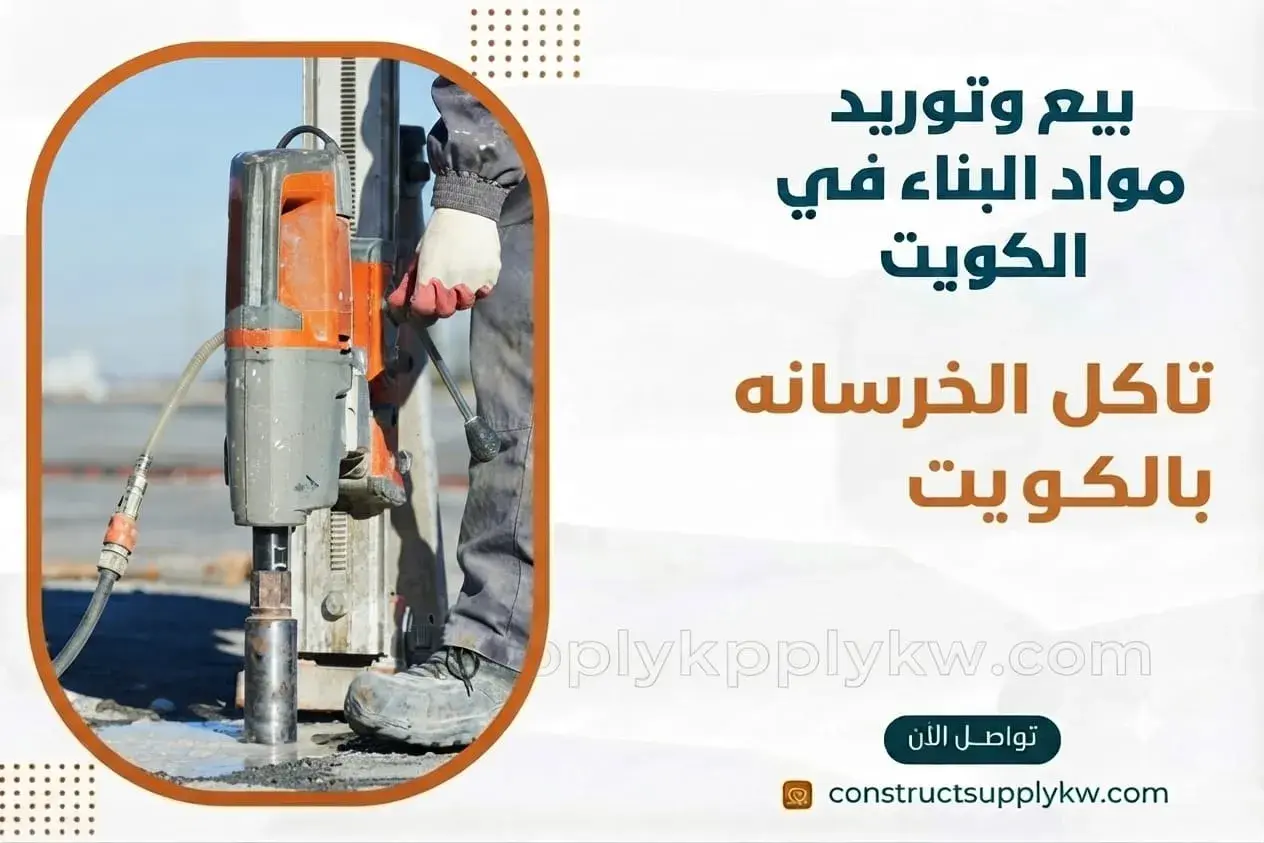
Concrete deterioration refers to the gradual loss of the physical, mechanical, or chemical properties of concrete caused by environmental exposure, operational conditions, or chemical reactions occurring throughout the structure's lifetime. Deterioration may result from sulfate attack, chloride penetration, repeated wetting and drying cycles, carbonation, freeze-thaw action in certain climates, or other aggressive chemical processes affecting either the cement matrix or reinforcing steel. Rather than occurring suddenly, deterioration usually begins with subtle microscopic changes that gradually expand if appropriate preventive engineering measures were not incorporated during design and construction.
Within Kuwait, controlling concrete deterioration is particularly important because many construction sites contain saline soils or elevated concentrations of aggressive groundwater. Engineers therefore prioritize minimizing concrete permeability while selecting cement appropriate for each environmental exposure classification. Requirements concerning concrete cover thickness, consolidation quality, curing procedures, and water-to-cement ratios all contribute to reducing the movement of aggressive substances into the concrete mass and delaying the onset of deterioration.
Practical construction experience consistently demonstrates that premature deterioration often results from several relatively minor construction mistakes occurring simultaneously. Excessive water addition, contaminated aggregates, inadequate curing, poor consolidation, or insufficient quality supervision may individually appear insignificant, yet together they dramatically reduce long-term durability. Preventive engineering therefore remains substantially more economical and technically effective than repairing deteriorated structural elements after damage has already developed, particularly when foundations or underground concrete become difficult to access.
Routine inspections of completed structures also play an important role by identifying early indicators of deterioration before significant structural problems develop, allowing preventive maintenance programs to preserve safety and extend service life.
-
Deterioration usually begins with microscopic changes.
-
Different environmental conditions produce different deterioration mechanisms.
-
Dense concrete significantly slows chemical attack.
-
SRC Cement improves resistance to sulfate-induced deterioration.
-
Proper curing reduces early-age durability problems.
-
Regular inspections support early detection.
-
Quality supervision minimizes construction defects.
-
Saline environments require additional durability measures.
-
Preventive engineering costs less than structural rehabilitation.
-
Long-term performance depends upon every stage of construction.
Uses of SRC Cement
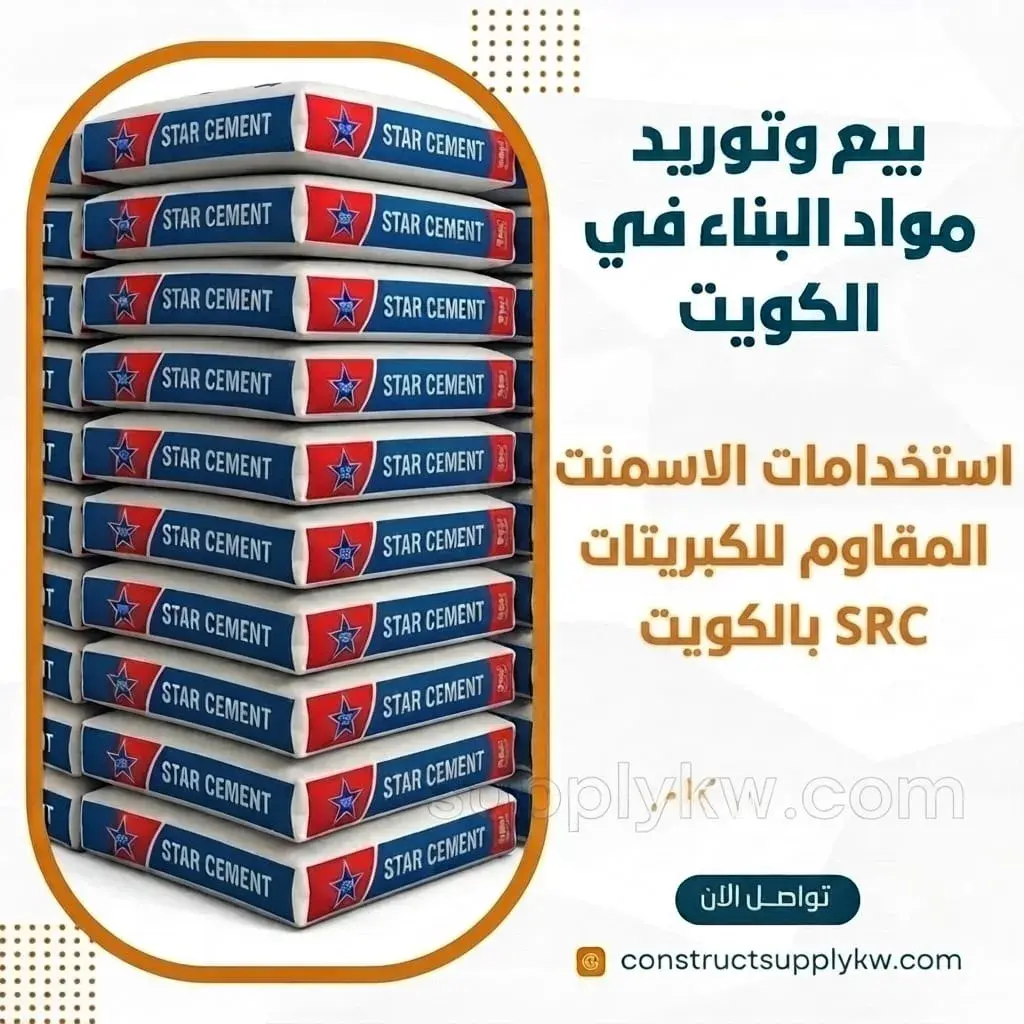
The uses of SRC Cement include a wide variety of construction projects exposed to sulfate-rich soils or groundwater where long-term chemical durability is a primary engineering requirement. It is extensively used for foundations, raft slabs, pile foundations, underground reservoirs, wastewater treatment plants, sewer networks, industrial facilities, retaining structures, and major infrastructure developments. It is also frequently specified for projects located near coastal regions or constructed on highly saline soils because it significantly reduces the harmful effects of sulfate attack throughout the structure's operational life.
This does not mean, however, that SRC Cement should automatically be selected for every construction project. Professional engineers determine the appropriate cement type only after reviewing geotechnical investigations, groundwater analyses, environmental exposure classifications, structural design requirements, and the intended service life of the building. Where sulfate concentrations remain low, Ordinary Portland Cement may provide the most technically appropriate and economically efficient solution. When significant sulfate exposure is confirmed, specifying SRC Cement becomes an engineering decision focused on reducing long-term deterioration and protecting the owner's investment.
Construction experience repeatedly demonstrates that projects using SRC Cement in the correct applications maintain greater structural stability while requiring substantially fewer major repairs than buildings constructed with unsuitable materials for their environmental conditions. Consequently, the true value of SRC Cement lies not in its purchase price but in its ability to safeguard structural performance throughout decades of service.
Engineers also recommend following the structural designer's specifications without substituting cement types during construction unless formal engineering approval has been obtained because unauthorized material changes may significantly influence durability, structural behavior, and the building's intended service life.
-
Widely used for foundations, underground structures, and buried concrete.
-
Suitable for wastewater treatment facilities and sewer infrastructure.
-
Recommended for sulfate-rich soils and aggressive environments.
-
Selection depends upon geotechnical investigation results.
-
Improves concrete durability under chemical exposure.
-
Reduces future maintenance and rehabilitation costs.
-
Should never be specified indiscriminately.
-
Supports achievement of the intended design service life.
-
Frequently required in major government infrastructure projects.
-
Provides a long-term engineering solution when used in the appropriate environment.
Conclusion
Sulfate-Resistant Cement (SRC) represents one of the most important engineering solutions for projects constructed in environments containing elevated sulfate concentrations and aggressive soils. It plays a critical role in protecting foundations, extending the service life of concrete, and improving long-term structural durability when incorporated into a comprehensive engineering system that includes geotechnical investigation, optimized concrete mix design, professional construction practices, and continuous quality control. Throughout this guide, we have examined its engineering characteristics, practical applications, role in preventing chemical deterioration, and importance in selecting the correct construction materials according to site-specific environmental conditions. Practical experience consistently demonstrates that making the correct engineering decision during the design stage saves property owners significant maintenance and repair costs while ensuring reliable structural performance throughout the building's intended service life.
Frequently Asked Questions
What is SRC Cement?
SRC Cement is Sulfate-Resistant Cement, a specially formulated Portland cement manufactured with a chemical composition that significantly improves resistance to sulfate attack in aggressive soils and groundwater.
When should SRC Cement be used?
SRC Cement is recommended whenever geotechnical investigations or groundwater analyses confirm elevated sulfate concentrations capable of affecting concrete durability during the structure's service life.
Does SRC Cement protect concrete from every type of deterioration?
No. SRC Cement primarily improves sulfate resistance. Protection against chlorides and other aggressive agents also requires low-permeability concrete, proper mix design, adequate concrete cover, and construction that fully complies with engineering specifications.
Can SRC Cement be used in every building?
It can be used in many projects, but the decision should always be based on engineering evaluation of site conditions because many buildings do not require its specialized sulfate-resistant properties.
Does SRC Cement increase the service life of concrete?
Yes. When used under appropriate environmental conditions together with proper concrete design and professional construction practices, SRC Cement contributes significantly to extending concrete service life while reducing chemical deterioration.
What is the difference between SRC Cement and OPC?
The primary difference is chemical composition. SRC Cement is specifically formulated to resist sulfate attack, whereas Ordinary Portland Cement (OPC) is intended for general construction applications under normal environmental conditions.
Does SRC Cement eliminate the need for proper concrete curing?
No. Proper curing, consolidation, aggregate quality, water control, and workmanship remain essential engineering requirements regardless of the cement type being used.
Is SRC Cement more expensive than ordinary cement?
Its initial purchase cost may be higher than conventional Portland cement, but when used in projects requiring sulfate resistance, it often produces substantial long-term savings by reducing maintenance, repair, and structural rehabilitation costs.
.webp)
.webp)