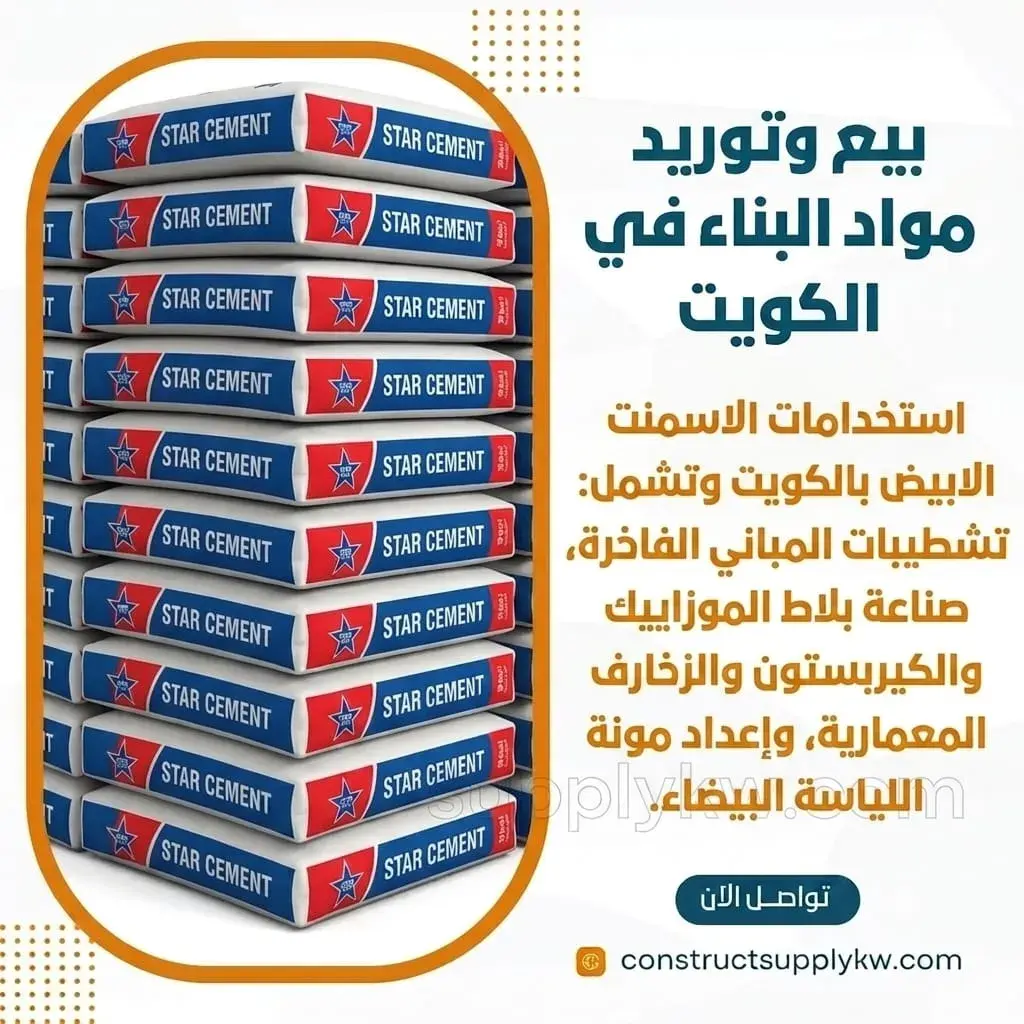
If you are a contractor, a project owner, or even an ordinary citizen planning to build your house, you have probably faced the challenge of understanding the real difference between the prices of subsidized and non-subsidized cement in Kuwait. The truth is, this topic is not just a number on paper; it directly affects your budget and determines your ability to complete your project without exceeding costs. Subsidized cement, which the government provides at a lower price, is a golden opportunity for anyone looking to reduce costs, but its limited quantities sometimes make the choice challenging. On the other hand, non-subsidized cement is completely free in the market, and its price fluctuates according to global and local supply and demand, which leads contractors and large companies to focus on its high quality and continuous availability.
In this article, we will cover all the details: current prices, the difference between subsidized and non-subsidized cement, the effect of subsidies on the market, choosing the right type for your project, and even tips to save costs without compromising quality. You will find accurate and reliable information based on real numbers and market experience, and we will also answer the most common questions related to this topic.
What is the Real Difference Between Subsidized and Non-Subsidized Cement in Kuwait?
Have you ever wondered why subsidized cement is significantly cheaper than free-market or non-subsidized cement? The difference is not just a simple price gap; it is linked to government subsidy policies, production costs, and distribution logistics. The government provides subsidized cement at a lower price to make it accessible to citizens and local contractors without the burden of rising prices or inflation, especially for small and medium-scale residential projects. This allows anyone planning to build or renovate to calculate their budget accurately without surprises.
On the other hand, non-subsidized cement prices depend on the market, meaning any increase in raw material prices, fuel, or transportation directly affects the price per ton. This makes large contractors or investors in massive projects rely on free-market cement to ensure consistent supply, even if it is more expensive. Real-life experiences with local contractors show that many use subsidized cement for small or residential projects due to its lower price but switch to free-market cement when the project is large or requires higher quality and consistent availability.
Another important factor is that subsidies do not always cover everything. Sometimes there are limits on the quantity for each consumer, requiring careful planning and smart decision-making. Understanding this difference helps you choose the right type for your project without wasting money or facing shortages in materials.
How Cement Prices Affect Local Projects
Have you ever thought about how a small difference in cement price can completely change your project budget? This is not just a number on paper; it affects all aspects of your project, from material costs to labor and project duration. Local contractors notice that choosing subsidized cement significantly reduces initial costs, especially in small to medium residential projects, stabilizing the project budget and reducing the need for additional financing.
For instance, a project requiring 500 tons of cement, with a 20 KWD difference per ton between subsidized and non-subsidized cement, would save about 10,000 KWD overall—a substantial amount for any small or medium project. On the other hand, large-scale or commercial projects usually rely on free-market cement to ensure continuous availability and higher quality, even if the price is higher.
Price differences also impact other decisions, such as the type of concrete, additional materials, and even the number of workers needed since everything is linked to cement costs. Understanding the impact of cement prices on the budget helps contractors and project owners plan financially better, reduce unexpected costs, and accurately estimate the project’s profitability while making the best use of available resources without compromising quality.
How to Choose the Right Type of Cement for Your Project
How do you know which cement type is right without wasting money? The first step is to evaluate your project size and budget. For small or medium-scale projects, subsidized cement is often the best choice because it provides significant cost savings without compromising basic quality, especially for residential construction or home renovation.
For large projects, such as multi-story buildings or commercial projects, free-market cement may be required to ensure the necessary quantities are available at all times and meet quality standards. Also, the duration of the project is important, as subsidized cement sometimes comes in limited quantities per consumer, which can cause delays if the project is large.
Real-life experience shows that combining both types can be a smart solution: using subsidized cement for primary works to save costs and free-market cement for sensitive parts or large-scale projects. Monitoring the market regularly is also important because free-market cement prices can change rapidly due to supply and demand, while subsidized cement prices remain relatively stable. Ultimately, choosing the right type relies on a deep understanding of project needs, pricing, and subsidy policies, ensuring the success of your project without financial or logistical surprises.
Government Subsidies and Their Role in Market Stability
Have you ever wondered why the Kuwaiti government continues to provide subsidized cement despite the presence of a free market? The idea goes beyond merely lowering prices for citizens; it is a strategic move to maintain stability in the local construction market. The government monitors cement prices and determines subsidy quantities to ensure they reach those who truly need them, particularly small-scale residential construction or emergency building repairs.
Subsidies not only reduce costs but also create a balance between supply and demand, which is crucial to preventing excessive price increases in the free market. Local contractor experiences show that any small or medium project relying on subsidized cement can maintain its budget more accurately, thus reducing financial risks. However, contractors must be aware of the limits per beneficiary, as excessive consumption may prevent full utilization of subsidies in future projects.
Economically, subsidies encourage investment in local construction projects by reducing financial risks and providing investors and project owners with better long-term planning confidence. This ensures continuous activity in the construction sector and stabilizes the labor market, as small and medium projects rely heavily on a steady supply of essential materials. Therefore, subsidies are not just a price difference; they are a full system that stabilizes the market and promotes sustainable economic growth.
How Cement Prices Impact Project Costs
Have you ever considered how a small difference in cement price can drastically affect the total cost of a project? This issue goes beyond mere numbers and encompasses every aspect of the project, from materials to labor and timeline. Local experts confirm that using subsidized cement reduces initial costs significantly, especially for small to medium residential projects, stabilizing budgets and reducing the need for extra financing.
For example, if a project requires 500 tons of cement, a 20 KWD price difference per ton results in a 10,000 KWD total saving—a significant amount for smaller projects. Large-scale or commercial projects typically rely on free-market cement despite its higher price to ensure uninterrupted supply and higher quality.
Price differences influence other decisions such as concrete type, additional materials, and labor requirements, as everything links back to cement costs. Understanding this impact helps contractors and investors plan finances better, reduce surprises, and maximize project profitability without sacrificing quality.
Quality vs. Price: How to Strike the Right Balance
Is it always best to choose the cheapest option, or is quality more important? Every contractor and project owner must answer this question before purchasing cement. Lower-priced subsidized cement is ideal for basic works and standard concrete applications, while large-scale or commercial projects often require free-market cement to ensure structural integrity and compliance with strict building standards.
Practical experience shows that combining both types is sometimes the best approach: using subsidized cement for foundational works and free-market cement for high-stress areas. Regular market monitoring is critical, as free-market prices can fluctuate rapidly, whereas subsidized cement remains relatively stable. Quality determines not only structural strength but also the contractor’s reputation, since concrete failures or construction issues can cause delays and additional costs. Therefore, balancing price and quality is an art of financial and technical planning that ensures project success and long-term durability.
How to Determine the Right Cement Quantity for Your Project
Have you ever wondered how to calculate the exact amount of cement needed without overbuying or running short? Determining the right quantity depends on project size, work type, and tons needed for each phase. Local contractor experience shows that miscalculating cement quantity is a major cause of delays and increased costs.
Small and medium projects can usually rely entirely on subsidized cement, but accurate calculation is essential to avoid exceeding the allowed quantity, which could prevent future subsidy use. Large projects need careful planning, especially if they rely on free-market cement, because any surplus or shortage affects total costs. Factors like waste during transport or storage must be considered, as cement can be damaged by moisture or poor handling. Experts recommend precise estimation for each project phase before purchasing, including foundational concrete and finishing works. Accurate quantity determination saves money, reduces waste, and ensures uninterrupted project execution.
Factors Affecting Cement Prices in the Kuwaiti Market
Have you ever wondered why cement prices fluctuate even when the type is the same? The Kuwaiti cement market is influenced by multiple internal and external factors. Internally, government subsidies stabilize subsidized cement prices, while free-market cement is directly affected by production costs, fuel, transportation, and labor expenses. Real-life contractor experience shows that any increase in energy or transport costs immediately reflects in free-market cement prices.
Externally, global markets for raw materials like clinker and coal affect local prices, especially when Kuwait imports part of its needs. Global crises in shipping or energy can suddenly raise free-market cement prices, while subsidized cement remains stable due to government intervention. Local supply and demand also play a major role: during peak construction seasons, demand rises, increasing free-market prices, while subsidies help balance supply. Logistics, storage, and financial liquidity for contractors also influence the final selling price. Understanding these factors is critical for project planning and risk management.
Practical Tips to Save Costs Without Compromising Quality
How can you save money in your construction project without reducing cement quality? Planning is key. First, accurately determine the required quantity and type of cement. Second, use subsidized cement for essential and standard concrete works and reserve free-market cement for sensitive areas. Third, proper storage is vital: protect cement from moisture and heat, as damage increases costs. Fourth, monitor the market regularly to purchase at optimal prices. Finally, combine subsidized and free-market cement strategically to maximize savings while maintaining quality. Experts confirm that smart selection, storage, and monitoring reduce project costs significantly and ensure smooth execution without surprises.
Challenges the Market Faces During Price Increases
Have you ever wondered why some projects are delayed or halted due to rising cement prices? The Kuwaiti cement market faces real challenges when prices fluctuate or demand rises. Large contractors sometimes experience supply shortages due to global raw material price hikes or changes in transportation and energy costs. For subsidized cement, the main challenge is limited quantities per consumer, which can pressure small and medium projects if planning is not accurate.
For free-market cement, any price increase affects all project stages because the cost per ton multiplies across the entire quantity needed, significantly raising total project costs. Smart financial management and advanced planning are essential, including precise quantity determination, market monitoring, and balancing the use of subsidized and free-market cement. Storage and handling also pose challenges, as poor practices can lead to waste. Projects without proper planning may face delays, especially when free-market prices fluctuate rapidly, requiring contractors to be highly flexible in supplier and financial management.
Contractors’ Strategies for Managing Cement Costs
How do contractors in Kuwait handle price fluctuations to keep projects running? Real-life experience shows that managing cement costs is not just about buying; it’s a comprehensive process requiring smart planning and monitoring. First, know exactly how much cement is needed for each phase and determine which type is subsidized and which is free-market. Second, experienced contractors purchase quantities during lower-price periods, which significantly reduces total project costs.
Third, proper storage is critical: cement must be kept away from moisture and heat, as damage increases costs unexpectedly. Combining subsidized and free-market cement strategically ensures balance between cost and quality, especially in large projects. Contractors also monitor global markets for raw materials and energy, as price hikes affect local free-market cement costs. These strategies allow contractors to maintain project continuity without budget overruns and maximize government subsidies while ensuring construction quality. Managing cement costs involves estimation, storage, monitoring, and adaptability, which distinguishes successful contractors from projects that face recurring issues.
The Role of Cement in Sustainable Construction
Have you ever considered how choosing the right cement affects long-term project sustainability? Cement quality impacts not only immediate building strength but also structural durability and future maintenance costs. Real-life experiences show that projects using subsidized cement for primary works and free-market cement for sensitive parts achieve an ideal balance between cost and quality, ensuring sustainability and reduced future maintenance expenses.
Selecting appropriate cement for each construction stage minimizes cracks and material waste, saving additional costs. Experts agree that strategically combining both types guarantees success for residential, commercial, or industrial projects and ensures long-term sustainability. Conversely, projects that ignore planning or use only one type without studying project needs often face quality or maintenance problems over time. Understanding cement’s role in sustainable construction is essential for ensuring project success, maximizing return on investment, and maintaining financial and structural stability.
Innovation and Modern Technology in Cement Production
Have you ever thought about how innovation in cement production can affect prices and quality in projects? The cement industry in Kuwait has seen significant development, including more efficient production techniques and waste reduction methods. Large companies’ experience shows that using advanced kilns and smart clinker production controls reduces energy costs and enhances product quality.
This directly affects free-market cement prices by lowering production costs and stabilizing the market for large-scale projects that require significant quantities. Innovations in packaging and storage also protect cement from moisture or damage during transport, reducing waste and increasing efficiency for small and medium projects. These advancements also improve the effectiveness of subsidized cement, ensuring that government support reaches beneficiaries without losses. Smart contractors can plan better, selecting the appropriate type for each stage, whether primary or finishing work. Innovation in cement production not only reduces costs but also improves building quality and promotes long-term project sustainability.
The Role of Government Subsidies in Encouraging Construction Investment
Have you ever wondered why government cement subsidies are critical for construction investment? Subsidies are not only about lowering prices—they are strategic tools to encourage investors and contractors to start new projects. Real-life experience in Kuwait shows that small and medium projects benefit the most, allowing construction to start with a lower budget and minimal extra financing, increasing market activity and creating new job opportunities.
Large or commercial projects typically rely on free-market cement for continuous supply, but subsidies help stabilize local prices, giving confidence for long-term planning. Subsidies also reduce financial risks by mitigating sudden fluctuations in free-market cement prices for small to medium projects. Economically, this promotes overall growth in the construction sector, creating an attractive environment for investment, as investors can rely on reasonably stable cement prices in part of their project. This translates into increased economic activity, improved living standards, and more employment opportunities, particularly in residential projects serving citizens directly.
Final Tips for Choosing the Right Cement
How can you choose the right cement for your project without overspending or facing execution delays? First, accurately assess project needs in size, type, and timeline. Small and medium projects usually benefit from subsidized cement for foundational and standard concrete works. Large projects often require free-market cement to ensure quantity and quality, but a strategic combination of both minimizes costs without compromising quality.
Second, proper storage is critical to prevent damage from moisture or heat. Third, regular market monitoring helps decide the best time and quantity to purchase, whether subsidized or free-market. Fourth, applying innovative building techniques reduces waste and maximizes each ton of cement. Finally, financial planning and evaluating quantities for each stage ensure smooth execution without surprises. Selecting the right cement combines financial planning, quality management, and market awareness, ensuring a successful, sustainable, and cost-efficient project.
Conclusion
Ultimately, the difference between subsidized and non-subsidized cement in Kuwait is more than just a price—it is a strategic factor affecting project budgets, construction quality, and long-term sustainability. Government subsidies reduce costs, stabilize the market, and encourage investment in the local construction sector. Free-market cement ensures availability and higher quality for large-scale projects, despite its higher price. A deep understanding of both types, precise quantity planning, and continuous market monitoring are essential to project success. Strategic use of both cement types, proper storage, and innovative construction techniques allow cost savings without sacrificing quality, resulting in sustainable, profitable, and secure projects.
Frequently Asked Questions
1. What is the main difference between subsidized and free-market cement?
Subsidized cement is cheaper due to government support but limited in quantity, usually for small and medium projects. Free-market cement is available in larger quantities, has higher quality, and its price depends on the market.
2. How can I maximize the benefits of subsidized cement?
Use it for essential and standard concrete works, adhere to quantity limits per beneficiary, and store it properly to avoid damage.
3. Can both subsidized and free-market cement be used in the same project?
Yes, combining both types provides balance between cost and quality: subsidized for basic works and free-market for sensitive parts or large-scale projects.
4. What factors affect free-market cement prices?
Global raw material prices, fuel and transport costs, local supply and demand, and peak construction seasons are key factors.
5. How does cement choice impact project sustainability?
Selecting the right type for each construction stage reduces waste, ensures structural durability, and minimizes future maintenance costs, promoting long-term project sustainability.