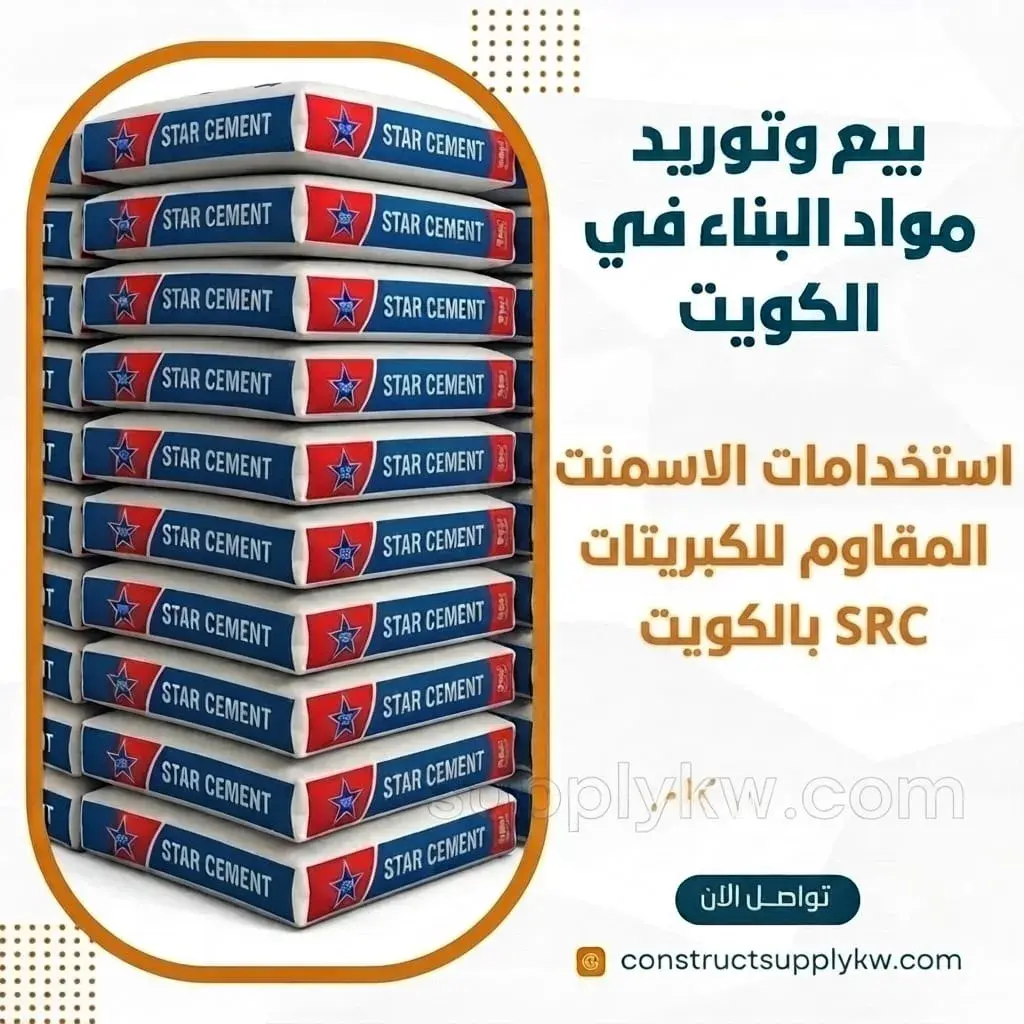
Ordinary Portland Cement (OPC) is the most widely used type of cement in construction projects around the world and serves as the primary binding material for most reinforced concrete, plain concrete, buildings, and infrastructure developments. Despite its widespread use, many project owners and contractors select it without fully understanding its engineering characteristics or the situations in which it represents the best choice compared with other cement types. Understanding its specifications, initial and final setting times, compressive strength, heat of hydration, and internationally recognized standards such as ASTM C150 helps engineers, contractors, and project owners make informed technical decisions that directly influence construction quality, structural durability, and long-term performance. In this comprehensive guide, we examine every major aspect of Ordinary Portland Cement from both an engineering and practical perspective while considering the conditions commonly encountered in construction projects throughout Kuwait.
Ordinary Portland Cement
.webp)
Ordinary Portland Cement forms the foundation of modern concrete construction and is used in a significant percentage of residential, commercial, and industrial building projects that do not require specialized performance characteristics such as sulfate resistance or low heat of hydration. This type of cement is manufactured by finely grinding Portland clinker together with a carefully controlled quantity of gypsum in order to regulate the setting process while producing suitable working characteristics during mixing, placing, and finishing. Its popularity results from its balanced combination of strength development, workability, availability, and cost-effectiveness, making it the preferred choice for most conventional structural applications.
Throughout Kuwait, Ordinary Portland Cement is extensively used in foundations, columns, beams, suspended slabs, bridges, reinforced concrete buildings, and numerous infrastructure projects that are not exposed to severe chemical environments. Its successful application depends upon selecting the appropriate strength grade for the project while ensuring that the concrete mix design complies fully with engineering specifications and applicable building codes. Concrete performance is determined not only by the cement itself but also by aggregate quality, water content, mixing procedures, consolidation, and proper curing after placement.
Practical construction experience consistently demonstrates that many concrete failures are not caused by deficiencies in Ordinary Portland Cement itself but rather by execution errors such as excessive water addition, delays during concrete placement, inadequate curing, or the use of substandard construction materials. For this reason, experienced engineers view cement as only one component within a complete concrete system in which every element must perform correctly to achieve the intended engineering results.
Professional engineers also recommend purchasing cement only from reputable manufacturers that maintain strict quality-control procedures and provide certified laboratory test reports because consistency between production batches plays an essential role in ensuring the success of major construction projects.
-
It is the most widely used cement for conventional construction projects.
-
Suitable for reinforced and plain concrete under normal structural conditions.
-
Provides an excellent balance between performance and workability.
-
Used in nearly every major structural concrete element.
-
Concrete performance depends upon the complete concrete system.
-
Compatible with most conventional construction methods.
-
Readily available throughout local construction markets.
-
Delivers consistent results when engineering specifications are followed.
-
Suitable for residential and commercial developments.
-
Best purchased from certified manufacturers with continuous quality control.
OPC Cement
The term OPC Cement stands for Ordinary Portland Cement, the internationally recognized designation for the standard Portland cement specified by many engineering codes and construction standards worldwide. OPC is manufactured in several strength classifications depending on the required compressive strength and the desired rate of strength development. Selecting the appropriate grade depends upon project requirements, structural loading, construction schedules, and design specifications. Consequently, understanding the technical classification printed on cement bags is often more important than recognizing the commercial brand name because engineering performance is determined by standardized specifications rather than marketing labels.
OPC Cement offers excellent workability during mixing and placement while providing reliable strength development when incorporated into properly designed concrete mixtures. It is compatible with most chemical and mineral admixtures used to improve workability, reduce water demand, increase strength, or modify other concrete properties. As a result, contractors rely on OPC for the majority of projects that do not require specialized characteristics such as sulfate resistance, low heat generation, or rapid strength gain.
Field experience consistently shows that some contractors choose OPC simply because it is less expensive than specialized cement types. However, sound engineering practice requires evaluating project conditions before making material selections. Projects located in aggressive marine environments or sulfate-rich soils may require more specialized cement despite its higher initial cost, whereas conventional construction projects generally obtain excellent value and dependable performance from OPC Cement.
Proper storage also plays a vital role in preserving cement quality. Cement should always be kept in dry conditions, protected from moisture, and stacked correctly to prevent premature hydration or lump formation before use.
-
Internationally recognized as Ordinary Portland Cement.
-
Used in most conventional structural construction projects.
-
Available in multiple strength classifications.
-
Compatible with numerous concrete admixtures.
-
Provides excellent value for standard construction applications.
-
Site conditions should always determine cement selection.
-
Proper storage preserves engineering properties.
-
Suitable for reinforced concrete construction.
-
Commonly used in buildings and infrastructure.
-
Successful application depends upon compliance with engineering specifications.
Initial Setting Time of Cement
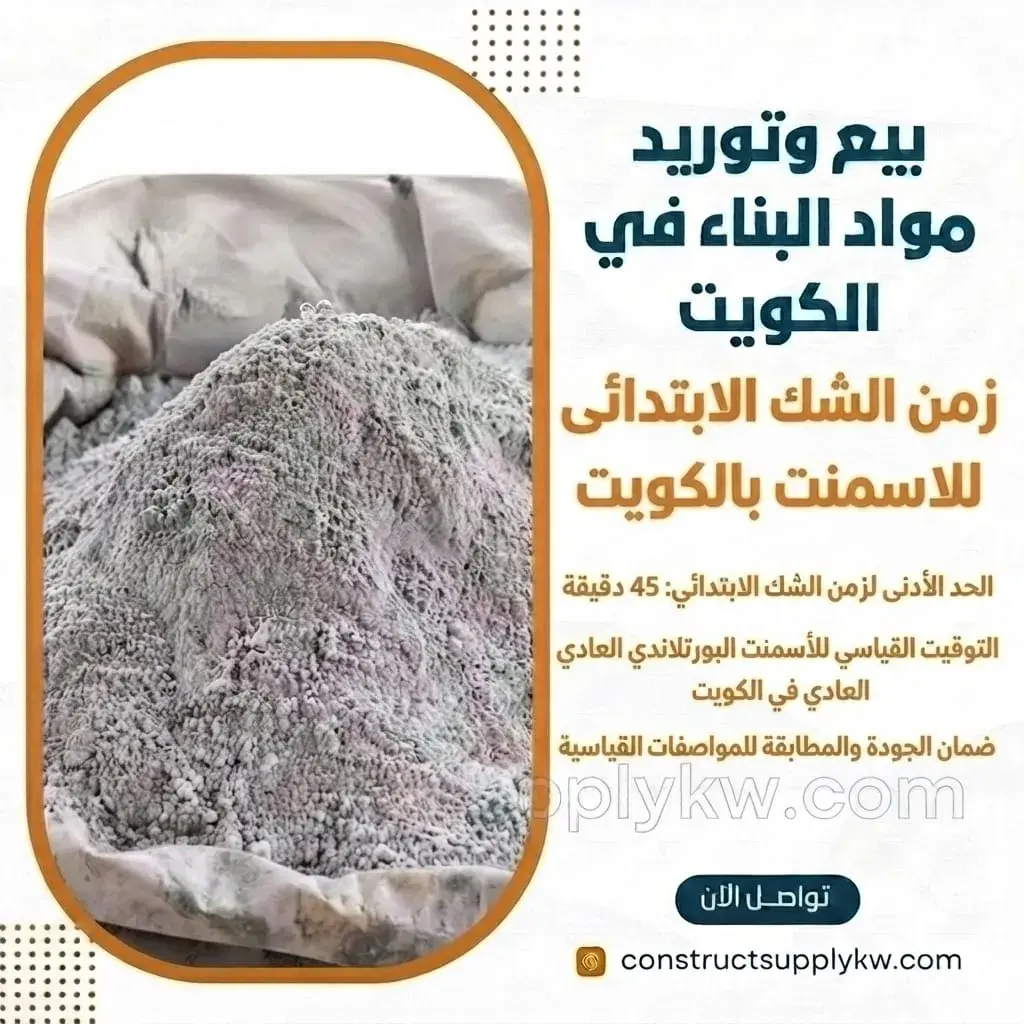
The initial setting time of cement is one of the most important engineering characteristics monitored by quality-control laboratories before approving any cement product because it determines the period during which fresh concrete remains workable for transportation, placement, consolidation, and finishing before the setting process begins. Initial setting time does not indicate that concrete has developed structural strength. Instead, it represents the beginning of the chemical hydration reactions between cement and water. Once this stage has started, adding additional water or attempting to remix the concrete becomes unacceptable because doing so directly reduces the quality and long-term performance of the hardened concrete.
On major construction projects throughout Kuwait, transportation schedules, batching operations, and concrete placement activities are carefully coordinated around the initial setting time to prevent concrete from beginning to stiffen before reaching its final placement location. Kuwait's extremely high summer temperatures can significantly accelerate cement hydration, making proper scheduling even more critical. Contractors therefore often plan concrete pours during cooler periods of the day while implementing measures that help control fresh concrete temperature whenever necessary in accordance with engineering specifications and applicable construction codes.
One of the most common construction mistakes is adding water after the initial setting process has already begun in an attempt to restore workability. Although this may temporarily improve concrete flow, it substantially weakens the hardened concrete, increases permeability, and reduces future compressive strength. Professional contractors avoid this practice by carefully planning transportation logistics, selecting suitable concrete mixtures, and maintaining proper quality control rather than attempting corrective actions after hydration has already started.
Laboratory testing consistently confirms that compliance with standardized initial setting time requirements provides an important indicator of cement quality and manufacturing consistency. Consequently, every production batch undergoes detailed testing before being released to the market.
-
Defines the available time for placing and consolidating concrete.
-
Marks the beginning of cement hydration reactions.
-
Additional water should never be added after initial setting begins.
-
Influenced by ambient temperature and construction conditions.
-
Helps organize transportation and concrete placement operations.
-
Represents one of the most important quality-control tests.
-
Values vary according to cement type and applicable specifications.
-
Plays an important role in scheduling large construction projects.
-
Closely related to construction quality.
-
Indicates the consistency of cement manufacturing.
Final Setting Time of Cement
The final setting time of cement represents the stage at which cement paste has completed its transition from a plastic material into a rigid solid. At this point, the concrete has developed sufficient rigidity to retain its shape, although it has not yet reached its design strength. Many people mistakenly assume that the final setting time indicates when formwork can be removed or structural loads can be applied. In reality, these are entirely different engineering milestones. Final setting simply marks the completion of the initial hardening process, while strength development continues for days and even weeks depending on the cement type, curing conditions, ambient temperature, and concrete mixture.
On construction projects throughout Kuwait, engineers pay close attention to the final setting time when preparing construction schedules, particularly for projects involving large concrete pours or sequential structural operations. Kuwait's high summer temperatures can accelerate hydration reactions, making it essential to consider actual site conditions rather than relying solely on standard laboratory values. In some situations, approved concrete admixtures are incorporated to adjust the setting characteristics so they better suit project requirements without compromising the concrete's long-term engineering performance.
One of the most common misconceptions on construction sites is believing that concrete becomes ready to support structural loads immediately after reaching its final setting time. This misunderstanding can lead to premature formwork removal or early loading before the concrete has achieved sufficient compressive strength. Engineering codes therefore base formwork removal and structural loading decisions primarily on compressive strength test results rather than on setting time alone because structural safety depends on actual strength development instead of initial hardening.
Reliable cement manufacturers conduct comprehensive laboratory testing on every production batch to verify compliance with standardized final setting time requirements. These quality-control procedures ensure manufacturing consistency and provide contractors and engineers with confidence that the product will perform predictably under field conditions.
-
Indicates the completion of the initial cement hardening process.
-
Does not signify that concrete has reached its design strength.
-
Helps organize construction scheduling and site operations.
-
Influenced by ambient temperature and cement composition.
-
Values vary according to engineering specifications.
-
Should never be used alone when determining formwork removal.
-
Verified through standardized laboratory testing.
-
Serves as an important indicator of manufacturing quality.
-
Directly related to cement hydration reactions.
-
Represents one of the fundamental engineering properties of Portland cement.
Compressive Strength of Cement
.webp)
Compressive strength of cement is one of the primary engineering indicators used to evaluate cement quality and its ability to contribute to durable, high-strength concrete. It is important to recognize, however, that cement compressive strength is measured using standardized cement mortar specimens under controlled laboratory conditions. The actual compressive strength of concrete depends on many additional variables, including aggregate quality, water-to-cement ratio, mixing procedures, consolidation, curing methods, and the age of the concrete. Consequently, excellent cement alone cannot guarantee excellent structural performance unless every component of the concrete system complies with engineering standards.
Compressive strength increases progressively over time as hydration reactions continue. For this reason, most engineering specifications and international construction codes use the 28-day compressive strength as the principal benchmark for evaluating concrete performance. Certain projects may also require early-age strength testing to determine whether construction activities such as formwork removal or subsequent structural operations can proceed according to schedule without compromising structural safety.
Practical construction experience consistently demonstrates that the greatest reductions in compressive strength usually result not from poor cement quality but from excessive mixing water, inadequate consolidation, insufficient curing, or the use of unsuitable construction materials. Even premium-quality cement cannot compensate for poor workmanship or improper concrete production practices. Professional contractors therefore implement comprehensive quality-control programs covering material inspection, trial concrete mixes, fresh concrete testing, hardened concrete testing, and continuous monitoring throughout construction.
Engineering comparisons between cement products should always rely upon certified laboratory test results and standardized quality documentation rather than anecdotal observations or isolated field experiences because standardized testing provides objective technical data for informed engineering decisions.
-
Represents one of the primary indicators of cement quality.
-
Increases progressively as hydration continues.
-
Determined using internationally recognized laboratory procedures.
-
Cement strength differs from the compressive strength of concrete.
-
Concrete strength depends upon both materials and construction quality.
-
Twenty-eight-day strength remains the primary engineering reference.
-
Routine testing supports effective quality assurance.
-
High-strength cement cannot compensate for poor construction practices.
-
Used to verify compliance with engineering specifications.
-
Forms the basis of numerous structural engineering decisions.
Heat of Hydration
The heat of hydration refers to the thermal energy released when cement chemically reacts with water from the moment mixing begins until hydration continues throughout the hardening process. This phenomenon naturally occurs in every type of Portland cement, although both the quantity and rate of heat generation vary according to cement composition, chemical characteristics, and cement content within the concrete mixture. In large structural elements such as massive foundations, thick concrete walls, and heavy structural blocks, heat of hydration becomes a critical engineering consideration because excessive temperature differences between the interior and exterior of the concrete may produce thermal stresses capable of causing early-age cracking.
For conventional construction projects using Ordinary Portland Cement, heat generation is generally appropriate for most standard structural applications. However, engineers frequently adopt specialized solutions when constructing large mass concrete elements. These solutions may include optimizing the concrete mix design, reducing cement content where appropriate, incorporating supplementary cementitious materials, or controlling the temperature of concrete ingredients before mixing in accordance with project specifications and applicable engineering codes.
Field experience consistently shows that many thermal cracking problems are caused not solely by the cement itself but by inadequate construction planning or insufficient temperature monitoring during the early stages after concrete placement. Large construction projects therefore often include continuous temperature monitoring within concrete elements to verify that internal temperatures remain within acceptable engineering limits while appropriate curing procedures are maintained to minimize thermal stress and ensure stable hydration.
A thorough understanding of heat of hydration enables engineers and contractors to select the most appropriate construction strategy for each project rather than applying identical procedures to every concrete element regardless of size, geometry, or environmental conditions.
-
Generated naturally when cement reacts chemically with water.
-
Heat output varies according to cement composition.
-
Particularly significant in large mass concrete structures.
-
Excessive temperature differences may cause thermal cracking.
-
Concrete mix design can help control heat generation.
-
Large projects often require continuous temperature monitoring.
-
Closely related to the rate of strength development.
-
A natural property of every Portland cement product.
-
Proper thermal management reduces cracking risks.
-
Influences construction methods and curing procedures.
Cement for Ordinary Concrete
.webp)
Cement for ordinary concrete remains the primary application of Ordinary Portland Cement (OPC), making it one of the most widely specified construction materials for structural and non-structural concrete that operates under normal service conditions. It is commonly used for residential foundations, floor slabs, columns, beams, pavements, retaining walls, sidewalks, warehouses, commercial buildings, and many infrastructure projects where the concrete is not expected to withstand aggressive sulfate attack, severe chemical exposure, or other highly corrosive environments. Because of its balanced engineering properties, OPC provides dependable strength development, good workability, and economical performance, making it the standard choice for conventional concrete construction throughout Kuwait and many other countries.
From an engineering perspective, achieving high-quality ordinary concrete depends on much more than selecting a reputable cement product. Every component within the concrete mixture contributes to the final structural performance. Properly graded aggregates, clean mixing water, an accurately controlled water-to-cement ratio, thorough mechanical mixing, effective vibration during placement, and continuous curing all work together to produce dense, durable concrete with predictable long-term behavior. Even premium-quality cement cannot compensate for poor workmanship or incorrect mix proportions. Conversely, a well-designed concrete mixture using certified OPC often outperforms poorly executed concrete produced with more expensive materials.
Practical construction experience across Kuwait consistently demonstrates that ordinary concrete performs exceptionally well for decades when every stage of production and placement follows engineering specifications. However, many durability problems originate from avoidable construction mistakes such as excessive water addition, insufficient consolidation, inadequate curing, or contaminated aggregates. These execution errors frequently lead to shrinkage cracks, reduced compressive strength, increased permeability, and premature deterioration. Professional contractors therefore consider proper construction procedures equally as important as selecting high-quality cement.
Engineers also evaluate the project's environmental conditions before selecting Ordinary Portland Cement. While OPC performs exceptionally well in conventional construction, projects located in marine environments, sulfate-rich soils, or aggressive industrial areas may require specialized cement types that offer enhanced chemical resistance despite their higher initial cost. The long-term savings achieved through improved durability often justify the additional investment.
-
The most widely used cement for conventional concrete construction.
-
Suitable for residential, commercial, and general infrastructure projects.
-
Produces reliable strength when concrete is properly designed.
-
Overall performance depends upon every concrete ingredient.
-
Requires proper consolidation and curing for maximum durability.
-
Appropriate for most standard structural applications.
-
Environmental exposure should always be evaluated before selection.
-
Provides an excellent balance between quality and construction cost.
-
Compatible with conventional concrete production methods.
-
Delivers long-term performance when engineering specifications are followed.
ASTM C150 Specification
The ASTM C150 Specification is one of the world's most widely recognized engineering standards governing Portland cement. It serves as the primary technical reference used by manufacturers, consultants, laboratories, contractors, and engineers to establish the chemical, physical, and performance requirements that Portland cement must satisfy before being approved for construction use. Rather than simply classifying cement products, ASTM C150 defines detailed manufacturing requirements, standardized laboratory testing procedures, acceptance criteria, and quality-control guidelines that ensure consistent engineering performance across different production facilities.
One of the greatest strengths of ASTM C150 is its classification system for Portland cement. The specification identifies multiple cement types designed for different construction conditions, including Ordinary Portland Cement, moderate sulfate-resistant cement, high sulfate-resistant cement, low heat cement, and high early-strength cement. This standardized classification allows engineers to select cement according to project requirements instead of relying solely on commercial product names. By specifying cement according to ASTM C150, project designers ensure that the selected material possesses the characteristics required for its intended application.
Throughout Kuwait, engineering consultants frequently require contractors to submit documentation demonstrating compliance with ASTM C150 or equivalent internationally recognized standards before approving construction materials. Certified laboratory reports provide confidence that the cement consistently satisfies the required chemical composition, physical properties, and mechanical performance. Independent testing laboratories also rely on standardized ASTM procedures to evaluate cement quality objectively and ensure that results remain comparable regardless of where the testing is performed.
Nevertheless, compliance with ASTM C150 should never be viewed as a substitute for quality construction practices. Even fully certified cement cannot overcome poor concrete production, inadequate curing, improper placement, or deficient site supervision. Successful construction always depends upon combining certified materials with professional engineering execution throughout every phase of the project.
-
One of the most widely recognized international Portland cement standards.
-
Defines chemical, physical, and performance requirements.
-
Includes standardized laboratory testing procedures.
-
Classifies Portland cement according to engineering applications.
-
Helps engineers select the appropriate cement type.
-
Improves confidence in manufacturing consistency.
-
Frequently specified by consultants and engineering firms.
-
Supports objective laboratory quality evaluation.
-
Strengthens quality-control programs on construction projects.
-
Must always be combined with proper construction practices.
Properties of Portland Cement
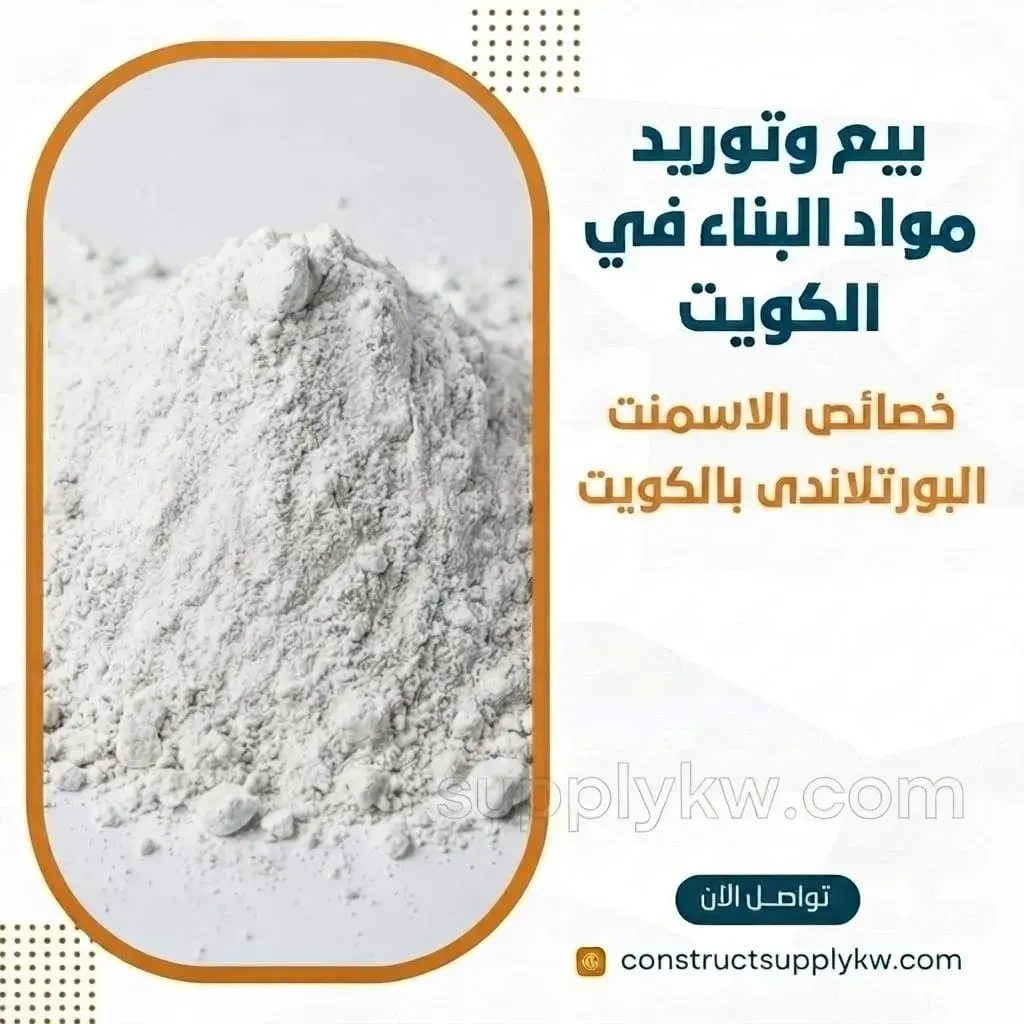
The properties of Portland cement include a comprehensive combination of physical, chemical, and mechanical characteristics that determine how the cement behaves from the moment water is added until the concrete reaches its long-term structural performance. Important engineering properties include fineness, initial setting time, final setting time, compressive strength, soundness, heat of hydration, and chemical composition. Each characteristic influences a different aspect of concrete performance, making it impossible to evaluate cement quality using only a single property. Engineers instead rely upon a complete series of standardized laboratory tests that collectively provide an accurate assessment of cement performance.
These engineering properties directly influence concrete workability, placement efficiency, strength development, durability, crack resistance, and long-term structural behavior. Modern cement manufacturing plants continuously monitor every production stage through sophisticated quality-control systems to maintain consistent product performance. Representative samples are regularly tested in specialized laboratories to verify compliance with engineering specifications and ensure that individual production batches exhibit minimal variation.
Practical construction experience consistently demonstrates that understanding Portland cement properties allows engineers and contractors to select the most appropriate product for each project instead of relying exclusively on price or brand recognition. A cement perfectly suited for conventional residential construction may not provide the optimum performance required for massive concrete foundations, marine structures, industrial facilities, or infrastructure projects exposed to aggressive environmental conditions. Consequently, engineering evaluation of cement properties forms an essential component of successful project planning.
Combining certified Portland cement possessing stable engineering characteristics with proper concrete production and construction practices produces concrete capable of delivering excellent durability, reliable structural performance, and extended service life across a wide variety of building applications.
-
Includes both physical and chemical engineering properties.
-
Directly influences overall concrete performance.
-
Evaluated through standardized laboratory testing.
-
Assists engineers in selecting suitable cement for each project.
-
Closely related to hydration and strength development.
-
Affects workability, placement, and finishing.
-
Continuously monitored during cement manufacturing.
-
Different projects prioritize different cement properties.
-
Forms a fundamental part of construction quality assurance.
-
Contributes significantly to long-term structural durability.
Uses of OPC Cement
The uses of OPC Cement extend across nearly every sector of the construction industry, making it the most commonly specified cement for conventional concrete applications worldwide. Ordinary Portland Cement is widely used for foundations, columns, beams, suspended slabs, retaining walls, pavements, residential housing developments, commercial buildings, warehouses, schools, hospitals, bridges, and numerous public infrastructure projects. Its widespread acceptance results from its ability to provide dependable engineering performance while maintaining excellent workability and economical construction costs for projects operating under normal environmental conditions.
In day-to-day construction operations, OPC offers contractors exceptional flexibility because it is compatible with a wide variety of aggregate sources, chemical admixtures, reinforcement systems, and construction techniques. When incorporated into a properly engineered concrete mixture, it consistently produces durable structural concrete capable of satisfying the requirements of most conventional buildings. This versatility explains why OPC continues to dominate construction markets throughout Kuwait despite the availability of numerous specialized cement products.
However, selecting OPC should always be based upon project requirements rather than habit or convenience. Marine structures, industrial facilities, wastewater treatment plants, sulfate-rich soils, and chemically aggressive environments frequently require specialized cement capable of providing enhanced durability under severe exposure conditions. Professional engineers therefore begin every material selection process by evaluating environmental conditions, structural requirements, and long-term durability objectives before specifying the most appropriate cement type.
Construction experience repeatedly confirms that successful projects begin by matching the right material with the right application. When Ordinary Portland Cement is specified for the conditions it was designed to serve and is combined with proper concrete mix design, professional workmanship, and continuous quality control, it delivers dependable structural performance, excellent durability, and long service life, making it one of the most trusted construction materials ever developed.
-
Used in nearly every conventional concrete application.
-
Suitable for residential, commercial, and public construction projects.
-
Compatible with both traditional and modern construction methods.
-
Provides balanced engineering performance for standard structures.
-
Works effectively with approved concrete admixtures.
-
Not intended for every aggressive environmental condition.
-
Proper application ensures maximum structural performance.
-
Offers excellent economic value for conventional construction.
-
Extensively used throughout Kuwait's construction industry.
-
Remains the global benchmark for general-purpose cement.
Conclusion
Ordinary Portland Cement (OPC) continues to serve as the foundation of modern construction because it successfully combines reliable engineering performance, broad availability, ease of use, and cost efficiency. Throughout this guide, we have explored its technical characteristics, initial and final setting times, compressive strength, heat of hydration, role in ordinary concrete, compliance with ASTM C150, engineering properties, and its broad range of construction applications. The discussion clearly demonstrates that successful use of OPC depends not only on selecting a high-quality cement product but also on choosing the correct cement for the project, designing an appropriate concrete mixture, and maintaining strict quality control throughout mixing, placement, curing, and construction. When these engineering principles are followed together, Ordinary Portland Cement provides dependable structural performance, outstanding durability, and long service life across the vast majority of conventional construction projects.
Frequently Asked Questions
What is OPC Cement?
OPC stands for Ordinary Portland Cement, the most commonly used cement type for conventional reinforced concrete and general construction projects worldwide.
Is OPC Cement suitable for every construction project?
No. Although OPC is ideal for most residential, commercial, and standard infrastructure projects, specialized environments such as marine structures or sulfate-rich soils may require other cement types designed for enhanced durability.
What is the difference between the initial and final setting times of cement?
The initial setting time marks the beginning of cement hardening and the loss of workability, while the final setting time indicates the completion of the initial hardening stage. Neither represents the point at which concrete reaches its full structural strength.
Is the compressive strength of cement the same as the compressive strength of concrete?
No. Cement compressive strength is measured using standardized mortar specimens under laboratory conditions, whereas concrete strength also depends on aggregate quality, water content, workmanship, curing, and overall mix design.
What is the heat of hydration?
Heat of hydration is the thermal energy released during the chemical reaction between cement and water. It becomes especially important in large concrete elements because excessive temperature differences may cause thermal cracking.
Why is ASTM C150 important?
ASTM C150 establishes internationally recognized chemical, physical, and performance requirements for Portland cement while defining standardized testing methods and acceptance criteria used throughout the construction industry.
Does storage affect the quality of OPC Cement?
Yes. OPC Cement should always be stored in a dry environment protected from moisture, with bags stacked correctly to prevent premature hydration, lump formation, and deterioration before use.
What are the most common uses of OPC Cement?
OPC is widely used for foundations, columns, beams, slabs, residential buildings, commercial developments, roads, bridges, pavements, and most conventional reinforced concrete applications where specialized cement properties are not required.
.webp)
.webp)