Many people assume that once concrete has been poured, the most important phase of construction has been completed. In reality, however, the period immediately after placement is just as critical as the concrete mix design and the quality of the materials themselves. Fresh concrete requires suitable conditions to allow cement hydration to continue until the structure reaches its intended strength and durability. Any rapid loss of moisture during the first few days can reduce compressive strength, increase surface cracking, and shorten the service life of the concrete element. This is why Concrete Curing Compound plays such an essential role. It helps retain moisture within the concrete while minimizing water evaporation, especially in extremely hot climates such as Kuwait. In this article, we explore the importance of curing compounds, how they work, the best practices for concrete curing, common application mistakes, and how proper curing contributes to stronger, longer-lasting concrete structures.
Concrete Curing Compound
.webp)
A Concrete Curing Compound is considered one of the essential materials used in modern concrete construction because it plays a critical role in preserving the moisture contained within freshly placed concrete during the initial curing period. This stage is where most cement hydration reactions occur, allowing the concrete to gradually develop its designed mechanical strength. Most curing compounds function by forming a thin protective membrane across the concrete surface that significantly reduces water evaporation without interrupting the internal hydration process. Their importance becomes even greater in hot, dry environments where moisture loss occurs rapidly and may lead to early shrinkage, surface cracking, and reduced long-term concrete performance. Practical observations from construction and maintenance projects throughout Kuwait consistently show that concrete elements treated with an appropriate curing compound usually develop a more uniform surface appearance and better long-term durability than untreated concrete. However, selecting the proper curing compound depends on the type of project, the concrete element involved, and whether additional finishes or coatings will later be applied. Certain curing compounds must be removed before finishing materials are installed, while others are compatible with subsequent construction stages. For this reason, carefully reviewing the manufacturer's technical data before application remains an essential part of professional concrete construction.
-
Forms a protective membrane that minimizes moisture loss from the concrete surface.
-
Supports proper cement hydration during the early curing period.
-
Particularly beneficial in hot climate construction projects.
-
Available in various formulations depending on the manufacturer.
-
Suitable for slabs, walls, columns, pavements, and other concrete elements.
-
Should be selected according to future finishing requirements.
-
Helps produce a more uniform finished concrete surface.
-
Must be applied at the appropriate time after concrete placement.
-
Delivers optimum performance when technical instructions are followed.
-
Represents an important component of professional quality control procedures.
Concrete Curing
Concrete curing refers to every method used to provide the conditions necessary for cement hydration to continue after concrete placement. These methods include chemical curing compounds, continuous water curing, wet coverings, curing blankets, and other approved curing techniques depending on project requirements. The objective is not simply to keep the surface wet but to preserve the internal moisture necessary for the hydration process to continue uninterrupted. Professional construction projects incorporate curing into the execution plan before concrete placement even begins. Engineers determine the most suitable curing method by evaluating ambient temperature, wind speed, relative humidity, concrete type, and the dimensions of the structural element. Field experience consistently demonstrates that properly cured concrete during the first several days develops higher compressive strength, lower permeability, and greater durability than concrete that is left exposed without adequate moisture protection. Furthermore, curing procedures differ between horizontal slabs and vertical structural members, as well as between small residential projects and major infrastructure developments. Therefore, no single curing method is appropriate for every situation. Successful concrete curing depends on selecting the correct technique, beginning the process at the proper time, and maintaining curing throughout the period required by engineering specifications.
-
Includes every approved method used to preserve concrete moisture after placement.
-
Curing procedures vary according to the type of structural element.
-
Planning begins before concrete is poured.
-
Environmental conditions influence curing performance.
-
Proper curing significantly improves compressive strength.
-
Reduces long-term concrete permeability.
-
Requires curing periods specified by engineering standards.
-
Applied in residential, commercial, industrial, and infrastructure projects.
-
Represents an essential quality assurance procedure.
-
Is not limited solely to chemical curing compounds.
Concrete Curing After Placement
.webp)
Concrete curing after placement represents the stage during which freshly placed concrete gradually transforms into a structural element capable of safely carrying its designed loads. During this period, cement continues reacting with water through the hydration process, allowing strength to increase progressively over time. Any premature moisture loss interrupts these reactions and prevents the concrete from reaching its full performance potential. For this reason, curing involves much more than spraying water or applying a curing compound. It also includes protecting the concrete from direct sunlight, minimizing the effects of strong winds, and monitoring environmental conditions, especially during the first few days when the concrete is most vulnerable. Large construction projects typically follow detailed curing schedules specifying the starting time, curing method, duration, and inspection procedures as part of comprehensive quality control programs. Practical experience consistently shows that many long-term concrete defects, including surface cracking and reduced abrasion resistance, result more frequently from inadequate curing than from deficiencies in the concrete mix itself. Consequently, curing after concrete placement should never be viewed as an optional construction step but rather as an integral part of producing concrete capable of achieving its intended engineering performance.
-
Begins immediately after concrete placement and finishing operations.
-
Supports uninterrupted cement hydration.
-
Minimizes the effects of early moisture loss.
-
Includes protection from sunlight, wind, and environmental exposure.
-
Follows a predetermined curing schedule.
-
Improves the long-term quality of structural concrete.
-
Reduces the likelihood of surface defects.
-
Varies according to project conditions.
-
Forms part of professional quality control procedures.
-
Directly influences future concrete performance.
Curing Compound
The term Curing Compound refers to specially formulated chemical products designed to create a protective membrane across the surface of freshly placed concrete immediately after finishing. This membrane reduces the rate of water evaporation while preserving the internal moisture required for continued cement hydration. Curing compounds are extensively used on projects where continuous water curing is impractical, including highways, airport pavements, industrial floors, bridge decks, and other large concrete surfaces. Various formulations are available, including water-based emulsions, resin-based products, and wax-based compounds, each offering different levels of moisture retention depending on project requirements. Experience from construction projects throughout Kuwait demonstrates that selecting an appropriate curing compound produces more consistent curing results under harsh climatic conditions characterized by intense heat and rapid evaporation. Nevertheless, engineers must also consider compatibility with future finishes because certain curing compounds may reduce the adhesion of paints, tile adhesives, flooring systems, or waterproofing materials unless removed before finishing work begins. Proper application rates recommended by the manufacturer must also be followed to ensure the protective membrane forms uniformly across the entire surface without excessive thickness or uncovered areas.
Preventing Concrete Cracks
.webp)
Preventing concrete cracks is one of the primary objectives of proper curing because early-age cracking is most often caused by moisture leaving the concrete faster than the cement hydration process can consume it. When fresh concrete dries prematurely, it begins to shrink before it has developed sufficient strength, resulting in surface cracks that may gradually widen over time and compromise the durability, appearance, and long-term performance of the concrete element. Professional curing programs are specifically designed to minimize this risk by preserving internal moisture, reducing direct exposure to sunlight and wind, and applying an appropriate curing compound whenever conditions require additional protection. Practical field experience consistently shows that preventing cracks through proper curing is significantly less expensive and more effective than repairing cracked concrete after defects appear. Many future maintenance problems can be avoided simply by following a carefully planned curing procedure from the first day after concrete placement. It is also important to distinguish between cracks caused by early moisture loss and those resulting from structural loading, foundation movement, or design deficiencies, since each type has different causes and requires different engineering solutions. Proper curing therefore represents one of the most effective preventive measures available for maintaining concrete quality throughout its service life.
-
Minimizes early drying that leads to plastic shrinkage cracking.
-
Maintains concrete stability during the critical early curing period.
-
Reduces surface cracks caused by rapid moisture loss.
-
Extends the long-term service life of concrete structures.
-
Decreases the need for costly future repairs.
-
Requires curing to begin at the proper time after placement.
-
Improves the overall durability of structural concrete.
-
Differs from repairs intended for structural cracks.
-
Functions primarily as a preventive quality measure.
-
Strengthens construction quality from the beginning of the project.
Preserving Concrete Moisture
Preserving concrete moisture is the fundamental purpose of every curing method because the water inside freshly placed concrete is not simply an ingredient used during mixing—it is an essential component that allows cement hydration to continue until the concrete develops its intended strength and durability. If moisture escapes too rapidly because of high temperatures, direct sunlight, or strong winds, portions of the cement may stop hydrating before the process is complete, reducing compressive strength, increasing permeability, and limiting long-term performance. For this reason, contractors use several methods to retain moisture, including continuous water curing, wet coverings, curing blankets, and chemical curing compounds that significantly reduce evaporation. Engineers determine the most appropriate curing technique based on project requirements, environmental conditions, and the characteristics of the concrete element. In Kuwait, where high temperatures prevail throughout much of the year, maintaining moisture during the first hours and days after placement becomes especially important because this period has the greatest influence on the future quality of the concrete. Moisture preservation should therefore never be considered an optional construction procedure but rather a fundamental engineering requirement for achieving the concrete's full design performance.
-
Maintains uninterrupted cement hydration within the concrete.
-
Reduces the effects of heat and wind on fresh concrete surfaces.
-
Allows concrete to gain strength progressively over time.
-
Requires selecting the most suitable curing method.
-
Varies according to environmental conditions and project requirements.
-
Improves concrete density while reducing permeability.
-
Represents the foundation of successful curing operations.
-
Minimizes early-age shrinkage of concrete surfaces.
-
Required for every type of concrete construction project.
-
Contributes to superior long-term structural performance.
Concrete Curing Duration
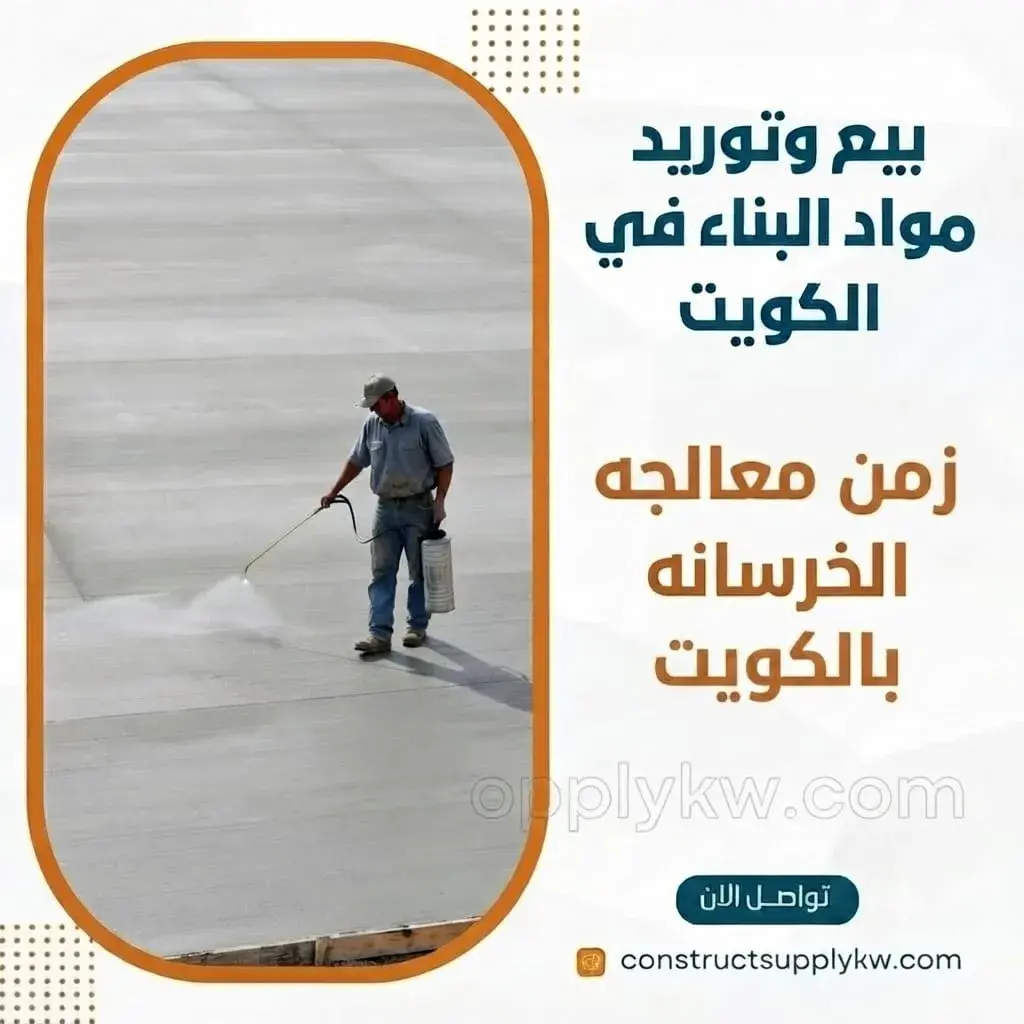
Concrete curing duration refers to the period during which suitable conditions must be maintained to allow cement hydration to continue after concrete placement. This period varies according to the type of cement, environmental conditions, project specifications, concrete composition, and engineering requirements. There is no single curing duration that applies to every project because concrete placed under high summer temperatures requires different curing considerations than concrete placed under moderate weather conditions. Likewise, massive structural elements may require different curing procedures from smaller concrete components. Professional construction projects therefore determine curing duration by referring to engineering specifications, project requirements, manufacturer recommendations, and applicable construction standards rather than relying on general assumptions. Contractors should never discontinue curing simply because the concrete surface appears hard since internal hydration continues long after the surface has become firm. Practical experience consistently demonstrates that maintaining curing for the required period has a direct influence on compressive strength, durability, resistance to environmental exposure, and the long-term performance of concrete structures. Proper curing duration is therefore an essential element of quality construction rather than merely a scheduling consideration.
-
Curing periods vary according to individual project requirements.
-
Environmental conditions directly influence curing duration.
-
Cement type and engineering specifications determine the required period.
-
Surface appearance alone should never determine when curing ends.
-
Proper curing duration improves concrete strength development.
-
Engineers establish curing periods according to technical standards.
-
Different structural elements may require different curing schedules.
-
Influences long-term durability and structural performance.
-
Forms an essential component of quality control procedures.
-
Should always continue until the specified curing period has been completed.
Increasing Concrete Strength
Increasing concrete strength is one of the most significant benefits of proper curing because concrete does not reach its design strength immediately after placement. Instead, its strength develops gradually as cement continues reacting with water through the hydration process during the first several days and weeks. When a curing compound or another effective curing method preserves sufficient internal moisture, hydration proceeds more efficiently, resulting in a denser and more cohesive internal concrete structure. Conversely, if concrete dries prematurely, part of the cement may stop hydrating before the reaction is complete, leading to lower compressive strength, increased permeability, and a greater likelihood of microscopic cracking over time. On construction projects throughout Kuwait, engineers consider curing an essential part of achieving the specified design strength rather than simply a finishing procedure that can be shortened to accelerate project schedules. Laboratory testing and practical field experience consistently demonstrate that properly cured concrete performs significantly better under structural loading and environmental exposure than concrete that receives inadequate curing. Investing in proper curing from the very beginning therefore reduces future maintenance costs, extends the service life of the structure, and ensures more stable long-term structural performance.
-
Proper curing allows concrete strength to continue developing as designed.
-
Prevents premature drying from interrupting cement hydration.
-
Produces a denser and stronger internal concrete structure.
-
Improves the concrete's ability to carry design loads.
-
Reduces permeability while increasing long-term durability.
-
Supports achievement of the specified design strength.
-
Minimizes the risk of premature concrete deterioration.
-
Lowers future repair and maintenance expenses.
-
Depends on maintaining curing throughout the required period.
-
Represents a fundamental element of professional concrete construction.
Concrete Surface Treatment
Concrete surface treatment includes every procedure intended to protect the outer layer of freshly placed concrete during the critical curing period immediately after placement. The surface of concrete is exposed directly to sunlight, wind, high temperatures, and environmental conditions, making it the first area to lose moisture if adequate protection is not provided. Since this outer layer also becomes the working surface that resists wear, weathering, abrasion, and environmental attack throughout the structure's service life, preserving its quality from the beginning has a direct influence on the performance of the entire concrete element. Various treatment methods are available depending on project requirements, including curing compounds, continuous water curing, wet coverings, protective membranes, and other approved curing systems. Engineers determine the most appropriate treatment method according to project specifications, environmental conditions, and construction procedures. Surface treatment should begin immediately after finishing operations are completed because the first several hours represent the most critical period for moisture retention. Field observations consistently show that surface defects such as plastic shrinkage cracking, dusting, or poor abrasion resistance are more commonly associated with inadequate curing than with deficiencies in the concrete mix itself. Proper concrete surface treatment therefore contributes not only to a better appearance but also to greater durability and long-term structural reliability.
-
Protects the exposed concrete surface from rapid moisture loss.
-
Reduces the effects of heat, sunlight, and wind.
-
Helps maintain uniform concrete quality.
-
Treatment methods vary according to project requirements.
-
Begins immediately after finishing operations.
-
Reduces shrinkage cracking and other surface defects.
-
Improves resistance to abrasion and environmental exposure.
-
Enhances the quality of finished concrete surfaces.
-
Forms part of professional quality assurance procedures.
-
Directly contributes to longer structural service life.
Best Curing Compound
Selecting the best curing compound does not mean choosing a single product that works for every construction project because the most appropriate solution depends on the type of concrete element, environmental conditions, construction sequence, project specifications, and the finishes that will later be applied to the concrete surface. Some projects require curing compounds that can be removed before coatings, flooring systems, waterproofing membranes, or tile adhesives are installed, while others benefit from products specifically formulated to remain on the concrete surface without interfering with subsequent work. Curing compounds also differ in their evaporation control efficiency, ease of application, drying characteristics, and compliance with engineering standards. Professional engineers therefore evaluate curing compounds according to technical performance rather than purchase price alone. The manufacturer's technical data sheet should always be reviewed to confirm compatibility with project requirements, application methods, environmental limitations, and curing performance. Practical construction experience consistently demonstrates that the best curing compound is the one that delivers the required moisture retention under actual site conditions while being applied correctly and at the proper time. Ultimately, even the highest-quality curing compound cannot compensate for poor workmanship or incorrect application procedures, making professional execution just as important as product selection itself.
-
Product selection depends on the specific project requirements.
-
The curing compound should comply with recognized engineering standards.
-
Future finishing systems must be considered before selection.
-
Purchase price alone should never determine product choice.
-
Technical data sheets should always be reviewed before use.
-
Products differ in their moisture-retention performance.
-
Engineers select the most suitable compound for each application.
-
Proper application is essential for maximum effectiveness.
-
High-quality curing improves long-term concrete performance.
-
The curing compound functions as one part of a complete curing system.
Conclusion
Concrete curing compounds are an essential component of successful concrete construction because they preserve the moisture required for cement hydration to continue until the concrete achieves its intended strength, durability, and long-term performance. Throughout this article, we examined the role of Concrete Curing Compound, explained the principles of Concrete Curing, discussed Concrete Curing After Placement, explored the function of Curing Compound, explained methods for Preventing Concrete Cracks, highlighted the importance of Preserving Concrete Moisture, reviewed the appropriate Concrete Curing Duration, demonstrated how curing contributes to Increasing Concrete Strength, examined Concrete Surface Treatment, and outlined the criteria for selecting the Best Curing Compound. When curing is performed according to engineering specifications and manufacturer recommendations, concrete develops higher quality, a longer service life, and greater resistance to future deterioration while significantly reducing the likelihood of defects that may require expensive repairs later.
Frequently Asked Questions
Can a curing compound replace water curing?
It depends on the curing method specified for the project. In many situations, curing compounds provide an effective alternative when continuous water curing is impractical, while some projects may still require water curing or a combination of approved curing methods according to engineering specifications.
When should a curing compound be applied after concrete placement?
The curing compound should be applied immediately after finishing operations have been completed and once the concrete surface reaches the condition recommended by the manufacturer. Delaying application may allow excessive moisture loss during the most critical early curing period.
Are all curing compounds suitable for concrete surfaces that will later receive paint or coatings?
No. Certain curing compounds may interfere with the adhesion of paints, flooring systems, waterproofing membranes, tile adhesives, or other finishing materials. The selected product should always be compatible with the planned finishing system or be removable if required.
Does curing duration affect concrete strength?
Yes. Maintaining curing for the full period specified by engineering standards allows cement hydration to continue properly, enabling the concrete to achieve higher compressive strength, improved durability, and better long-term structural performance.
What are the most common mistakes made during concrete curing?
Common mistakes include delaying the start of curing after concrete placement, applying an insufficient amount of curing compound, stopping curing before the required curing period has ended, selecting a curing compound that is incompatible with the project requirements or future finishes, and failing to follow the manufacturer's technical application instructions.
.webp)

.webp)