During renovation, structural repair, extensions, and concrete rehabilitation projects, simply placing fresh concrete over an existing concrete surface is rarely sufficient to achieve a durable structural connection. Differences in concrete age, surface condition, moisture content, and existing strength may create weak bonding zones that eventually develop into cracks, separation, or reduced structural performance. This is where Acrylic Bond becomes one of the most widely used bonding agents for improving adhesion between old and new concrete while significantly enhancing the bond strength of cement-based repair systems. However, obtaining reliable long-term performance depends on much more than selecting a quality product. Proper surface preparation, correct product selection, compliance with manufacturer recommendations, and accurate application procedures are equally essential. In this guide, we explain how Acrylic Bond works, where it should be used, common installation mistakes that reduce its effectiveness, and the professional practices that maximize bonding performance in residential, commercial, and industrial construction projects throughout Kuwait.
Acrylic Bond
.webp)
Acrylic Bond is one of the most commonly used polymer-based bonding agents in the construction industry whenever stronger adhesion is required between existing concrete and newly placed concrete or between cementitious repair mortars and aged cement surfaces. Rather than acting as a simple coating, Acrylic Bond forms an engineered bonding layer that significantly improves the mechanical and chemical adhesion between old and new cementitious materials compared with relying solely on ordinary cement paste. Its applications extend far beyond concrete bonding and include floor repairs, concrete edge restoration, patch repair mortars, specialized rendering systems, and many other cement-based rehabilitation works depending on the product formulation and the manufacturer's recommendations. Practical experience from structural rehabilitation projects throughout Kuwait consistently demonstrates that applying Acrylic Bond before casting fresh concrete over properly prepared existing concrete substantially reduces the likelihood of future separation between the two layers. Nevertheless, the material should never be viewed as a substitute for proper surface preparation. Loose concrete, contamination, and deteriorated substrate conditions must always be corrected before application because the bonding agent performs effectively only when applied to a structurally sound surface. Since Acrylic Bond formulations vary between manufacturers, contractors should carefully review technical data sheets for dilution ratios, application methods, waiting periods, curing conditions, and approved applications before beginning work to ensure the material performs exactly as designed.
-
Commonly used to improve adhesion between existing and newly placed concrete.
-
Widely applied in structural repair and cementitious rehabilitation projects.
-
Requires thorough surface preparation before application.
-
Technical characteristics vary according to product formulation.
-
Must be applied according to the manufacturer's mixing and application instructions.
-
Improves the overall performance of concrete repair systems.
-
Compatible with numerous cement-based applications when correctly specified.
-
Does not eliminate the need to remove unsound concrete before repair.
-
Helps achieve stronger long-term bonding when properly applied.
-
Represents an essential component in professional structural maintenance projects.
Concrete Bonding Agent
A concrete bonding agent is an essential component in projects requiring new concrete to be integrated with existing structural elements, including extensions, slab repairs, beam rehabilitation, column strengthening, wall reconstruction, and numerous structural maintenance applications. Its primary purpose extends beyond increasing adhesion because it also improves load transfer between old and new concrete while reducing the likelihood of weakness developing along the construction joint. Professional installation therefore begins with a detailed assessment of the existing concrete to verify structural soundness while removing all deteriorated material, dust, oil, laitance, curing compounds, or contaminants that may interfere with adhesion. Engineers then select a bonding agent specifically matched to the repair method, substrate condition, environmental exposure, and structural requirements while following the manufacturer's installation procedures precisely. Practical field experience consistently demonstrates that many unsuccessful concrete repairs are caused not by poor bonding materials but by inadequate substrate preparation or failure to observe the specified application time. Consequently, selecting a concrete bonding agent should never depend solely on price or brand reputation. Instead, its technical performance, compatibility with the project requirements, and compliance with engineering specifications should determine the final selection.
-
Used extensively in structural repair and concrete extension projects.
-
Improves load transfer between existing and newly cast concrete.
-
Requires complete cleaning of the substrate before application.
-
Product selection depends on the type of structural repair.
-
Performance relies on proper installation procedures.
-
Suitable for slabs, beams, columns, walls, and concrete floors.
-
Reduces weakness along construction joints.
-
Should be selected according to technical performance data.
-
Delivers optimum results when the substrate is properly prepared.
-
Functions as one element within a complete structural repair system.
Acrylic Bond Product
The term Acrylic Bond generally refers to polymer emulsions formulated with acrylic technology to improve adhesion, flexibility, and overall performance in cement-based construction applications. However, not every Acrylic Bond product possesses identical properties because manufacturers produce different formulations designed for specific purposes. Certain products are intended primarily as concrete bonding agents, while others are developed to improve repair mortars, reduce shrinkage cracking, increase adhesion in cement renders, or enhance the performance of patching materials. Consequently, contractors should never assume that every Acrylic Bond product is interchangeable simply because it carries a similar commercial name. Professional product selection begins by studying the technical data sheet to determine the intended application, dilution requirements, curing characteristics, environmental limitations, and compatibility with the proposed repair system. Field experience consistently demonstrates that choosing the correct Acrylic Bond formulation according to project requirements provides substantially better long-term performance than relying solely on commercial branding. Temperature, substrate condition, application timing, and mixing procedures also influence final performance. When applied according to the manufacturer's technical recommendations, Acrylic Bond significantly enhances the integrity of cement-based repair systems while improving long-term adhesion and structural stability.
-
Manufactured using advanced acrylic polymer technology.
-
Product performance varies according to formulation.
-
May function as a bonding agent or cement additive depending on specifications.
-
Improves flexibility in selected cement-based applications.
-
Requires accurate mixing ratios where dilution is specified.
-
Selected according to the intended engineering application.
-
Technical documentation should always be reviewed before use.
-
Improves the cohesion of repair mortars and overlays.
-
Suitable for numerous rehabilitation and maintenance applications.
-
Delivers maximum performance only when correctly applied.
Bonding Old and New Concrete
Bonding old and new concrete is one of the most technically demanding operations in structural repair because the completed system must ultimately behave as a single structural element despite being constructed at different times. The interface between existing and freshly placed concrete represents the most critical location within the repair because inadequate preparation may create a permanent plane of weakness. Professional practice therefore begins by removing all deteriorated concrete until only sound material remains, followed by thorough cleaning to eliminate dust, oils, laitance, curing compounds, and other contaminants that could interfere with adhesion. A suitable Acrylic Bond or approved bonding agent is then applied according to the manufacturer's instructions while carefully observing the specified application window before placing the fresh concrete. Experience from structural rehabilitation projects throughout Kuwait consistently demonstrates that properly prepared bonding interfaces dramatically reduce the likelihood of future cracking, delamination, and separation when subjected to structural loading and thermal movement. Nevertheless, bonding agents should never replace proper structural design or mechanical reinforcement where engineering calculations require additional load transfer mechanisms. Instead, they function as one component within an integrated repair system designed to maximize structural continuity and long-term durability.
-
Begins with removing all unsound concrete until sound material is exposed.
-
Requires complete cleaning before the bonding agent is applied.
-
Application procedures vary according to repair requirements.
-
Certain structural repairs may require supplemental mechanical reinforcement.
-
Proper preparation significantly reduces future delamination.
-
Improves structural load transfer across construction joints.
-
Success depends more on preparation quality than material quantity.
-
Suitable for structural rehabilitation and building extensions.
-
Creates stronger integration between existing and new concrete.
-
Represents a critical step in long-lasting concrete repairs.
Improving Concrete Adhesion
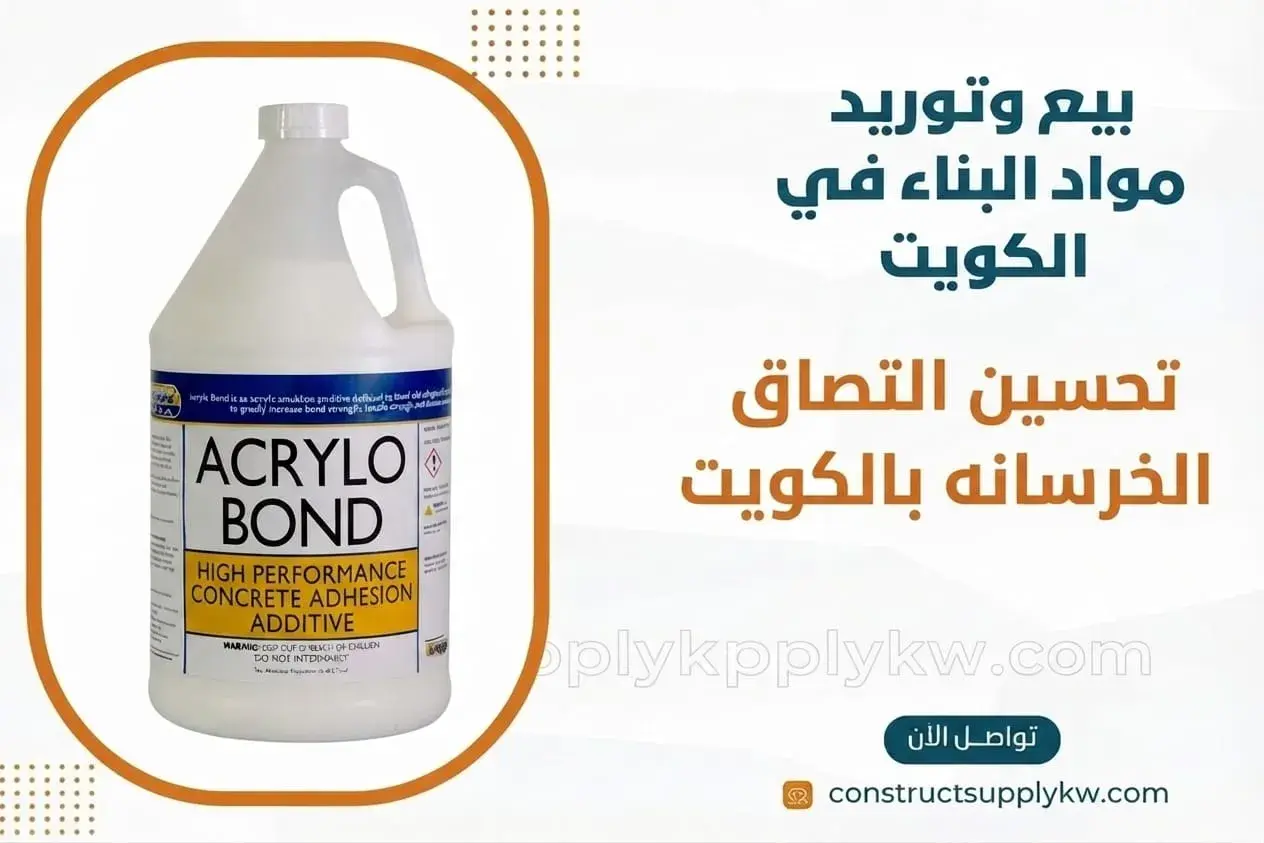
Improving concrete adhesion involves far more than applying a high-quality bonding agent. Long-term performance depends on a complete engineering process in which every stage contributes to the final bond strength. Even the highest-performing Acrylic Bond product cannot achieve its intended performance if the existing concrete surface is contaminated with dust, oil, curing compounds, paint residues, or loose cement particles. Professional contractors therefore begin by mechanically roughening the substrate where necessary, pressure-cleaning the surface, and removing all deteriorated concrete before any bonding material is applied. Timing is equally important because many bonding agents are designed to receive fresh concrete while they remain within a specific stage of curing or tackiness as defined by the manufacturer. Practical experience from structural repair projects consistently demonstrates that strict compliance with these technical requirements produces significantly stronger adhesion than simply applying a bonding agent without adequate preparation. Environmental conditions such as temperature, humidity, and wind also influence drying characteristics and product performance, particularly during Kuwait's hot summer months. Achieving superior concrete adhesion therefore requires the combined effect of proper substrate preparation, appropriate material selection, professional application methods, and careful control of installation conditions rather than depending on a single product alone.
-
Strong adhesion begins with thorough substrate preparation.
-
Surface contaminants must be completely removed before application.
-
Mechanical roughening often improves bonding performance.
-
Environmental conditions influence curing and adhesion.
-
Correct application timing is essential for optimal results.
-
Professional preparation significantly improves repair quality.
-
Reduces the likelihood of weak construction joints.
-
Increases the long-term durability of repaired concrete.
-
Requires full compliance with manufacturer recommendations.
-
Represents a complete installation process rather than a single material.
Cementitious Concrete Admixtures
Cementitious concrete admixtures are used to modify the properties of cement-based materials so they perform more effectively under specific project requirements. These admixtures may improve adhesion, increase workability, reduce permeability, enhance crack resistance, modify setting times, or improve overall durability depending on their formulation. Acrylic Bond is one example of a polymer product that can improve the performance of repair mortars and certain cementitious applications, but it is important to distinguish between bonding agents applied to existing concrete surfaces and admixtures mixed directly into cement-based materials because each serves a different engineering purpose. Professional engineers select admixtures only after determining the precise objective of the repair, whether that involves increasing adhesion, improving durability, reducing shrinkage, enhancing flexibility, or optimizing construction efficiency. Equally important is strict adherence to the manufacturer's recommended dosage because excessive quantities may negatively affect the performance of the cementitious system. Understanding the specific function of each admixture enables contractors to design more reliable repair systems while preventing materials from being used in applications for which they were never intended.
-
Used to modify the performance of cement-based materials.
-
Different admixtures serve different engineering purposes.
-
Acrylic-based products may improve selected repair mortars.
-
Bonding agents and internal admixtures perform separate functions.
-
Manufacturer dosage recommendations should always be followed.
-
Product selection depends on project objectives.
-
Suitable for structural repair, maintenance, and construction.
-
Some products are mixed into mortar while others are applied to surfaces.
-
Correct selection improves repair quality and durability.
-
Prevents inappropriate use of specialized construction materials.
Concrete Surface Preparation
.webp)
Concrete surface preparation is widely regarded as the single most important stage in successful bonding and structural repair because no bonding agent can compensate for a weak, contaminated, or deteriorated substrate. Professional preparation begins by removing loose concrete, deteriorated material, dust, grease, curing compounds, paint, salts, and any other substances capable of preventing proper adhesion. Depending on project requirements, mechanical scarification, grinding, or abrasive cleaning may also be performed to increase surface roughness and improve mechanical bonding between the existing concrete and the repair material. Cracks, voids, and other defects should be evaluated and repaired before applying the bonding agent, while the moisture condition of the substrate should comply with the product manufacturer's recommendations. Practical experience consistently demonstrates that neglecting proper surface preparation frequently results in bond failure even when premium Acrylic Bond products are used because every bonding material requires a clean, structurally sound substrate to perform as intended. Engineers therefore consider substrate preparation an investment in long-term repair quality rather than simply a preliminary construction step.
-
Begins by removing all unsound concrete.
-
Eliminates dust, grease, salts, and surface contaminants.
-
May require mechanical roughening depending on the repair.
-
Significantly improves bonding agent performance.
-
Reduces the likelihood of future bond failure.
-
Existing cracks should be repaired before application.
-
Requires evaluation of the existing concrete condition.
-
Forms the foundation of successful repair systems.
-
Improves structural load transfer between old and new concrete.
-
Cannot be omitted regardless of bonding agent quality.
Construction Joint Treatment
Construction joint treatment is one of the most important procedures affecting the long-term performance of reinforced concrete structures because construction joints represent the transition between concrete placed at different times. If these joints are not properly treated, they may become weak zones susceptible to cracking, water penetration, or reduced structural continuity. Professional treatment begins by removing the weak cement laitance from the surface of the existing concrete until sound aggregate is exposed, followed by careful cleaning to eliminate all debris before the bonding agent is applied. Acrylic Bond or another approved bonding material is then used according to the manufacturer's instructions while observing the specified application window before placing fresh concrete. Throughout Kuwait, engineers place particular emphasis on proper construction joint treatment in foundations, retaining walls, tanks, slabs, and other structural elements because these locations significantly influence long-term durability. Treatment methods may vary depending on structural design, service conditions, and loading requirements, meaning no single procedure is appropriate for every project. Correct construction joint treatment enables the existing and newly placed concrete to function as one continuous structural element while substantially reducing future maintenance requirements.
-
Treatment begins by removing weak cement laitance.
-
Construction joints must be thoroughly cleaned before bonding.
-
Procedures vary according to structural application.
-
Proper treatment improves structural load transfer.
-
Reduces water penetration through construction joints.
-
Requires compliance with manufacturer application timing.
-
Suitable for foundations, tanks, walls, and slabs.
-
Improves the quality of rehabilitation and extension projects.
-
Prevents construction joints from becoming structural weak points.
-
Represents a critical element of professional concrete construction.
Increasing Bond Strength
Increasing bond strength is the primary objective when Acrylic Bond is used in structural repair and concrete rehabilitation projects, but achieving maximum performance requires much more than simply applying the product. Bond strength is the result of a complete engineering process in which substrate preparation, material selection, environmental conditions, and installation quality work together as one integrated system. A clean and properly roughened concrete surface allows the bonding agent to penetrate and develop a stronger mechanical and chemical connection with the existing substrate. Accurate mixing ratios, compliance with the recommended application window, and placing fresh concrete within the specified time frame all contribute directly to the final bond performance. Field experience from numerous structural repair projects has shown that many bonding failures result from relatively simple installation mistakes such as delaying the concrete placement after applying the bonding agent, using the material on contaminated or weak concrete, or ignoring the manufacturer's technical recommendations. Professional contractors therefore perform careful inspections before beginning work, verifying substrate cleanliness, moisture condition, environmental suitability, and product compatibility with the repair method. When every stage is completed correctly, the repaired concrete behaves more efficiently under service loads, demonstrates improved structural continuity, and provides significantly greater long-term durability than repairs relying solely on ordinary cement paste.
-
Bond strength depends on both material quality and installation quality.
-
Proper substrate preparation is essential before application.
-
Application timing directly influences final bonding performance.
-
Manufacturer mixing instructions should always be followed.
-
Improves the long-term effectiveness of structural repairs.
-
Reduces the likelihood of future separation between concrete layers.
-
Promotes more efficient load transfer across repair zones.
-
Product selection should match the engineering application.
-
Full compliance with technical procedures maximizes performance.
-
Represents one of the most important indicators of repair quality.
Acrylic Bond Application
Successful Acrylic Bond application requires careful execution at every stage because even the highest-quality bonding agent cannot compensate for improper installation procedures. Work begins with complete surface preparation by removing contaminants, loose concrete, and weak cementitious material before preparing the bonding agent according to the manufacturer's technical instructions. Certain Acrylic Bond formulations require dilution before use, while others are supplied ready for direct application, making it essential to consult the product data sheet before beginning work. The bonding agent is then applied using brushes, rollers, or other suitable tools to produce a continuous, uniform coating across the entire bonding area without excessive buildup or uncovered sections. Fresh concrete or repair mortar must be placed within the application period specified by the manufacturer because exceeding this window may significantly reduce bonding performance. Environmental conditions should also be considered, particularly high temperatures, direct sunlight, and rapid drying conditions that may affect curing behavior. Practical experience consistently demonstrates that careful attention to these seemingly minor installation details has a major influence on long-term repair success. For this reason, experienced contractors review the technical documentation before every application to verify compatibility with project requirements and site conditions rather than relying solely on previous experience or routine installation practices.
-
Application begins only after complete substrate preparation.
-
Mixing procedures must follow the manufacturer's specifications.
-
A continuous and uniform bonding layer should be achieved.
-
Fresh concrete should be placed within the approved application window.
-
Suitable application tools should match the substrate condition.
-
Environmental conditions influence product performance.
-
Technical documentation should always be reviewed before installation.
-
Proper application maximizes long-term bonding effectiveness.
-
Reduces failures caused by incorrect installation practices.
-
Represents the final preparation stage before concrete placement or repair work.
Conclusion
Acrylic Bond has become one of the most valuable materials for bonding existing concrete to newly placed concrete when it is incorporated into a complete repair system that emphasizes proper surface preparation, correct product selection, and strict compliance with technical installation procedures. Throughout this guide, we examined the role of Acrylic Bond in improving adhesion, explained the function of concrete bonding agents, explored Acrylic Bond polymer formulations, discussed methods for bonding old and new concrete, reviewed techniques for improving concrete adhesion, analyzed cementitious admixtures, highlighted the importance of concrete surface preparation, explained professional construction joint treatment, examined the factors that increase bond strength, and outlined the correct procedures for applying Acrylic Bond. When every stage is executed according to engineering best practices, repaired concrete develops stronger structural continuity, improved load transfer, longer service life, and substantially greater resistance to future deterioration.
Frequently Asked Questions
Can Acrylic Bond be used for every type of concrete repair?
Not necessarily. The suitability of Acrylic Bond depends on the type of repair, the condition of the existing concrete, the repair method, and the manufacturer's technical recommendations. Certain structural applications may require alternative bonding systems or specialized repair materials.
Does Acrylic Bond eliminate the need for surface preparation?
No. Surface preparation remains the most critical stage in any bonding operation. Acrylic Bond enhances adhesion only after the substrate has been properly cleaned, repaired, and prepared according to engineering standards.
When should new concrete be placed after applying Acrylic Bond?
The placement time varies depending on the specific product. Contractors should always follow the application window stated in the manufacturer's technical data sheet rather than relying on general assumptions.
Is Acrylic Bond mixed into concrete or applied to the surface?
That depends on the product formulation and intended application. Some Acrylic Bond products are designed as surface bonding agents, while others may be incorporated into cement-based repair mortars or specialized mixes according to the manufacturer's instructions.
What are the most common mistakes that reduce Acrylic Bond performance?
The most common errors include inadequate surface cleaning, applying the product outside its recommended working time, ignoring the manufacturer's installation procedures, using the bonding agent on weak or contaminated concrete, and failing to remove deteriorated concrete before beginning the repair.
.webp)

.webp)