8 mm Rebar in Kuwait Specifications Uses and Price Guide
8 mm rebar in Kuwait is one of the fundamental reinforcement sizes widely used by engineers and contractors in a variety of secondary reinforcement applications that require a balance between flexibility, strength, and ease of installation. Although many project owners focus primarily on steel prices when purchasing reinforcement bars, practical experience consistently proves that the success of any construction project begins with selecting a product that complies with recognized standards, is manufactured by a trusted producer, and satisfies both structural design requirements and the applicable building code. This diameter is intended for specific engineering applications and should never be substituted with another bar size unless approved by the structural engineer, since every diameter has a different structural function. In this comprehensive guide, we explain the specifications of 8 mm reinforcing steel, its practical applications in Kuwait, the factors affecting its price, the methods used to verify its quality, and the key criteria that should be considered before purchasing, ensuring that buying decisions are based on sound engineering knowledge rather than price alone.
8 mm Rebar in Kuwait
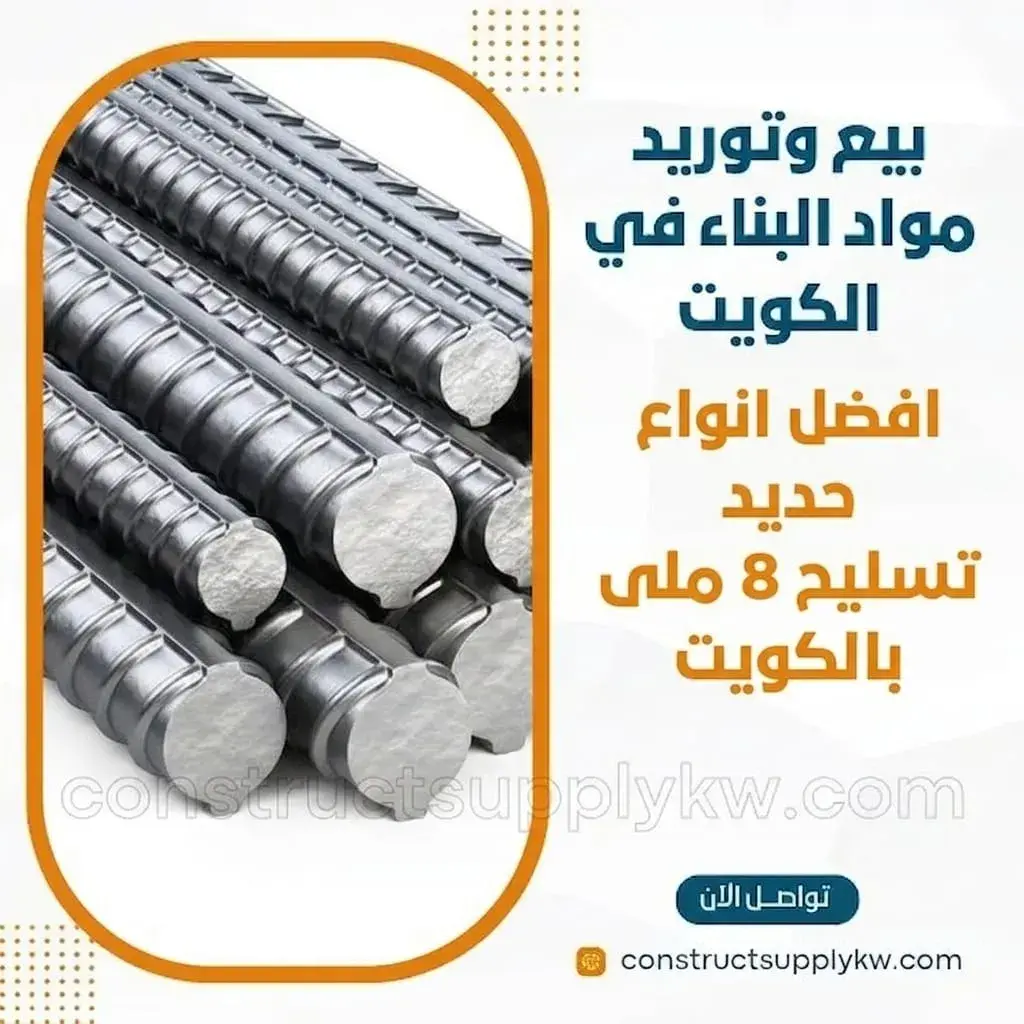
When discussing 8 mm rebar in Kuwait, it is important to understand that this reinforcement size was never designed to replace every other rebar diameter. Instead, it was specifically developed to perform particular structural functions within reinforced concrete elements according to the engineering calculations prepared by the structural designer. In most residential and commercial construction projects, this diameter is commonly used for stirrups in columns and beams, reinforcement mesh, and several secondary concrete components that are not subjected to major structural loads. Therefore, its effectiveness depends entirely on being installed in the correct structural location rather than being selected simply because it is more economical.
Through continuous observation of construction projects across Kuwait over recent years, it has become evident that companies committed to engineering specifications from the very beginning of the procurement process consistently achieve superior construction quality compared to projects relying on reinforcement supplied from unknown sources. High-quality reinforcing steel features consistent diameter, accurate weight, and properly formed ribs on the surface of the bar, all of which improve the bond between concrete and steel after casting. Premium products also maintain their mechanical properties during cutting and bending operations carried out in fabrication workshops without developing cracks or fractures that could compromise the structural integrity of the reinforced concrete member.
Another advantage of this diameter is the speed and efficiency it provides during construction. An 8 mm reinforcing bar offers excellent flexibility, allowing fabrication teams to shape reinforcement accurately while maintaining the dimensions specified in structural drawings. Consequently, contractors rely heavily on this size when producing large quantities of stirrups because it can be processed efficiently without requiring heavy fabrication equipment or complicated forming procedures. On professionally managed projects, procurement quantities are determined according to approved bar schedules rather than rough estimates, since either shortages or excessive purchases may delay construction progress or unnecessarily increase project costs.
One of the most common misconceptions among project owners is assuming that every 8 mm reinforcing bar available on the market offers identical quality. In reality, significant differences may exist between manufacturers regarding raw material quality, production accuracy, and quality control procedures performed before the product reaches the market. For this reason, a reliable supplier does more than simply sell reinforcement bars; they also provide certificates of conformity and laboratory test reports demonstrating full compliance with applicable engineering standards.
Based on practical experience within Kuwait's construction materials market, the best project outcomes are consistently achieved when reinforcing steel is sourced from reputable manufacturers and stored correctly in dry conditions away from standing water, moisture, and contaminants until installation begins.
-
Commonly used for column and beam stirrups according to approved structural drawings.
-
Frequently incorporated into reinforcement mesh requiring smaller bar diameters with uniform spacing.
-
Offers excellent flexibility for cutting and bending while maintaining its mechanical properties when fabricated correctly.
-
Improves productivity during reinforcement preparation in fabrication yards and construction sites.
-
Should always be purchased from reputable manufacturers that provide compliance certificates.
-
Must never be replaced with another diameter without approval from the structural engineer.
-
Proper storage helps preserve steel quality until installation.
-
High-quality surface ribs significantly improve the bond between reinforcement and concrete.
-
Its application is determined by structural calculations rather than cost considerations.
-
Selecting a trusted supplier minimizes the risk of receiving non-compliant reinforcement.
mm Rebar Price in Kuwait 8
Searching for the 8 mm rebar price in Kuwait is one of the first steps taken by project owners and contractors before construction begins. However, identifying the actual market price requires much more than reviewing a single quotation because reinforcing steel prices fluctuate continuously under the influence of both local and international market conditions. Global raw material prices, energy costs, international shipping expenses, and the level of demand within Kuwait all directly influence the final price paid by the customer.
Prices also differ from one supplier to another depending on the source of the steel and the services included with the purchase. While one supplier may only provide the material itself, another may include additional services such as rapid delivery, unloading, quality certification, and scheduled deliveries aligned with project milestones. Consequently, comparing quotations requires evaluating the complete value of the service rather than simply comparing the listed price per ton.
On large-scale developments, many contractors prefer signing long-term supply agreements that help stabilize pricing or reduce the impact of market fluctuations throughout the construction period, particularly for projects extending over several months. Smaller developments often benefit from purchasing reinforcement in phases, reducing long-term storage requirements while allowing buyers to take advantage of favorable market price movements whenever opportunities arise.
Practical experience in Kuwait's construction sector demonstrates that many buyers make the mistake of selecting the lowest available quotation without verifying the manufacturer's reputation or reviewing quality certifications. They later discover discrepancies in weight or experience difficulties obtaining consultant approval for the delivered materials. Such issues often generate losses that significantly exceed the initial savings achieved by purchasing cheaper steel.
For this reason, detailed quotations should always include the manufacturer, steel grade, applicable standards, delivery schedule, transportation conditions, and any additional services so that buyers can make objective comparisons based on overall value rather than price alone.
-
Compare quotations only after confirming the same manufacturer, steel grade, and specifications.
-
Ask whether transportation costs are included, especially for projects outside major delivery areas.
-
Verify that quality certificates are included whenever required.
-
Never base purchasing decisions solely on the lowest quoted price.
-
Monitor market trends when purchasing large quantities.
-
Consider fixed-price supply agreements for long-duration projects.
-
Review replacement policies for non-compliant deliveries.
-
Evaluate the complete service package instead of material cost alone.
-
Choose suppliers with proven delivery reliability.
-
Purchasing from reputable suppliers often reduces indirect project costs over time.
Weight of an 8 mm Rebar
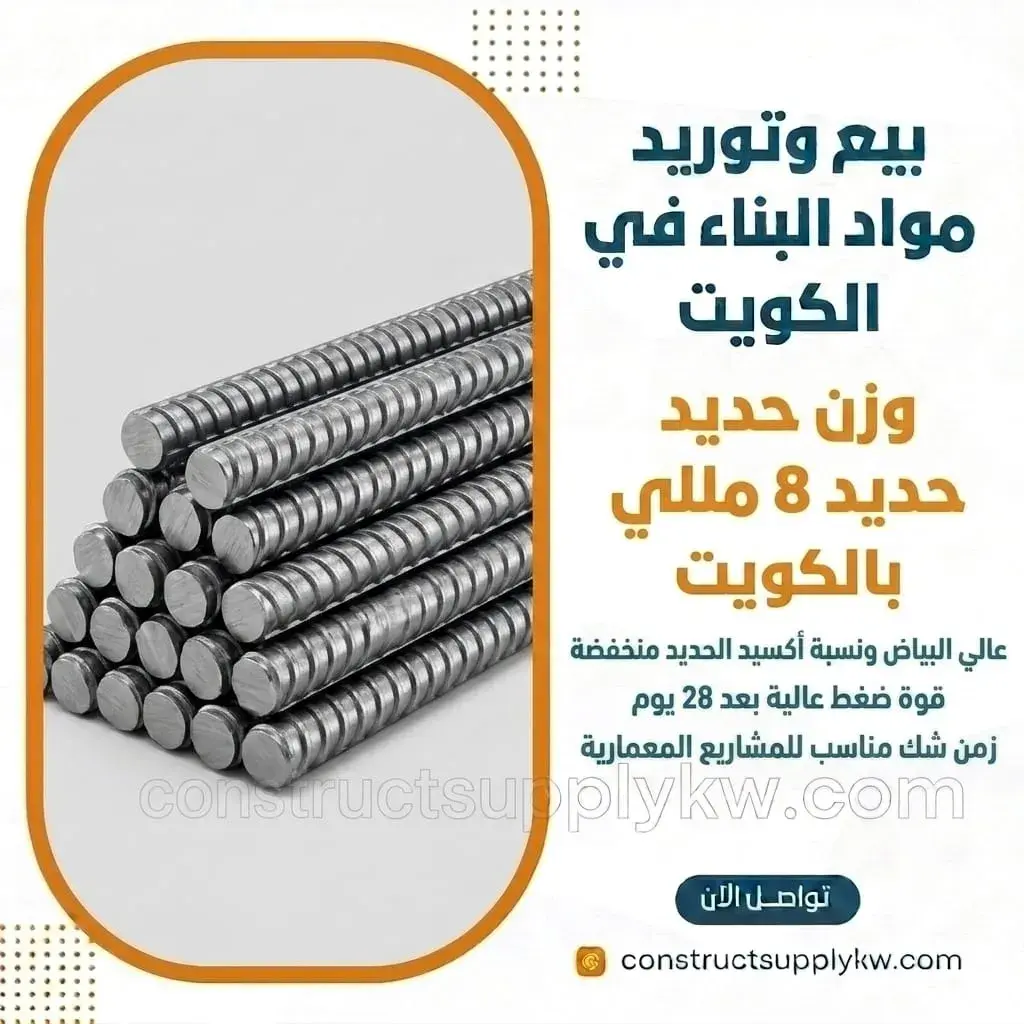
The weight of an 8 mm rebar is one of the most important technical indicators used by engineers and consultants when inspecting reinforcement deliveries because weight is not only essential for quantity calculations but also serves as a practical indicator of compliance with recognized engineering standards. The theoretical weight of an 8 mm reinforcing bar is approximately 0.395 kilograms per meter, while the approximate weight of a standard 12-meter bar is 4.74 kilograms, according to internationally accepted engineering formulas used for calculating reinforcing steel weights.
For this reason, project inspection teams do not rely solely on measuring the bar diameter. Some lower-quality products may appear visually identical while containing less steel than required, resulting in a weight below the permitted tolerance. Accordingly, random samples are selected from every shipment and weighed using calibrated equipment before being compared with the theoretical values specified in the applicable standards. Only after successful verification is the shipment approved for use on site.
Accurate weight measurements also play a vital role during quantity surveying, budgeting, procurement planning, and verification of delivered materials. On major construction projects, project management systems use actual reinforcement weights to monitor steel consumption, evaluate work progress, and control costs throughout the construction process. Consequently, weight accuracy serves both technical and financial management functions simultaneously.
Practical experience further demonstrates that suppliers who consistently maintain standard weights across all production batches provide greater confidence to contractors and consultants while reducing the likelihood of shipment rejection or additional inspection delays. This contributes directly to smoother project execution and improved construction efficiency.
-
The theoretical weight is approximately 0.395 kg per meter.
-
A standard 12-meter bar weighs approximately 4.74 kg.
-
Weight verification confirms compliance with engineering specifications.
-
Accurate weight simplifies quantity estimation and procurement planning.
-
Weight discrepancies may indicate manufacturing deficiencies.
-
Random samples should be weighed before shipment approval.
-
Calibrated weighing equipment should always be used.
-
Accurate weights improve project cost calculations.
-
Weight inspection is a fundamental part of reinforcement acceptance procedures.
-
Consistent product quality increases confidence in supplied materials.
Reinforcing Steel Weight Table
A reinforcing steel weight table is one of the most valuable technical references used daily by structural engineers, quantity surveyors, procurement managers, and contractors because it provides precise theoretical weights for every rebar diameter used in reinforced concrete construction. Its importance extends far beyond simple weight calculations. It serves as the foundation for estimating project quantities, preparing procurement schedules, reviewing supplier deliveries, and verifying that the reinforcement delivered to the construction site matches both the approved structural drawings and the bill of quantities. In Kuwait's construction industry, where projects often involve thousands of reinforcing bars and significant steel tonnage, even a minor error in weight calculations can result in substantial financial losses or procurement delays.
The primary advantage of using an accurate reinforcing steel weight table is that it allows engineers to convert reinforcement schedules into precise material quantities before purchasing begins. Instead of relying on rough estimates, every bar diameter and length can be translated into an exact theoretical weight using internationally accepted engineering formulas. This accuracy improves budgeting, minimizes material shortages, reduces unnecessary stock, and allows procurement teams to negotiate with suppliers based on verified quantities rather than assumptions.
Weight tables are also essential during material inspection. Consultants frequently compare the actual weight of delivered reinforcement against theoretical values published in engineering references. Significant differences may indicate manufacturing defects, reduced steel content, or products that do not comply with applicable specifications. Detecting such discrepancies before installation prevents potentially serious structural issues while protecting project owners from receiving substandard materials.
In addition, modern structural design software and quantity surveying applications automatically generate reinforcement schedules based on these standardized weight values. This integration enables contractors to monitor steel consumption throughout every construction phase while improving inventory management and reducing material waste. As a result, maintaining an updated reinforcing steel weight table on every construction project has become a standard professional practice that supports engineering accuracy from the design stage through project completion.
-
Provides theoretical weights for every reinforcing bar diameter.
-
Improves the accuracy of quantity surveying and procurement planning.
-
Helps verify delivered steel against engineering specifications.
-
Reduces estimation errors during project budgeting.
-
Supports inventory control throughout construction.
-
Enables accurate comparison between theoretical and actual weights.
-
Assists consultants during material inspection procedures.
-
Reduces unnecessary material waste on construction sites.
-
Forms an essential reference for quantity surveyors and structural engineers.
-
Supports efficient project cost management from procurement to completion.
8mm Rebar Diameter
.webp)
The 8 mm rebar diameter represents a carefully engineered structural dimension rather than simply a measurement of the steel bar itself. Every reinforcing bar diameter specified in structural drawings is selected after detailed calculations evaluating loads, bending moments, shear forces, crack control requirements, and reinforcement spacing. Therefore, an 8 mm reinforcing bar should never be viewed as a cheaper substitute for larger diameters. Instead, it is intended for structural elements specifically designed to utilize this size, including stirrups, reinforcement mesh, temperature reinforcement, and other secondary applications where engineering calculations demonstrate that this diameter provides the required structural performance.
A common misconception among some project owners is that increasing the bar diameter automatically improves structural safety. In reality, replacing an 8 mm bar with a larger diameter without engineering approval may actually reduce construction quality. Larger bars occupy more space inside reinforced concrete members, potentially affecting concrete placement, reinforcement spacing, concrete cover, and overall structural behavior. Structural design depends on achieving an optimal balance between steel area, reinforcement distribution, and concrete performance rather than simply maximizing bar size.
Another important consideration is the distinction between nominal diameter and actual manufactured diameter. Reputable manufacturers maintain strict production tolerances to ensure every reinforcing bar remains within the dimensional limits specified by international standards. Inferior products may exhibit noticeable dimensional variations that directly affect weight, cross-sectional area, and ultimately structural capacity. Consequently, consultants frequently measure reinforcement diameters during material inspections, particularly on government projects or developments requiring rigorous quality assurance.
From a construction perspective, the 8 mm diameter offers excellent workability. Its flexibility allows fabrication teams to produce stirrups and detailed reinforcement shapes efficiently while maintaining dimensional accuracy. This improves productivity in reinforcement workshops and reduces installation time without compromising structural performance, provided fabrication follows approved engineering procedures.
-
Selected according to structural calculations rather than cost.
-
Commonly used for stirrups and secondary reinforcement.
-
Larger diameters should never replace it without engineering approval.
-
Dimensional accuracy directly affects structural performance.
-
Nominal diameter must comply with international manufacturing tolerances.
-
Proper diameter improves reinforcement spacing inside concrete.
-
Offers excellent flexibility during fabrication.
-
Supports accurate production of reinforcement cages.
-
Frequently inspected during quality control procedures.
-
Reliable manufacturers maintain consistent dimensional accuracy across all production batches.
Standard Length of an 8 mm Rebar
The standard length of an 8 mm rebar supplied throughout Kuwait is generally 12 meters, which has become the international standard adopted by most reinforcing steel manufacturers worldwide. This standardization simplifies transportation, handling, fabrication, quantity calculations, and storage while allowing engineers to prepare reinforcement schedules using consistent dimensions across virtually every construction project. Because reinforcement detailing is typically based on standard bar lengths, contractors can optimize cutting schedules, minimize waste, and improve fabrication efficiency throughout the construction process.
Professional contractors rarely cut reinforcing bars randomly. Instead, they prepare detailed cutting schedules based on structural drawings to maximize material utilization from every 12-meter bar. Modern reinforcement optimization software analyzes required lengths and generates cutting plans that significantly reduce waste while maintaining full compliance with structural requirements. Even small improvements in cutting efficiency can produce considerable savings on projects consuming hundreds or thousands of tons of reinforcement.
Proper handling and storage are equally important. Standard-length reinforcing bars should always be stacked on elevated supports to prevent direct contact with soil or standing water. Adequate ventilation should be maintained around stored reinforcement to minimize surface corrosion before installation. During transportation, suitable lifting equipment should be used to prevent excessive bending, twisting, or impact damage that could complicate fabrication or require unnecessary corrective work before installation.
Experience from construction projects across Kuwait consistently demonstrates that adherence to standard bar lengths improves coordination between suppliers, contractors, and reinforcement fabrication teams. It simplifies inventory management, accelerates material inspections, facilitates quantity verification, and contributes to smoother project execution from procurement through final installation.
-
The internationally recognized standard length is 12 meters.
-
Standard lengths simplify transportation and handling.
-
Improve reinforcement fabrication efficiency.
-
Reduce waste through optimized cutting schedules.
-
Support accurate quantity surveying.
-
Simplify material inspections during delivery.
-
Should be stored above ground on suitable supports.
-
Proper handling prevents unnecessary deformation.
-
Compatible with most structural detailing practices.
-
Improve coordination between suppliers and construction teams.
ASTM Specifications for Reinforcing Steel
.webp)
ASTM specifications for reinforcing steel are among the most widely recognized engineering standards in the global construction industry. They establish comprehensive technical requirements governing the manufacture, testing, mechanical performance, chemical composition, dimensional tolerances, and quality control procedures for reinforcing bars used in reinforced concrete structures. Rather than serving as a simple manufacturing guideline, ASTM standards create a consistent benchmark that enables engineers, consultants, contractors, and project owners to evaluate reinforcing steel based on objective engineering criteria instead of relying solely on the manufacturer's reputation or commercial claims. This standardization has become especially important in Kuwait, where many construction projects utilize reinforcement produced by different local and international manufacturers while maintaining the same engineering quality requirements.
One of the most commonly referenced standards is ASTM A615, which specifies the requirements for deformed and plain carbon-steel reinforcing bars used in concrete reinforcement. Depending on project requirements, consultants may also specify ASTM A706, particularly for structures requiring improved weldability or enhanced ductility under demanding structural conditions. Each specification establishes minimum requirements for yield strength, tensile strength, elongation, dimensional tolerances, rib geometry, and manufacturing quality, ensuring that reinforcing bars can safely perform throughout the design life of the structure.
Compliance with ASTM standards, however, should never be interpreted as a substitute for project-specific quality verification. Professional construction practice requires consultants to review mill certificates, examine laboratory test reports, verify batch identification numbers, and compare the supplied reinforcement with the structural specifications before approving any shipment for installation. This multi-layer verification process protects construction quality by ensuring that every delivery satisfies both international standards and the project's contractual requirements.
Practical experience across Kuwait's construction sector demonstrates that projects supplied by manufacturers operating comprehensive quality management systems generally experience fewer consultant observations, fewer rejected shipments, and smoother inspection procedures. This consistency ultimately contributes to higher construction quality, improved structural reliability, and greater confidence among all project stakeholders. Consequently, ASTM compliance should always be considered one of the primary evaluation criteria when selecting reinforcing steel suppliers rather than simply another document included with the shipment.
-
ASTM standards establish internationally recognized quality requirements for reinforcing steel.
-
They define mechanical properties including yield strength, tensile strength, and elongation.
-
Dimensional tolerances and rib geometry are carefully regulated.
-
ASTM A615 is commonly specified for carbon-steel reinforcing bars.
-
ASTM A706 is frequently selected for projects requiring enhanced weldability or ductility.
-
Compliance certificates should always be verified before material acceptance.
-
Laboratory testing remains essential even when ASTM certification is provided.
-
Consultants compare supplied reinforcement with project specifications before approval.
-
ASTM compliance improves quality consistency across different manufacturers.
-
Choosing ASTM-compliant reinforcement significantly enhances long-term structural reliability.
Reinforcing Steel Code
The reinforcing steel code represents the complete engineering framework governing the design, detailing, fabrication, placement, inspection, and acceptance of reinforcing steel in reinforced concrete construction. Many people mistakenly believe that building codes simply determine how much steel should be installed. In reality, modern structural codes regulate virtually every aspect of reinforcement design, including reinforcement spacing, lap splice lengths, anchorage requirements, concrete cover, bend diameters, stirrup configuration, development length, placement tolerances, and inspection procedures. Together, these requirements ensure that reinforcing steel and concrete function as a single structural system capable of safely resisting all anticipated service loads throughout the building's design life.
Construction projects in Kuwait typically follow internationally recognized structural codes specified within the project documents, including American, British, or other approved engineering standards depending on the project's design philosophy and client requirements. Consequently, every reinforcement detail shown on structural drawings is based on extensive engineering calculations rather than construction preference. Even seemingly minor modifications—such as relocating a lap splice, reducing concrete cover, or altering bend geometry—can significantly influence structural performance and therefore require formal engineering approval before implementation.
The reinforcing steel code also establishes durability requirements that are particularly important in Kuwait's environmental conditions. Proper concrete cover protects reinforcing steel from moisture penetration, chloride exposure, and long-term corrosion while maintaining the bond between steel and concrete. The code further specifies methods for securing reinforcement before concrete placement to prevent movement during casting, ensuring that reinforcing bars remain precisely in the positions assumed during structural design calculations.
Experience gained from professionally managed construction projects consistently demonstrates that strict code compliance reduces construction errors, minimizes consultant comments during inspections, and significantly improves the long-term performance of reinforced concrete structures. Rather than viewing structural codes as administrative requirements, experienced engineers recognize them as practical engineering tools developed from decades of research, testing, and real-world structural performance. Following these codes throughout every stage of construction remains one of the most effective ways to ensure structural safety, durability, and quality.
-
Structural codes regulate every stage of reinforcement design and installation.
-
They specify reinforcement spacing, lap lengths, anchorage, and concrete cover.
-
Bend diameters and reinforcement detailing are defined by engineering standards.
-
Construction modifications require structural engineer approval.
-
Proper code compliance improves long-term durability.
-
Concrete cover requirements help protect reinforcement against corrosion.
-
Reinforcement positioning during concrete placement is strictly regulated.
-
Codes are based on extensive engineering research and practical experience.
-
Compliance reduces construction defects and consultant observations.
-
Following approved structural codes significantly enhances project quality and safety.
Reinforcing Steel Quality Testing
.webp)
Reinforcing steel quality testing is one of the most critical procedures performed before any shipment is approved for use in a construction project because the external appearance of a reinforcing bar alone cannot determine whether it satisfies the structural requirements specified by the design engineer. A bar may appear perfectly straight, clean, and properly ribbed while still failing to achieve the required mechanical properties established by international standards. For this reason, professionally managed construction projects throughout Kuwait follow comprehensive inspection and testing procedures before reinforcement is incorporated into reinforced concrete elements. The quality verification process begins by reviewing the manufacturer's mill certificates, confirming the production batch number, checking the steel grade, and ensuring that every delivered bundle corresponds exactly with the approved project documentation.
Following the documentation review, representative samples are randomly selected and submitted to accredited laboratories for mechanical testing. These laboratory procedures typically include yield strength testing, tensile strength testing, and elongation measurements, each of which evaluates a different aspect of structural performance. Yield strength determines the stress level at which permanent deformation begins, tensile strength measures the maximum load the bar can withstand before failure, and elongation evaluates ductility, which is essential for maintaining structural integrity under service conditions. Additional inspections include verifying the actual diameter, theoretical weight, rib configuration, straightness, and overall dimensional accuracy of each reinforcing bar to ensure complete compliance with the applicable engineering specifications.
Large-scale government and infrastructure projects may require even more comprehensive testing programs, including chemical composition analysis and additional quality verification procedures whenever specified by the project consultant. Practical experience has repeatedly shown that relying solely on the manufacturer's certificates without conducting independent verification increases project risk, particularly when reinforcement is sourced from multiple suppliers. Independent laboratory testing provides objective confirmation that every shipment satisfies both international standards and project-specific engineering requirements before installation begins.
Within Kuwait's construction industry, reputable reinforcing steel suppliers typically provide complete documentation together with recent laboratory reports issued by recognized testing facilities. This commitment to transparency significantly simplifies material acceptance procedures, increases consultant confidence during inspections, and minimizes construction delays caused by rejected deliveries. Ultimately, investing in thorough quality testing before concrete placement is considerably less expensive than addressing structural deficiencies after construction has progressed, making quality verification one of the most valuable investments in any reinforced concrete project.
-
Review mill certificates before accepting any reinforcement shipment.
-
Verify production batch numbers against manufacturer documentation.
-
Perform yield strength testing according to applicable engineering standards.
-
Conduct tensile strength testing to evaluate structural performance.
-
Measure elongation to confirm adequate ductility.
-
Inspect bar diameter, theoretical weight, and rib geometry.
-
Submit representative samples to accredited testing laboratories.
-
Reject any shipment that fails to satisfy project specifications.
-
Maintain complete testing records as part of project quality documentation.
-
Work with suppliers who consistently provide independently verified laboratory reports.
Best Reinforcing Steel in Kuwait
Selecting the best reinforcing steel in Kuwait involves far more than choosing the most recognizable manufacturer or comparing the lowest available prices. High-quality reinforcing steel is the result of an integrated manufacturing and quality management process that begins with carefully controlled raw materials, continues through advanced production technologies, and concludes with rigorous inspection, laboratory testing, and proper storage before delivery. Consequently, the best reinforcing steel is defined not only by its strength but also by the consistency of its quality across every production batch, ensuring predictable structural performance throughout the service life of the building.
Experienced structural engineers evaluate reinforcing steel using several technical criteria rather than relying on marketing claims. These criteria include compliance with internationally recognized standards such as ASTM specifications, consistent mechanical properties, accurate dimensional tolerances, reliable manufacturing quality control systems, and complete documentation supporting every shipment. A trusted supplier should also demonstrate the ability to provide uninterrupted deliveries according to project schedules while maintaining identical quality throughout all supplied quantities. This consistency becomes particularly important on large developments where reinforcement is delivered over several months.
Another distinguishing characteristic of leading reinforcing steel suppliers is the technical support they provide beyond the sale itself. Professional suppliers assist contractors in calculating reinforcement quantities, interpreting reinforcement schedules, coordinating phased deliveries, and ensuring that the correct steel grades and diameters are supplied for every stage of construction. These additional services reduce procurement errors, minimize storage costs, improve construction efficiency, and help maintain project schedules without .unnecessary interruptions
Storage and handling conditions also contribute significantly to overall product quality. Even premium reinforcing steel can suffer unnecessary deterioration if stored improperly before delivery. Reputable suppliers maintain organized storage facilities that protect reinforcement from excessive moisture, contamination, and physical damage while preserving identification markings required for inspection and traceability. Proper logistics management ensures that reinforcement arrives at the construction site in excellent condition and ready for immediate inspection and installation.
Ultimately, the best reinforcing steel in Kuwait is not necessarily the least expensive option. Instead, it is the product that consistently satisfies engineering specifications, demonstrates verified quality through laboratory testing, maintains reliable availability, and is supported by a supplier committed to technical excellence, professional service, and long-term customer confidence. Choosing such reinforcement represents an investment in structural safety, construction quality, and the long-term durability of the entire project.
-
Select manufacturers with proven quality management systems.
-
Confirm compliance with international engineering standards before purchasing.
-
Request recent laboratory test reports for every shipment.
-
Verify consistency between different production batches.
-
Evaluate supplier reliability in addition to product quality.
-
Choose suppliers capable of maintaining scheduled deliveries.
-
Consider technical support and engineering assistance during procurement.
-
Ensure reinforcement is stored under appropriate environmental conditions.
-
Compare total project value rather than purchase price alone.
-
High-quality reinforcing steel reduces long-term maintenance risks and improves structural durability.
Conclusion
8 mm rebar in Kuwait remains one of the most important reinforcing steel sizes used in modern construction when applied according to structural design requirements and supplied by reputable manufacturers committed to international quality standards. Throughout this guide, we have examined every major aspect that engineers, contractors, consultants, and project owners should understand before purchasing or specifying this reinforcement size. From its structural applications, theoretical weight, standard dimensions, and weight tables to ASTM specifications, structural codes, quality testing procedures, and supplier selection criteria, every factor contributes to ensuring that reinforcing steel performs exactly as intended throughout the service life of the structure.
The guide also demonstrates that purchasing decisions should never be based solely on price. Product quality, manufacturing consistency, verified laboratory testing, reliable delivery schedules, technical support, and supplier credibility all represent equally important considerations that directly influence construction quality and long-term structural performance. Working with an experienced supplier capable of providing certified reinforcing steel, complete quality documentation, and dependable logistical support significantly reduces construction risks while improving project efficiency and consultant approval processes.
Ultimately, investing in high-quality reinforcing steel is not simply an additional project expense. It is a direct investment in structural safety, construction reliability, long-term durability, and the overall success of the development. Selecting the right reinforcement from the beginning creates a stronger foundation for every stage of construction and helps ensure that the completed structure continues to perform safely and efficiently for decades to come.
Frequently Asked Questions
Can 8 mm rebar be used as the main reinforcement in columns and foundations?
In most structural designs, 8 mm reinforcing bars are not used as the primary reinforcement for columns or foundations. Instead, they are commonly specified for stirrups, reinforcement mesh, and secondary reinforcement applications as determined by the structural engineer.
What is the standard weight of a 12-meter 8 mm reinforcing bar?
The theoretical weight of a standard 12-meter 8 mm reinforcing bar is approximately 4.74 kilograms, although small manufacturing tolerances may be permitted under applicable engineering standards.
How can I verify the quality of reinforcing steel before purchasing?
Quality should be verified by reviewing mill certificates, examining laboratory test reports, confirming compliance with applicable engineering standards, checking theoretical weight and dimensions, and purchasing only from reputable manufacturers or authorized suppliers.
Why do prices for 8 mm reinforcing steel vary among suppliers in Kuwait?
Prices differ because of variations in manufacturing source, raw material costs, transportation expenses, delivery services, quality assurance programs, production standards, and additional services provided by each supplier.
Why is compliance with structural codes and international standards so important?
Structural codes and internationally recognized standards ensure that reinforcing steel is selected, fabricated, installed, and inspected according to proven engineering principles. Compliance improves structural safety, enhances durability, minimizes construction defects, and helps ensure that reinforced concrete structures perform reliably throughout their intended service life.