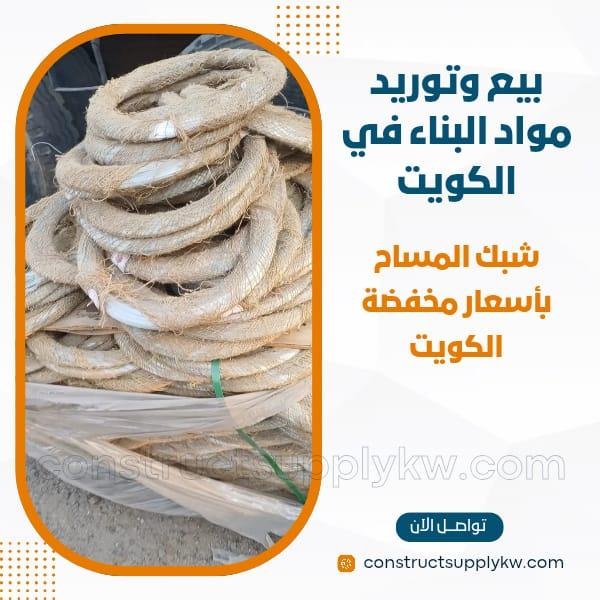
Plaster mesh has become one of the most important materials used in modern plastering systems because it plays a fundamental role in reinforcing transition areas between different construction materials, minimizing crack formation, and improving the long-term stability of plaster layers. With the growing variety of plaster mesh products available in the Kuwaiti market, including different materials, sizes, specifications, and applications, selecting the right product has become a technical engineering decision rather than simply choosing the lowest-priced option. Successful selection depends on understanding the characteristics of every mesh type, identifying the appropriate size for each application, evaluating technical specifications, and matching the product with the project's construction requirements. This comprehensive guide explains the different types of plaster mesh, their dimensions, engineering applications, and the factors influencing their prices while providing practical recommendations that help contractors, engineers, and project owners make informed purchasing decisions capable of achieving superior finishing quality and long-term project performance.
Why Isn't There One Single Type of Plaster Mesh Suitable for Every Project?
One of the most common misconceptions found on construction sites is the belief that all types of plaster mesh perform exactly the same function and differ only in price or manufacturer. Practical engineering experience demonstrates that this assumption is incorrect because every mesh type has been specifically developed to solve different construction challenges. Walls where reinforced concrete meets masonry blocks require reinforcement methods that differ from those used on solid masonry walls. Likewise, exterior façades exposed to continuous temperature fluctuations and weather conditions require different technical characteristics than interior walls operating in a relatively stable environment. For this reason, professional engineers begin by carefully studying the construction project before selecting any plaster mesh product. They evaluate the structural system, transition zones between building materials, plaster thickness, finishing systems, anticipated structural movement, and consultant specifications before determining the most appropriate mesh type. Product compatibility with plaster materials and finishing systems is also reviewed because even a high-quality product may fail to deliver satisfactory performance if it is used in the wrong application. Practical experience from numerous projects throughout Kuwait consistently demonstrates that selecting the appropriate plaster mesh from the beginning significantly reduces the possibility of future cracking, improves finishing quality, and minimizes repair work after project completion. Consequently, the wide variety of plaster mesh products available today should not be viewed as a marketing strategy but rather as a collection of specialized engineering solutions developed to satisfy the diverse technical requirements of modern construction projects.
How Do Engineers Select the Correct Mesh Type Before Comparing Prices?
When contractors or engineers begin purchasing plaster mesh, the first question should never be "How much does it cost?" Instead, the correct question is "What engineering function will this product perform within the project?" because this determines which product should be selected. Professional engineers therefore rely upon a comprehensive guide to plaster mesh types that connects each engineering application with the most appropriate product characteristics. If the objective is reinforcing transitions between different construction materials, the selected mesh will differ from the product designed for strengthening façade plaster systems or supporting thermal insulation applications. Mesh density, manufacturing methods, dimensions, and installation techniques all vary according to the intended engineering purpose. Only after identifying the correct application do engineers begin comparing products according to manufacturing quality, installation efficiency, compatibility with plaster materials, dimensional stability, and long-term performance. Price comparisons become the final step rather than the starting point. Practical experience from projects completed throughout Kuwait consistently demonstrates that this engineering methodology significantly reduces technical mistakes, prevents the purchase of unsuitable products, and saves considerable expenses by minimizing reconstruction work and premature maintenance. Consequently, professional engineers always determine the functional role of the plaster mesh before selecting a product, whereas purchasing decisions based primarily on price frequently lead to unsuitable material selection and avoidable construction problems.
When Is Fiberglass Mesh the Best Engineering Solution?
Fiberglass mesh has become one of the most widely used reinforcement materials in modern finishing systems because of several technical characteristics that make it highly effective for specific engineering applications. However, despite its popularity, it should never be considered the ideal solution for every project. Fiberglass mesh is valued for its lightweight construction, ease of transportation and installation, dimensional stability, and its ability to distribute stresses uniformly throughout plaster layers. It is widely used in thermal insulation systems, crack repair applications, and finishing systems requiring additional reinforcement without increasing structural loads. Nevertheless, selecting fiberglass mesh should never be based solely on product popularity. Engineers carefully evaluate mesh density, fiber quality, manufacturing processes, surface treatments, and compatibility with the plaster or mortar system specified for the project. They also verify that the product is supported by complete technical documentation confirming its long-term engineering performance. Practical experience from finishing projects throughout Kuwait consistently demonstrates that fiberglass mesh delivers outstanding results whenever it is used for the applications for which it was specifically designed. At the same time, other mesh types may provide superior performance under different engineering conditions. This clearly illustrates that successful material selection depends upon choosing the correct product for the intended application rather than simply selecting the most widely available or commonly recommended option.
How Does Crack-Resistant Mesh Extend the Service Life of Plaster Finishes?
Crack-resistant plaster mesh is one of the preventive engineering solutions widely adopted in modern construction projects to minimize the effects of stress caused by the natural movement of different construction materials and the normal shrinkage that occurs within plaster layers after installation. Its primary purpose is not to eliminate every possible crack but rather to distribute internal stresses across a wider surface area so that excessive force is not concentrated at a single point where visible cracks are most likely to develop. For this reason, engineers commonly specify this type of mesh at the junctions between reinforced concrete and masonry blocks, around windows and door openings, and in areas exposed to repeated thermal expansion and contraction or significant structural movement. Product selection is always based on a detailed engineering assessment of the project's cracking risks rather than treating the mesh as an optional precaution. Engineers also evaluate mesh density, installation methods, compatibility with plaster thickness, and the mortar system specified for the project because all of these factors directly influence long-term performance after installation. Practical experience from maintenance and rehabilitation work across numerous projects in Kuwait consistently demonstrates that correctly installed crack-resistant mesh significantly improves finishing durability, reduces the frequency of surface crack repairs, and extends the operational life of plaster systems. Consequently, this product should be viewed as a long-term engineering investment in construction quality rather than simply another material included within the project's procurement budget.
How Are Mesh Sizes Selected for Different Construction Applications?
Selecting the correct plaster mesh sizes should never depend solely on what happens to be available in a warehouse or offered by a supplier. Instead, size selection begins with a thorough engineering evaluation of the intended application because mesh dimensions directly influence installation efficiency, material waste, stress distribution, and the overall quality of plastering work. Engineers first review the construction drawings to identify every location requiring reinforcement before selecting dimensions that minimize unnecessary cutting while covering the largest possible installation area with the fewest joints. Roll width, roll length, handling convenience, and installation productivity are also considered, particularly in large-scale projects where labor efficiency and execution speed play major roles in controlling project costs. In many developments, multiple mesh sizes are specified within the same building because façade systems, interior walls, transition zones, and structural openings often require different reinforcement strategies. Practical experience from construction projects throughout Kuwait consistently demonstrates that selecting appropriate mesh dimensions not only reduces material waste but also improves workmanship quality, minimizes installation errors, increases labor productivity, and contributes directly to more stable and durable plaster finishes over the long term.
What Is the Practical Difference Between Interior Wall Mesh and Façade Mesh?
Although every plaster mesh product is ultimately designed to reinforce plaster layers and reduce the possibility of cracking, interior wall mesh and façade mesh are selected according to entirely different engineering considerations because the environmental conditions affecting each application vary significantly. Interior walls generally operate within stable temperature and humidity conditions, allowing engineers to select reinforcement products primarily according to wall construction methods, building materials, plaster thickness, and interior finishing requirements. Exterior façades, however, remain continuously exposed to sunlight, seasonal temperature fluctuations, humidity variations, wind, and other environmental influences capable of affecting long-term plaster performance. Consequently, façade reinforcement systems must be selected according to their ability to maintain structural stability under these demanding operating conditions. Engineers also evaluate compatibility with exterior finishing systems, whether traditional cement plaster, modern multilayer rendering systems, or insulated façade assemblies. Practical experience from numerous projects across Kuwait consistently demonstrates that assigning the appropriate mesh type to each operating environment significantly improves finishing durability, reduces the likelihood of plaster separation or cracking, and extends the service life of building façades. Conversely, using a single mesh type throughout every part of a building without considering environmental conditions often produces inferior engineering results despite the quality of the product itself.
When Does a Project Require Exterior Wall Mesh with Different Engineering Specifications?
Exterior wall mesh should never be selected using the same criteria applied to interior reinforcement because building façades represent the most environmentally exposed part of any structure. Exterior plaster systems continuously experience intense sunlight, high temperatures, seasonal temperature variation, humidity, wind exposure, and natural thermal expansion and contraction throughout the building's operational life. Consequently, engineers begin by evaluating the complete façade system before selecting the appropriate reinforcement mesh. This evaluation includes reviewing the plastering method, render thickness, wall construction materials, thermal insulation systems, decorative finishing layers, and the anticipated movement characteristics of the façade. Product dimensional stability, manufacturing quality, material composition, and the ability to maintain engineering performance after installation beneath plaster layers are all carefully examined before approval. For major residential, commercial, and governmental developments, engineers also verify that every production batch supplied to the project maintains identical technical specifications because inconsistency between deliveries can negatively affect long-term façade performance. Practical experience from villas, apartment complexes, commercial buildings, and institutional projects throughout Kuwait consistently demonstrates that selecting exterior wall mesh according to these engineering principles significantly reduces the possibility of surface cracking, plaster separation, and premature façade deterioration. Properly selected exterior reinforcement therefore contributes not only to structural durability but also to preserving the architectural appearance of the building for many years after project completion.
How Do Mesh Classifications Help Engineers Select the Right Product for Each Finishing System?
The Kuwaiti construction materials market offers numerous plaster mesh classifications, leading some buyers to believe that these classifications exist merely because different manufacturers market their products differently. In reality, every classification has been developed to satisfy a specific engineering application within modern finishing systems. Some reinforcement meshes are intended for traditional cement plaster, others are designed specifically for external thermal insulation systems, while additional products have been developed for reinforcing transitions between different structural materials or supporting specialized multilayer finishing systems. Professional engineers therefore begin by identifying the finishing system specified for the project before reviewing the technical characteristics required at each construction stage. They then select the mesh classification capable of delivering the highest degree of compatibility with the complete finishing assembly. Installation efficiency, compatibility with bonding materials, labor productivity, and the overall influence on finishing quality are also evaluated before procurement decisions are finalized. Practical experience from construction projects throughout Kuwait consistently demonstrates that selecting the correct mesh classification reduces installation errors, improves construction quality, increases labor efficiency, and minimizes the need for corrective work after completion. Conversely, using an unsuitable classification frequently results in reduced finishing performance even when every other construction material used within the project satisfies engineering requirements.
How Should Contractors Compare Technical Specifications and Prices Before Purchasing?
When reviewing the technical specifications of each plaster mesh type, contractors and project owners often discover significant differences in pricing. At first glance, the least expensive product may appear to offer the greatest financial advantage. Professional engineering evaluation, however, focuses on total value rather than purchase price alone. Engineers begin by reviewing material composition, mesh density, dimensional characteristics, manufacturing quality, recommended engineering applications, and compatibility with the intended plastering system before considering commercial pricing. They also evaluate the product throughout its complete service life because reinforcement capable of maintaining stable plaster performance and minimizing future maintenance often delivers greater financial savings despite a higher initial purchase price. Contractors additionally assess supplier reliability, delivery schedules, consistency between manufacturing batches, product availability in multiple dimensions, and the quality of technical support because these operational factors directly influence project execution. Practical experience from construction projects across Kuwait consistently demonstrates that the best purchasing decisions result from balancing technical specifications, engineering performance, project requirements, manufacturing quality, and commercial pricing rather than selecting the lowest-priced product alone. In successful construction management, price is treated as one component within a comprehensive engineering evaluation rather than the primary basis for procurement.
How Does a Comprehensive Guide to Plaster Mesh Types Help Reduce Construction Errors?
A professional guide to plaster mesh types serves as a practical engineering reference for contractors, consultants, site engineers, and finishing specialists because it connects the technical characteristics of each reinforcement product with its correct construction application. Relying solely on personal experience or using the same mesh type throughout every area of a project often results in unsatisfactory performance, even when plastering work has been executed professionally. For this reason, experienced construction companies begin their material approval process by reviewing a structured classification guide that identifies the intended installation location, wall construction type, finishing system, and environmental conditions before selecting the appropriate reinforcement product. Such guides clearly distinguish between situations requiring fiberglass mesh, applications demanding crack-resistant mesh, reinforcement designed specifically for façades, products intended for interior walls, and specialized solutions for exterior wall systems. Their value extends well beyond product selection because they also help train installation teams on correct application procedures while significantly reducing construction mistakes caused by selecting unsuitable reinforcement materials. Practical experience from numerous projects across Kuwait consistently demonstrates that developments following a structured engineering guide for mesh selection achieve noticeably higher finishing quality, require fewer corrective repairs, reduce material waste, and minimize reconstruction work. This is achieved because every reinforcement product is installed precisely where its engineering characteristics provide the greatest benefit, ultimately improving overall construction quality and extending the service life of plaster finishes.
Conclusion
Selecting plaster mesh can no longer be considered a routine purchasing decision based solely on product availability or the lowest market price. It has become an essential engineering decision that directly influences plaster durability, finishing quality, crack resistance, and the long-term performance of modern construction projects. Every type of plaster mesh has been specifically developed to satisfy particular engineering conditions, meaning successful project execution depends upon selecting the reinforcement system that matches the intended application rather than simply purchasing the most common or least expensive product. The better engineers understand the characteristics of different mesh types, the greater the quality of construction and the lower the likelihood of future maintenance problems after project completion.
Throughout this article, types of plaster mesh have been examined from a practical engineering perspective, demonstrating that product diversity is not merely the result of commercial competition but rather the outcome of addressing different structural and finishing requirements found within modern buildings. The discussion explained the situations in which fiberglass mesh provides the greatest engineering advantages while also highlighting the role of crack-resistant mesh in distributing internal stresses, improving plaster stability, and reducing the formation of shrinkage and movement-related cracks.
The article further explained the importance of selecting appropriate mesh sizes according to each construction application while describing the engineering differences between interior wall mesh, façade mesh, and exterior wall mesh operating under demanding environmental conditions. It also explored how various mesh classifications help engineers identify the most appropriate reinforcement product for each finishing system while demonstrating that proper classification significantly improves construction quality and reduces technical errors during execution.
Special attention was given to comparing the technical specifications of every mesh type together with their commercial prices, emphasizing that purchasing decisions should always be based upon engineering value rather than initial cost alone. In addition, the article introduced a comprehensive guide to plaster mesh types that assists contractors in matching each reinforcement product with its intended construction application while improving finishing quality, reducing waste, increasing execution efficiency, and minimizing future maintenance costs.
Practical experience from construction projects throughout Kuwait consistently demonstrates that the most successful plastering systems result from careful engineering analysis before materials are purchased. Engineers evaluate wall construction methods, plaster systems, environmental conditions, technical specifications, and long-term performance before selecting reinforcement products rather than relying upon pricing or product popularity. When this engineering methodology is followed, plaster mesh becomes an integral part of a complete construction quality system capable of delivering stronger, more durable, and more reliable plaster finishes.
Ultimately, understanding the available plaster mesh types, selecting the appropriate dimensions, reviewing the engineering specifications of every product, and matching each reinforcement system with its intended application provide the foundation for successful purchasing decisions. The more accurately these engineering principles are applied, the higher the quality of construction, the longer the service life of plaster finishes, and the greater the overall value achieved throughout the entire project.
Frequently Asked Questions
Which Types of Plaster Mesh Are Most Commonly Used in Kuwait?
The answer depends on the project type, but fiberglass mesh, crack-resistant mesh, façade reinforcement mesh, and transition reinforcement mesh are among the most widely used products in Kuwaiti construction projects.
Is Fiberglass Mesh Suitable for Every Construction Project?
No. Fiberglass mesh performs exceptionally well in specific engineering applications, but its selection should always be based on project requirements and the plastering system being used.
What Is the Main Purpose of Crack-Resistant Mesh?
Its primary function is to distribute internal stresses throughout plaster layers, reducing the likelihood of cracks caused by shrinkage, thermal movement, or differences between adjoining construction materials.
How Are Plaster Mesh Sizes Selected?
Mesh dimensions are selected according to the intended application, plaster thickness, wall dimensions, construction methods, and engineering requirements while minimizing waste during installation.
Is Façade Mesh Different from Interior Wall Mesh?
Yes. Exterior façades operate under significantly different environmental conditions than interior walls, requiring reinforcement products specifically designed for outdoor performance.
When Should Exterior Wall Mesh Be Used?
It should be used on building façades and other exterior areas exposed to weather conditions, with selection based on finishing systems, environmental exposure, and engineering specifications.
Why Are There So Many Different Mesh Classifications?
Different classifications exist because each one has been engineered for a particular finishing system or construction application, allowing engineers to optimize reinforcement performance for every project.
Should Price Be the Main Factor When Purchasing Plaster Mesh?
No. Technical specifications, manufacturing quality, intended application, durability, and long-term engineering performance should always be evaluated before comparing prices.
How Does a Guide to Plaster Mesh Types Help Contractors?
It helps contractors match every reinforcement product with the correct engineering application, reduces selection mistakes, improves finishing quality, and minimizes construction defects.
What Is the Most Important Criterion When Purchasing Plaster Mesh?
The most important consideration is selecting a product that fully matches the project's engineering requirements, technical specifications, installation conditions, and long-term performance objectives rather than simply choosing the lowest-priced option.