Lightweight Insulated Blocks Thermal and Acoustic Solution in Kuwait
With Kuwait experiencing extremely high temperatures throughout most of the year and air conditioning systems operating almost continuously, selecting building materials that improve thermal performance and reduce heat transfer has become an essential design decision from the earliest stages of construction rather than an optional finishing upgrade. Among the most effective modern solutions are lightweight insulated blocks, which combine reduced weight with excellent thermal and acoustic insulation while maintaining construction quality and installation efficiency. As a result, many residential, commercial, and institutional developments now rely on this type of masonry to reduce electricity consumption and improve indoor comfort. The overall performance of insulated blocks depends on manufacturing quality, proper installation, and compatibility with the project's structural and insulation requirements, making a thorough understanding of their properties an important step before making purchasing or construction decisions.
Insulated Blocks
.webp)
When discussing insulated blocks, the term refers to far more than simply a lighter masonry unit. It describes a specially engineered construction material designed to minimize heat transfer and reduce sound transmission through walls while maintaining adequate structural performance and long-term stability. These blocks achieve their insulating properties through carefully selected raw materials or manufacturing technologies that create microscopic air pockets or incorporate materials with low thermal conductivity, significantly limiting the movement of heat between the exterior and interior of a building. In Kuwait's climate, where outdoor temperatures often reach extreme levels during the summer months, this characteristic becomes especially valuable because exterior walls represent one of the largest pathways through which heat enters a building. Practical experience from numerous residential developments has shown that buildings constructed with insulated blocks maintain indoor comfort more effectively and retain cooler temperatures for longer periods after air conditioning systems are switched off. Their advantages extend beyond thermal insulation, as they also help reduce the transmission of unwanted noise between rooms and from outdoor environments, making them highly suitable for villas, apartment complexes, schools, offices, healthcare facilities, and other buildings requiring both comfort and privacy. However, achieving these benefits depends on selecting products that fully comply with engineering specifications because insulation performance varies between manufacturers according to raw materials, production quality, internal structure, and verified laboratory testing. For this reason, engineers and project owners should always review certified technical documentation before approving insulated blocks for construction.
-
They significantly reduce heat transfer from outdoor environments into occupied spaces.
-
They improve indoor thermal comfort throughout Kuwait's long summer season.
-
They help minimize unwanted noise transmission between interior and exterior spaces.
-
They are well suited for residential, commercial, educational, and institutional projects focused on energy efficiency.
-
Their performance depends on manufacturing quality rather than weight alone.
-
They support modern construction systems designed to improve building efficiency.
-
They reduce the thermal load placed on air-conditioning equipment.
-
They create more stable indoor temperatures throughout the day.
-
They perform best when installed according to engineering specifications.
-
They provide long-term value by improving building comfort and operational efficiency.
Lightweight Blocks
Lightweight blocks successfully combine ease of handling during construction with improved thermal performance, making them one of the most widely adopted masonry materials in modern projects seeking a balance between structural efficiency and operational performance. Their lower weight should never be interpreted as reduced quality or structural weakness. Instead, their reduced density results from carefully engineered manufacturing processes and material compositions that decrease overall weight while maintaining the mechanical properties required for non-load-bearing walls and other applications specified by structural engineers. Lower block weight directly improves construction productivity because workers can install larger wall areas with less physical effort, while the reduced dead load contributes to lighter structural demands on the building framework. In many contemporary housing developments across Kuwait, engineers specify lightweight blocks for interior and exterior walls where improved insulation and reduced structural weight are desired, provided their use complies fully with structural design requirements. Contractors also appreciate that lightweight blocks are easier to cut and shape when necessary, resulting in less material waste, cleaner job sites, and faster project completion. Nevertheless, not every lightweight block available on the market offers the same level of quality. Engineers should therefore verify laboratory-certified performance relating to compressive strength, water absorption, thermal insulation, and manufacturing consistency before selecting a product rather than relying solely on reduced weight as an indicator of quality. True engineering performance always depends on compliance with recognized manufacturing and testing standards.
-
They reduce the permanent structural loads applied to the building framework.
-
They simplify transportation, lifting, and installation activities on construction sites.
-
They improve worker productivity by reducing physical handling effort.
-
They minimize material waste during cutting and installation.
-
They are ideal for projects aiming to improve insulation while reducing wall weight.
-
They provide greater flexibility for architectural detailing and openings.
-
They increase construction efficiency throughout large-scale developments.
-
They should always comply with recognized engineering standards.
-
They deliver the best performance when used in appropriate structural applications.
-
They combine reduced weight with improved operational building efficiency.
Thermal Insulation for Buildings
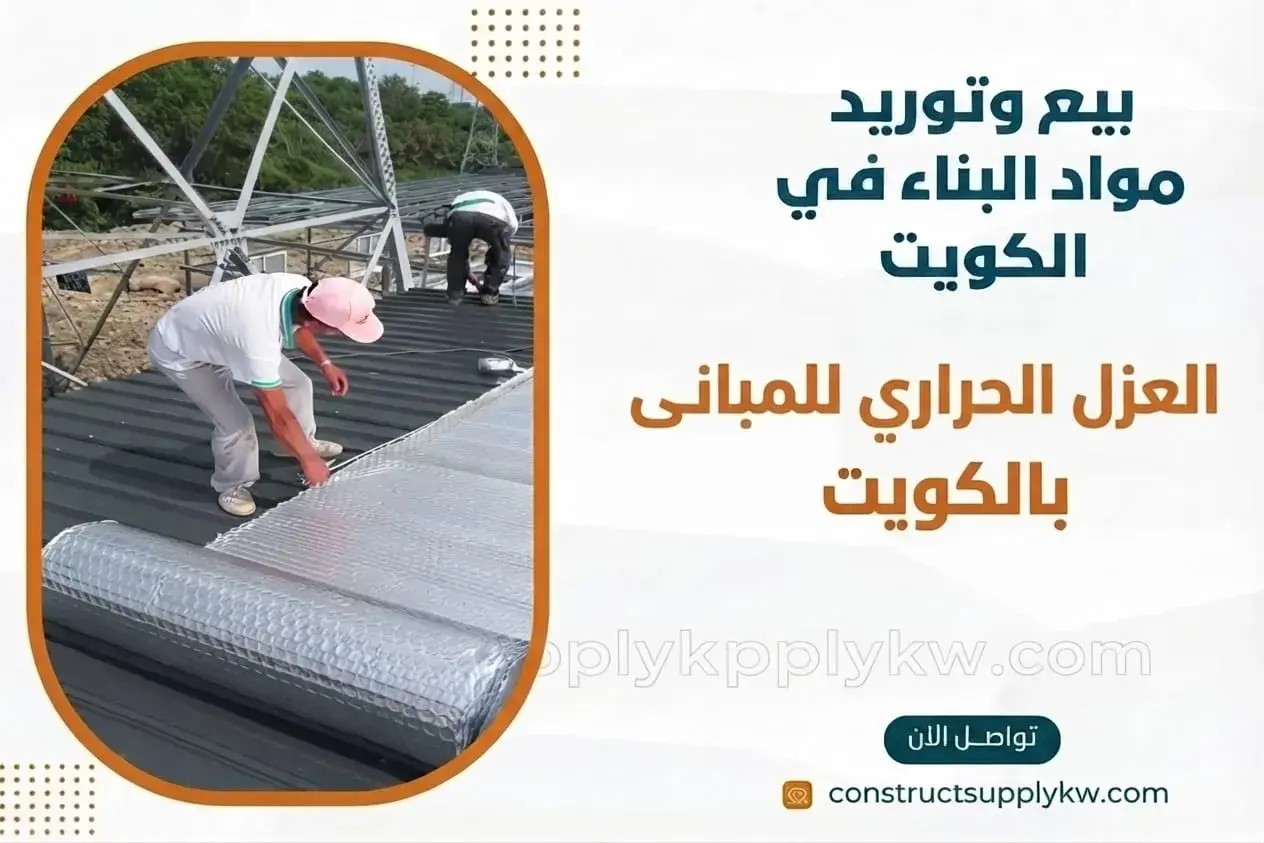
Thermal insulation for buildings has become one of the most important aspects of modern construction in Kuwait because minimizing heat gain directly contributes to reducing electricity consumption while improving occupant comfort throughout the year. Many people mistakenly believe that air-conditioning systems alone are sufficient to maintain comfortable indoor conditions. In reality, cooling efficiency depends heavily on the ability of the building envelope to resist heat transfer, with exterior walls representing one of the largest sources of thermal gain. For this reason, lightweight insulated blocks have become an integral component of comprehensive building envelope systems designed to reduce thermal loads before mechanical cooling is even required. By limiting the amount of heat entering through masonry walls, these blocks allow air-conditioning systems to maintain desired indoor temperatures with less energy, shorter operating cycles, and improved long-term reliability. Practical experience from numerous modern residential projects demonstrates that buildings constructed with enhanced thermal masonry maintain more stable indoor temperatures than conventional structures, particularly during the hottest afternoon hours of summer. Improved thermal insulation also enhances occupant comfort by minimizing sudden temperature fluctuations between different rooms while lowering long-term electricity expenses. Consequently, engineers increasingly regard insulated masonry not simply as another building material but as a proactive engineering solution that addresses heat transfer at its source rather than depending exclusively on larger mechanical cooling systems.
-
They reduce heat transfer through exterior wall assemblies.
-
They decrease cooling loads placed on air-conditioning systems.
-
They improve indoor temperature stability throughout occupied spaces.
-
They enhance thermal comfort for residents and building occupants.
-
They contribute to long-term reductions in energy consumption.
-
They support the design of more sustainable and efficient buildings.
-
They minimize the effects of intense summer heat.
-
They improve the overall thermal performance of the building envelope.
-
They function effectively alongside other insulation systems.
-
They have become a fundamental component of energy-efficient building design.
Acoustic Wall Insulation
Acoustic wall insulation serves a purpose far beyond creating quieter indoor environments because it has become an essential component of modern building design focused on improving quality of life and enhancing privacy between rooms and neighboring properties. Lightweight insulated blocks reduce sound transmission by utilizing internal structures that absorb and weaken sound waves before they pass through the wall assembly, particularly when installed within a complete masonry system using appropriate mortar and finishing materials. In Kuwait, acoustic insulation has become increasingly important in villas, residential compounds, schools, offices, healthcare facilities, hotels, and commercial buildings where traffic noise and daily activities can negatively affect comfort, concentration, and productivity. Practical experience from completed projects consistently demonstrates that incorporating acoustically efficient masonry during initial construction is significantly more effective and economical than attempting to solve noise problems after the building has been completed through additional retrofit solutions. At the same time, acoustic performance depends not only on the masonry unit itself but also on workmanship, proper joint sealing, plaster quality, and eliminating gaps that allow sound leakage. Engineers therefore evaluate acoustic insulation as part of the entire wall system rather than as a property of one material alone because optimal results require every component of the assembly to function together. This integrated approach creates quieter, more comfortable indoor environments while improving overall building quality.
-
They reduce sound transmission between rooms and neighboring buildings.
-
They improve privacy in homes, offices, schools, and healthcare facilities.
-
They create quieter and more comfortable indoor environments.
-
They perform best when incorporated into complete wall systems.
-
They reduce the impact of traffic and environmental noise.
-
They minimize the need for expensive post-construction acoustic upgrades.
-
Their effectiveness depends on proper workmanship and joint sealing.
-
They are ideal for buildings requiring enhanced acoustic comfort.
-
They improve productivity in educational and office environments.
-
They provide long-term value through improved occupant comfort.
Lightweight Masonry Blocks
.webp)
Lightweight masonry blocks differ from many traditional building materials because they are specifically engineered to balance structural performance, thermal efficiency, and ease of installation. Their reduced density lowers the permanent dead loads imposed on the structural frame while maintaining the performance characteristics required for approved construction applications. This reduction in weight simplifies transportation, lifting, and installation, enabling contractors to complete masonry work more quickly and efficiently. Builders also appreciate the reduced physical demands placed on construction crews, especially during large developments requiring thousands of masonry units. Despite these advantages, lightweight masonry should always be selected according to structural engineering requirements because each product offers different compressive strength characteristics and application limitations. Buyers should verify certified laboratory reports confirming thermal and mechanical performance rather than assuming that lower weight alone indicates superior quality. When high manufacturing standards are combined with professional installation, lightweight masonry blocks become one of the most effective construction materials for achieving long-term structural efficiency, operational savings, and sustainable building performance.
-
They reduce permanent structural loading on the building.
-
They simplify transportation and installation procedures.
-
They improve construction productivity and project efficiency.
-
They accelerate completion schedules for large developments.
-
They support more energy-efficient building designs.
-
They should always be selected according to engineering specifications.
-
They combine low weight with improved thermal performance.
-
They reduce material waste during construction.
-
They require certified manufacturing quality.
-
They provide lasting value through efficient building performance.
Building Energy Efficiency
Building energy efficiency has become one of the most important performance indicators used to evaluate modern construction projects, particularly in Kuwait, where air-conditioning systems operate for much of the year because of the country's demanding climate. The more effectively a building minimizes heat entering its interior spaces, the less energy is required to maintain comfortable indoor temperatures. Lightweight insulated blocks play an important role in achieving this objective because they improve the thermal performance of the building envelope by reducing heat transfer through exterior walls. As a result, cooling systems experience lower thermal loads, allowing them to operate more efficiently and for shorter periods while maintaining the desired indoor environment. Buildings designed with high energy efficiency also provide greater thermal stability throughout the day, improving occupant comfort by minimizing indoor temperature fluctuations. From an economic perspective, investing in thermally efficient building materials during the construction phase often produces substantially greater long-term value than attempting to reduce operating expenses after the building has already been completed. This is why many contemporary projects integrate thermal insulation strategies into the earliest stages of architectural and structural design instead of relying on corrective measures later. Practical experience from recently completed developments demonstrates that energy-efficient buildings not only reduce electricity consumption but also increase the property's market value by offering lower operating costs and a more comfortable living or working environment. Consequently, lightweight insulated masonry has become an important component of sustainable construction practices that balance operational savings with long-term building performance.
-
They improve the overall thermal performance of the building envelope.
-
They reduce cooling demands throughout the building's operational life.
-
They help maintain more stable indoor temperatures.
-
They contribute to lower long-term operating expenses.
-
They support sustainable construction and responsible energy management.
-
They improve occupant comfort throughout the year.
-
They increase the long-term value of residential and commercial properties.
-
They reduce the dependence on oversized mechanical cooling systems.
-
They improve overall building performance under Kuwait's climate conditions.
-
They represent an essential element of modern energy-conscious construction.
Reducing Electricity Consumption
.webp)
Reducing electricity consumption is one of the primary reasons homeowners, developers, and commercial investors in Kuwait choose lightweight insulated blocks during the design stage because the majority of electrical energy consumed in buildings is directly related to operating air-conditioning equipment under extremely hot weather conditions. When exterior walls effectively resist heat transfer, cooling systems require less energy and shorter operating cycles to maintain comfortable indoor temperatures. This does not mean insulated blocks produce a fixed percentage of electricity savings in every project because actual performance depends on multiple variables including building size, orientation, glazing performance, roof insulation, air-conditioning efficiency, occupancy patterns, and overall building design. Nevertheless, practical experience from numerous modern developments consistently demonstrates that improving wall insulation significantly reduces cooling loads and enables HVAC systems to operate under less demanding conditions. Lower operating hours also decrease wear on compressors, fans, and mechanical components, extending equipment life while reducing maintenance and replacement expenses. Rather than viewing insulated blocks solely as another construction material, engineers increasingly recognize them as a long-term operational investment because the financial benefits continue throughout the building's entire service life. Lower utility costs, improved mechanical efficiency, and enhanced occupant comfort combine to produce measurable economic value that extends well beyond the initial construction budget.
-
They reduce heat entering the building through exterior walls.
-
They decrease the operating hours required for cooling equipment.
-
They contribute to lower long-term utility expenses.
-
They reduce mechanical stress on air-conditioning systems.
-
They perform best when integrated with complete thermal insulation systems.
-
They improve overall energy efficiency in residential and commercial buildings.
-
They reduce the need for oversized cooling equipment.
-
They improve the long-term financial performance of the property.
-
They increase the value of investing in high-quality construction materials.
-
They support sustainable building operation throughout the structure's lifespan.
Heat Transfer Coefficient
The heat transfer coefficient is one of the most important engineering indicators used to evaluate the thermal performance of construction materials because it measures the amount of heat that passes through a building component under standardized testing conditions. Lower heat transfer values indicate better insulating performance and greater resistance to heat movement, making lightweight insulated blocks particularly attractive for projects focused on energy efficiency. This engineering property depends on numerous factors including material composition, density, internal air voids, manufacturing quality, wall thickness, and the overall construction system. Consequently, comparing two masonry products based solely on appearance or weight provides an incomplete assessment of their thermal capabilities. Engineers instead rely on certified laboratory reports and manufacturer technical data to compare heat transfer performance accurately before specifying construction materials. Throughout Kuwait, consulting engineers review these thermal values during project design to ensure compliance with energy performance objectives and engineering standards. Heat transfer calculations also assist designers in estimating expected cooling loads, selecting appropriately sized HVAC equipment, and predicting long-term building operating costs. For these reasons, verified engineering test results are considerably more valuable than marketing claims because they provide objective evidence regarding actual thermal performance after installation. Understanding heat transfer coefficients allows designers, contractors, and building owners to make technically sound decisions that improve comfort while reducing operational energy requirements.
-
They measure how effectively building materials resist heat movement.
-
Lower values indicate better thermal insulation performance.
-
They depend on material composition, density, and manufacturing quality.
-
They assist engineers in designing energy-efficient buildings.
-
They help estimate expected cooling loads during project planning.
-
They support proper HVAC equipment selection.
-
They are verified through standardized laboratory testing.
-
They provide reliable comparisons between competing building materials.
-
They accurately predict long-term wall thermal performance.
-
They support informed engineering and purchasing decisions.
Thermal Blocks
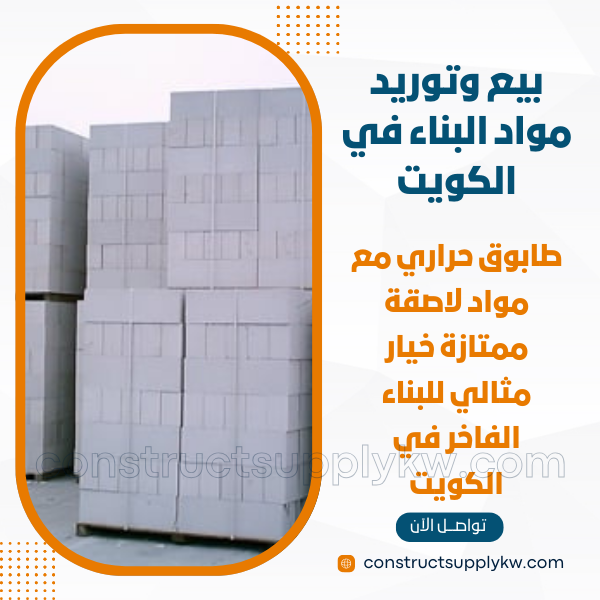
Thermal blocks have become one of the most important building materials in modern construction because of the growing emphasis on energy efficiency, sustainability, and occupant comfort. Their primary function is to reduce heat transfer through building walls while maintaining construction quality and ease of installation across a wide range of project types. These blocks achieve their performance through carefully engineered internal structures that create effective thermal barriers, significantly reducing the amount of external heat entering occupied spaces during daytime hours. In Kuwait, where intense solar exposure places substantial demands on cooling systems, thermal blocks have become increasingly popular in new residential and commercial developments seeking to improve long-term operating efficiency. Incorporating thermal masonry from the earliest design stages enables engineers to create high-performance building envelopes without relying entirely on additional insulation systems after construction. However, it is important to distinguish genuine thermal blocks supported by certified laboratory testing from products marketed as insulating materials without verified engineering evidence. Performance differences between manufacturers can be substantial depending on production methods, raw materials, and quality control procedures. When thermal blocks are combined with insulated roofs, energy-efficient windows, and professionally designed building envelopes, they contribute significantly to reducing cooling demands, lowering operating expenses, and creating healthier indoor environments capable of performing efficiently throughout Kuwait's challenging climate.
-
They create effective thermal barriers within exterior walls.
-
They are ideal for modern energy-efficient construction.
-
They reduce cooling loads during extreme summer conditions.
-
They improve indoor thermal comfort throughout the building.
-
They require certified laboratory testing to verify performance.
-
They perform best as part of integrated insulation systems.
-
They reduce long-term building operating costs.
-
They increase property value through improved efficiency.
-
They are suitable for residential, commercial, educational, and healthcare projects.
-
They represent one of the leading solutions for sustainable construction in hot climates.
Energy-Efficient Construction
Energy-efficient construction has evolved into a fundamental engineering philosophy that focuses on minimizing resource consumption from the earliest design stages rather than attempting to improve efficiency after project completion. This approach begins with selecting building materials capable of enhancing the thermal performance of the building envelope, with lightweight insulated blocks representing one of the most effective masonry solutions available. Their ability to reduce heat transfer through walls improves the efficiency of cooling systems while decreasing long-term electricity consumption. However, an energy-efficient building never depends upon a single material alone. Instead, it integrates insulated masonry, roof insulation, high-performance glazing, efficient HVAC systems, proper building orientation, and thoughtful architectural planning into one coordinated engineering strategy. When these components function together, electricity demand decreases, indoor environmental quality improves, and occupant comfort remains consistently high throughout the year. Modern developments across Kuwait increasingly incorporate these principles not only in large commercial projects but also in private villas and residential communities because building owners recognize the long-term financial and operational benefits. Lower utility costs, improved indoor comfort, extended equipment lifespan, and stronger property values all contribute to the growing demand for energy-efficient construction. Selecting lightweight insulated blocks therefore represents far more than a material choice—it is an essential step toward creating buildings that combine engineering performance, environmental responsibility, and long-term economic sustainability.
-
Energy efficiency begins with selecting appropriate construction materials.
-
It depends on integrating walls, roofs, insulation, windows, and HVAC systems.
-
It reduces building operating costs throughout its service life.
-
It improves indoor environmental quality and occupant comfort.
-
It increases long-term property value and investment potential.
-
It supports sustainable construction and responsible resource management.
-
It reduces dependence on energy-intensive cooling solutions.
-
It balances engineering performance with economic efficiency.
-
It is suitable for residential, commercial, and institutional developments.
-
It reflects the future direction of modern construction in hot climates.
Conclusion
Lightweight insulated blocks have evolved beyond being an alternative to conventional masonry and have become a key component of high-performance buildings designed to deliver superior thermal comfort, effective acoustic insulation, and improved energy efficiency. Throughout this article, we explored the characteristics of insulated blocks, the advantages of lightweight masonry, the importance of thermal and acoustic insulation, methods of improving building energy efficiency, strategies for reducing electricity consumption, the significance of the heat transfer coefficient, the performance of thermal blocks, and the principles of energy-efficient construction. When a high-quality insulated block is selected and installed according to engineering specifications by experienced professionals, the result is a building that delivers greater comfort, lower operating costs, improved environmental performance, and long-term value. Investing in insulated masonry is therefore both a sound engineering decision and a practical financial investment that continues to provide benefits throughout the entire lifespan of the building.
Frequently Asked Questions
What are lightweight insulated blocks?
Lightweight insulated blocks are specially engineered masonry units with reduced density and enhanced thermal and acoustic insulation properties. They help reduce heat transfer, minimize noise transmission, and improve the overall energy efficiency of buildings while maintaining construction quality.
Are insulated blocks suitable for Kuwait's climate?
Yes. They are particularly well suited to Kuwait because they reduce heat entering the building through exterior walls, improving cooling efficiency and helping lower electricity consumption during the country's long and extremely hot summers.
Are lightweight blocks weaker than conventional concrete blocks?
Not necessarily. Every masonry product is designed for specific engineering applications. The appropriate block should always be selected according to compressive strength requirements, structural design, and the intended use within the project.
How do insulated blocks reduce electricity consumption?
They reduce heat transfer through exterior walls, lowering the cooling load placed on air-conditioning systems. This allows HVAC equipment to operate more efficiently and for shorter periods, reducing overall energy use.
What is the heat transfer coefficient?
The heat transfer coefficient is an engineering measurement that indicates how much heat passes through a construction material. Lower values indicate better thermal insulation and improved resistance to heat movement.
Does acoustic insulation depend only on the block itself?
No. Effective acoustic performance depends on the complete wall assembly, including the masonry units, mortar quality, plastering, joint sealing, construction workmanship, and the overall wall design. Together, these elements determine the final sound insulation performance of the building.