PVC Corner Profiles: Affordable Finishing for Drywall & Ceilings
PVC corner profiles have become one of the most widely used finishing solutions for drywall systems, gypsum walls, and suspended ceilings because they combine affordability, ease of installation, and the ability to create perfectly straight corners that give the finished surface a clean, professional appearance. Although many people focus primarily on the quality of gypsum boards, joint compounds, or paint finishes, experienced finishing contractors understand that the quality of corner profiles and finishing accessories ultimately determines how well walls and ceilings withstand everyday use while maintaining sharp, straight edges for many years. In Kuwait, PVC finishing profiles have become increasingly popular in residential and commercial developments thanks to their moisture resistance, lightweight construction, and flexibility during installation, making them suitable for a wide variety of interior designs. In this article, we explore the applications of PVC corner profiles, explain how to choose the correct products, discuss the most common installation mistakes, and demonstrate why PVC has become one of the most economical and practical finishing solutions for modern drywall construction.
PVC Corner Profiles
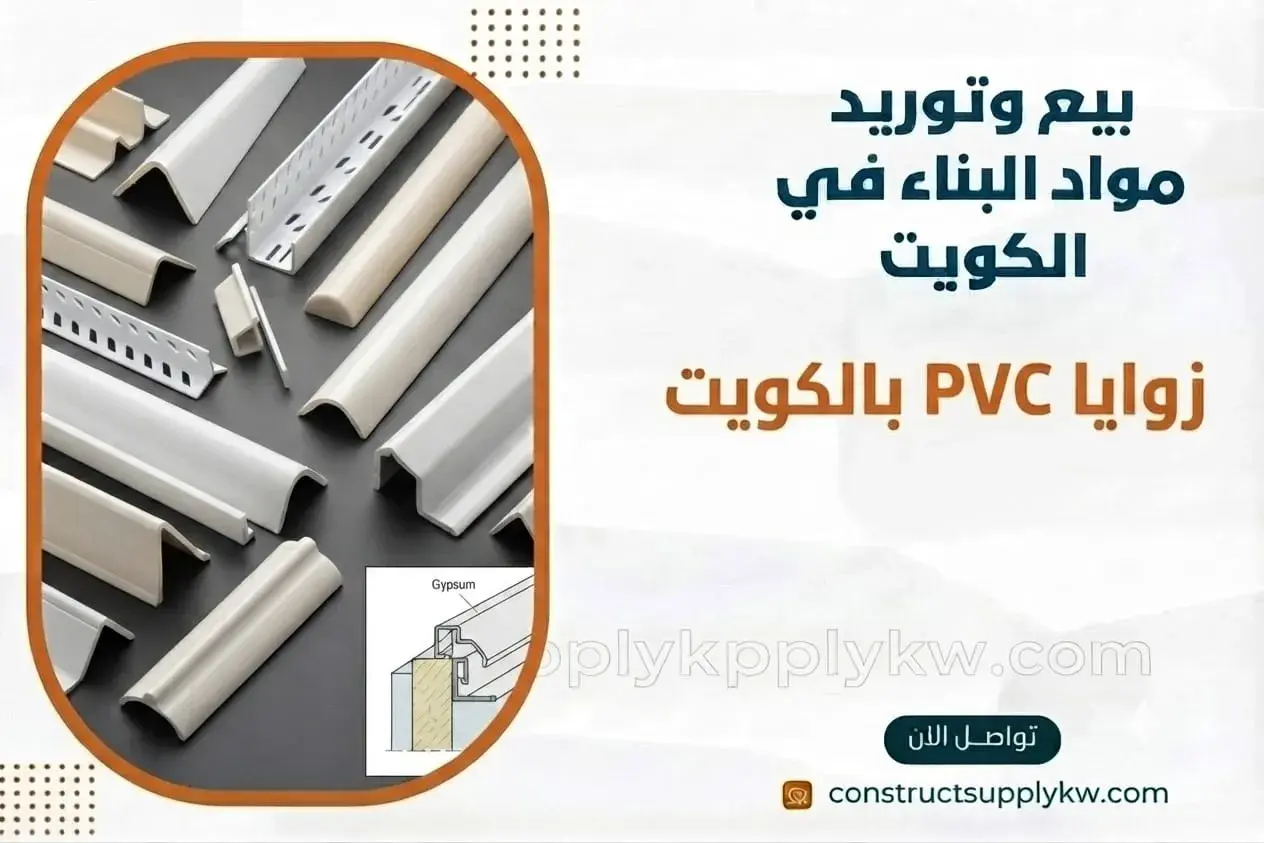
PVC Corner Profiles are widely used to protect and finish both external and internal corners in drywall partitions and gypsum ceilings while providing an excellent balance between durability, appearance, and project cost. These profiles are manufactured from polyvinyl chloride, a material recognized for its lightweight properties, resistance to moisture, and complete immunity to rust, giving it a significant advantage over certain metal alternatives in interior environments exposed to elevated humidity. Their function extends well beyond protecting exposed edges against impact damage. They also create perfectly straight, consistent corner lines that greatly simplify subsequent joint compound application and painting work. Practical experience from drywall finishing projects throughout Kuwait consistently shows that professional contractors specify PVC corner profiles for villas, apartments, office buildings, and commercial developments because they significantly reduce the likelihood of cracks developing along exposed corners due to minor impacts or everyday use. Their moderate flexibility also allows installers to cut and shape them with ease, enabling them to adapt to a variety of architectural details without requiring specialized equipment. This reduces installation time while maintaining excellent finishing quality when the profiles are installed correctly using appropriate bonding materials.
-
Provide effective protection for drywall corners during everyday use.
-
Help create perfectly straight and consistent corner lines.
-
Resist moisture without developing corrosion or rust.
-
Lightweight construction simplifies transportation and installation.
-
Reduce the likelihood of corner cracking after finishing.
-
Suitable for residential and commercial construction projects.
-
Improve the overall appearance of completed drywall systems.
-
Easy to cut and shape during installation.
-
Shorten installation time for interior finishing work.
-
Offer an economical solution without sacrificing visual quality.
PVC Angle
A PVC Angle serves as an essential structural and protective component within modern drywall finishing systems. Whenever gypsum walls or drywall-clad columns are constructed, exposed corners become the areas most vulnerable to damage caused by furniture movement, equipment transportation, or normal daily activity. Leaving these corners unprotected often results in chipped joint compound, cracked paint, or damaged gypsum edges after only a relatively short period of use. For this reason, PVC angles are installed before the final finishing stages to establish a rigid, accurately aligned corner capable of maintaining its shape over many years. PVC angles also vary in thickness and perforation design. The perforations allow joint compound to penetrate through the profile, creating a strong mechanical bond that minimizes the possibility of future separation. Experienced installers carefully verify corner alignment with precision levels before fixing the profile because even minor deviations become highly visible after painting is complete. Practical experience from drywall projects across Kuwait demonstrates that installation quality frequently influences the final appearance more than brand selection alone, making accurate workmanship every bit as important as choosing a high-quality product.
-
Protect the most vulnerable corners throughout interior spaces.
-
Installed before joint compound application for professional results.
-
Help maintain perfectly straight wall alignment.
-
Available in multiple thicknesses for different applications.
-
Perforations improve bonding with finishing compounds.
-
Reduce paint peeling around exposed corners.
-
Simplify future maintenance when necessary.
-
Suitable for columns, partitions, and drywall walls.
-
Performance depends heavily upon accurate installation.
-
Produce cleaner and more professional finishing results.
Drywall Corner Profiles
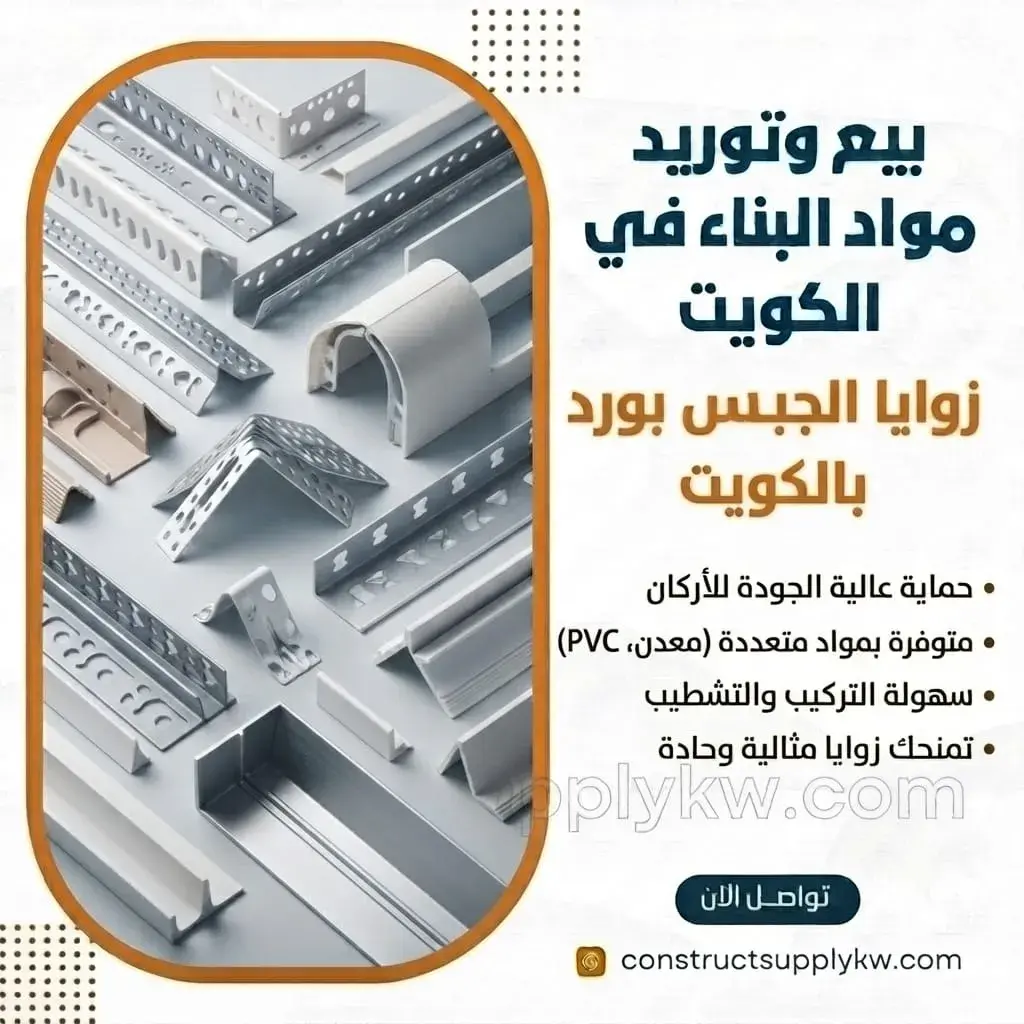
Drywall Corner Profiles have become indispensable components of every professionally constructed drywall wall or suspended ceiling because they preserve crisp, straight corners while protecting them from everyday impact damage. Many property owners mistakenly assume that gypsum boards alone determine finishing quality, but practical experience consistently proves that finishing accessories ultimately define the long-term durability of the entire installation. Without properly installed drywall corner profiles, exposed edges gradually lose their straightness as repeated impacts and daily use cause joint compound and gypsum material to deteriorate. The result is cracking, chipping, and damage that often requires partial reconstruction rather than simple cosmetic repair. Drywall corner profiles are available in several specialized designs intended for external corners, internal corners, curved ceiling features, and custom architectural detailing. Professional installers select each profile according to the geometry of the project while ensuring accurate installation and sufficient curing time before sanding and painting begin. Consequently, drywall corner profiles have become essential components for producing clean architectural lines capable of maintaining their appearance for many years without deterioration.
-
Preserve straight corners throughout drywall walls and ceilings.
-
Reduce damage caused by repeated everyday impacts.
-
Available in specialized profiles for numerous applications.
-
Help create clean and accurate architectural lines.
-
Simplify joint compound application and sanding.
-
Improve the overall quality of finished drywall surfaces.
-
Extend the service life of gypsum wall systems.
-
Lower maintenance costs caused by damaged corners.
-
Require the correct profile selection for each application.
-
Form an essential component of professional drywall construction.
PVC Profile
A PVC Profile is used throughout modern interior finishing projects wherever precise edge treatment, clean transitions, and accurate architectural detailing are required. These profiles are among the most versatile finishing components used in drywall systems and suspended ceilings. Their purpose extends beyond aesthetics because they reinforce connection points between adjacent surfaces while preventing uneven edges, visible imperfections, and inconsistencies caused by variations in joint compound thickness. PVC profiles are manufactured in a wide range of configurations suitable for straight applications, curved architectural elements, decorative joints, and finishing exposed drywall edges with exceptional accuracy. Successful implementation depends upon selecting the appropriate profile for each specific application because using an unsuitable profile can complicate installation and produce uneven joints after painting. Construction projects completed throughout Kuwait demonstrate that contractors frequently prefer PVC profiles in residential and office developments because they are lightweight, easy to cut, simple to install, and capable of producing highly consistent finishing results without requiring excessive adjustments during construction. As a result, PVC profiles have become indispensable elements within contemporary finishing systems that emphasize both construction efficiency and long-term visual quality.
-
Used to finish exposed edges and transition joints accurately.
-
Suitable for straight and curved drywall applications.
-
Help eliminate imperfections caused by uneven compound thickness.
-
Manufactured in numerous profile configurations.
-
Simplify intricate architectural detailing.
-
Easy to cut and modify directly on site.
-
Reduce overall installation time.
-
Produce more professional interior finishing.
-
Performance depends upon selecting the appropriate profile.
-
Widely used in contemporary interior construction projects.
Finishing Gypsum Walls
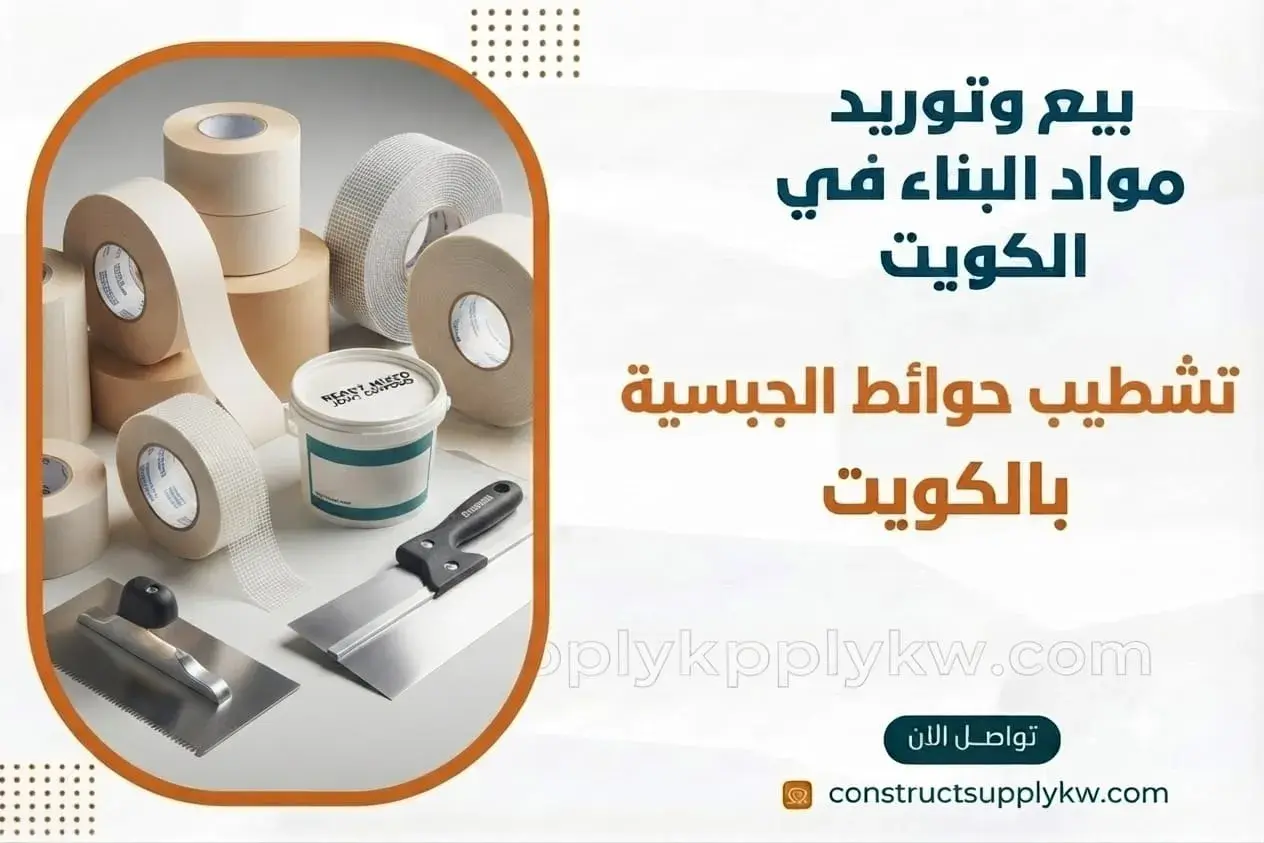
Finishing Gypsum Walls successfully depends upon the complete integration of every component within the drywall system rather than relying solely on the quality of the gypsum boards themselves. Corner profiles, finishing sections, joint compounds, and installation techniques all contribute directly to the durability and visual quality of the completed surface. Professional finishing begins with accurately positioning corner profiles and finishing sections before treating board joints using specialized compounds, followed by successive layers of finishing compound, sanding, and decorative painting. One of the most common construction mistakes is rushing between finishing stages without allowing sufficient drying time, often resulting in cracks, uneven surfaces, or visible imperfections after project completion. Correctly installed PVC corner profiles greatly simplify the creation of perfectly straight edges that cannot easily be achieved using joint compound alone. Practical experience from residential developments and commercial office projects throughout Kuwait consistently demonstrates that following the proper installation sequence dramatically improves finishing quality while reducing post-completion repair work. Consequently, successful gypsum wall finishing depends upon the performance of the entire system rather than any individual component.
-
Proper finishing begins with installing corner profiles first.
-
Joint treatment must follow recognized installation procedures.
-
Drying periods between finishing stages are essential.
-
Professional sanding significantly improves final paint quality.
-
PVC corner profiles help create perfectly straight edges.
-
Reduce defects that appear after project completion.
-
Improve the overall appearance of finished gypsum walls.
-
Increase finishing quality in residential and commercial buildings.
-
Require experienced installers familiar with drywall systems.
-
Produce durable finishes that remain attractive for many years.
Suspended Ceiling Corners
Suspended Ceiling Corners play a critical role in preserving clean architectural lines while enhancing the overall appearance of modern ceiling systems, especially those incorporating recessed lighting, layered ceiling designs, or decorative gypsum features. These corners experience various structural stresses during construction, making properly selected finishing profiles essential for preventing cracks that frequently develop where ceilings meet surrounding walls or along exposed external edges. PVC corner profiles also simplify the construction of gentle curves and decorative ceiling details that are difficult to achieve using finishing compounds alone. Experienced contractors carefully align and secure these profiles before beginning the final finishing stages because even slight deviations become highly noticeable once lighting fixtures are installed and operational. Observations from contemporary interior projects across Kuwait confirm that professionally installed suspended ceiling corner profiles have become a standard indicator of quality workmanship because they preserve straight architectural lines while maintaining balanced ceiling proportions long after project completion.
-
Preserve the alignment of suspended ceiling corners.
-
Reduce cracking where ceilings meet surrounding walls.
-
Improve the precision of concealed lighting installations.
-
Suitable for multi-level gypsum ceiling systems.
-
Simplify decorative architectural ceiling features.
-
Create straight and balanced ceiling lines.
-
Reduce corrective work after painting is complete.
-
Enhance the overall quality of interior design.
-
Require accurate installation before finishing begins.
-
Form an essential element of modern suspended ceiling construction.
Drywall Accessories
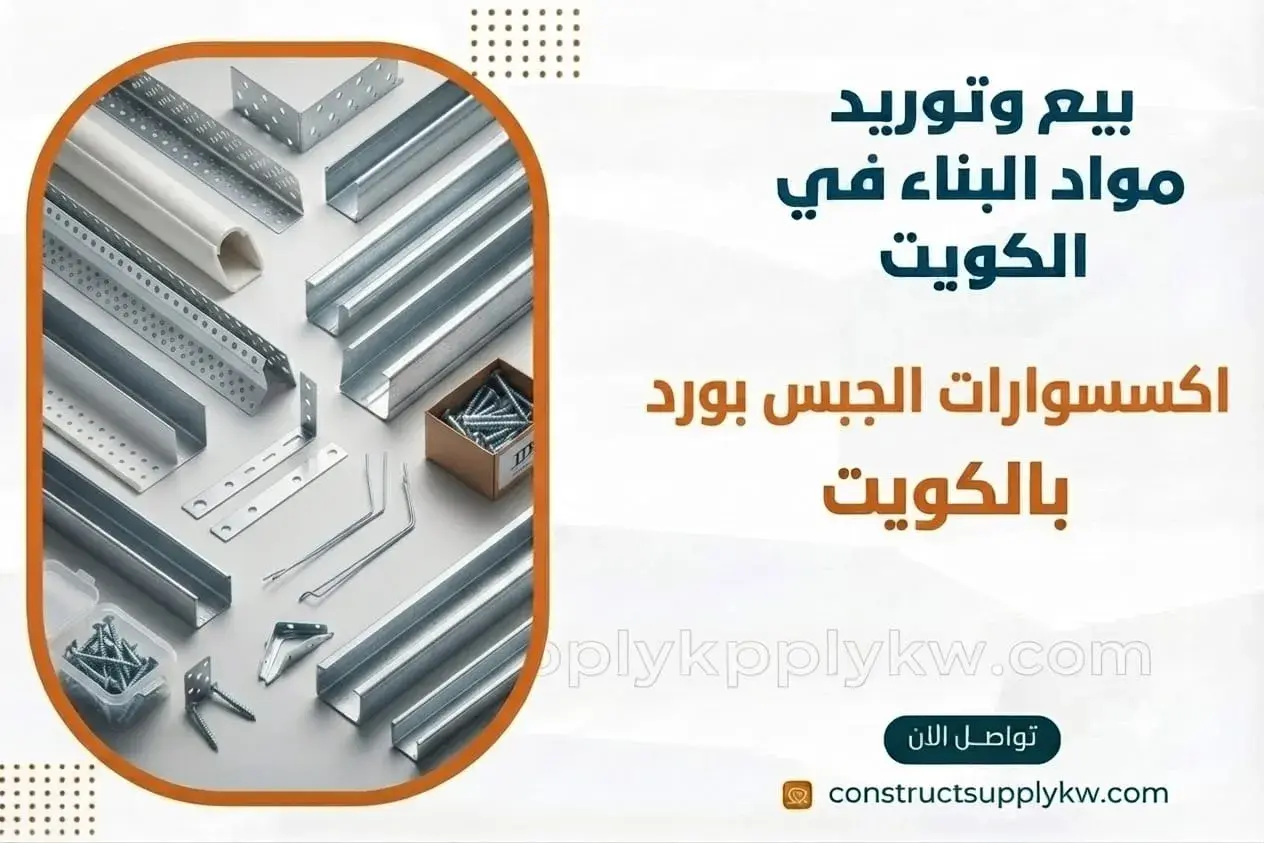
Drywall Accessories form the backbone of every professionally installed drywall system because they include all the supporting components that work together to create durable, straight, and visually refined walls and ceilings rather than simply attaching gypsum boards to a metal framework. These accessories include PVC corner profiles, joint tapes, finishing profiles, connection pieces, edge trims, and numerous specialized components, each engineered to perform a specific function that contributes to the long-term performance of the entire system. A common mistake made during cost reduction is investing in high-quality gypsum boards while selecting low-grade accessories. In practice, this often leads to corner failures, joint cracking, or finishing defects that become visible after only a short period of service. Practical experience from drywall finishing projects throughout Kuwait consistently demonstrates that the quality of accessories directly influences installation accuracy, corner alignment, surface consistency, and future maintenance requirements. Using accessories that are fully compatible with the drywall system also ensures that all materials expand and contract uniformly, minimizing the risk of cracks, separation, or visible imperfections caused by incompatible materials. As a result, professional-grade drywall accessories should never be viewed as optional additions but rather as essential structural elements that preserve the appearance and durability of the entire finishing system for many years.
-
Include every supporting component required for a complete drywall installation.
-
Improve finishing quality from the earliest stages of construction.
-
Reduce the likelihood of defects developing at joints and corners.
-
Make joint compound application and painting more accurate.
-
Increase the durability of drywall walls and suspended ceilings.
-
Ensure compatibility between every component of the finishing system.
-
Reduce future maintenance and repair requirements.
-
Simplify the execution of detailed architectural features.
-
Best selected from manufacturers recognized for consistent quality.
-
Represent a valuable investment in the long-term performance of drywall systems.
PVC Finishing Profiles
PVC Finishing Profiles are highly versatile architectural components used throughout interior construction projects because they serve far more purposes than simply protecting corners. They are widely used to finish exposed edges, create decorative joints, define transitions between different surfaces, and produce clean architectural detailing across gypsum walls and suspended ceilings. Engineers and finishing contractors often specify multiple profile types within the same project to achieve different functional and aesthetic objectives depending on each location. The flexibility of PVC allows these profiles to accommodate details that are considerably more difficult to execute using rigid metal sections, making them an economical yet highly practical solution for modern finishing work. Experience gained from interior finishing projects across Kuwait shows that premium-quality PVC profiles maintain their dimensional stability without cracking or distortion when installed according to recommended construction practices. Their precisely manufactured edges also simplify final painting because they provide accurate guides for joint compound application and create consistently smooth finishing lines throughout the project. For these reasons, PVC finishing profiles have become one of the preferred solutions for projects seeking efficient installation, professional appearance, and cost-effective long-term performance.
-
Used to finish edges, joints, and architectural transitions.
-
Suitable for gypsum walls and suspended ceiling systems.
-
Simplify the execution of intricate finishing details.
-
Lightweight construction allows quick installation.
-
Provide an economical solution for interior finishing.
-
Create straight guides for finishing compounds.
-
Available in multiple sizes and profile designs.
-
Help accelerate project completion.
-
Preserve the appearance of finished surfaces over time.
-
Compatible with a wide variety of interior architectural styles.
Protecting Wall Corners
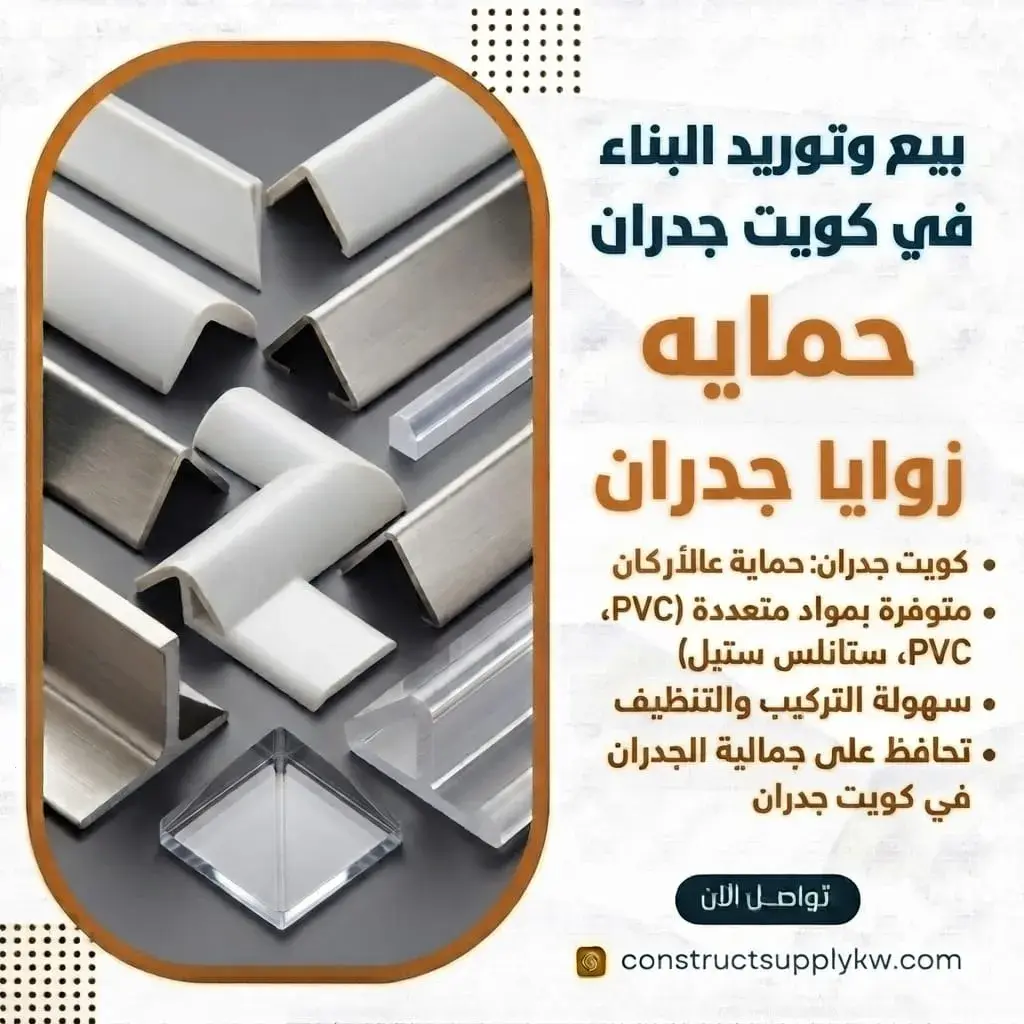
Protecting Wall Corners is one of the most effective methods of preserving interior finishing quality long after construction has been completed because exposed external corners experience significantly more wear than flat wall surfaces. Daily pedestrian traffic, furniture movement, maintenance equipment, cleaning activities, and accidental impacts all place continuous stress on wall corners. Even in private residential properties with relatively light usage, corners remain the first areas to exhibit visible damage. Installing PVC corner profiles during the finishing stage creates a protective reinforcement that absorbs minor impacts while preserving perfectly straight corner lines for many years. Corner protection provides both structural and aesthetic advantages because it prevents the small chips, cracks, and surface defects that often diminish the appearance of painted walls and require frequent maintenance. Practical experience consistently shows that protecting corners during construction costs substantially less than repairing damaged corners after occupancy, particularly in schools, commercial buildings, office complexes, healthcare facilities, and other high-traffic environments. Consequently, corner protection has become a standard requirement in modern interior finishing systems designed to maximize durability while minimizing Protect wall corners against everyday impact damagefuture maintenance expenses.
-
Preserve straight architectural lines for extended periods.
-
Reduce long-term maintenance and repair costs.
-
Prevent chips and cracks from developing on exposed edges.
-
Suitable for residential, commercial, and institutional buildings.
-
Maintain the appearance of painted walls over many years.
-
Minimize damage caused by furniture and maintenance equipment.
-
Help preserve decorative paint finishes.
-
Deliver effective protection at an economical cost.
-
Form an important part of professional long-lasting interior finishing.
Plastic Finishing Corners
Plastic Finishing Corners have become one of the most economical and widely specified solutions for modern interior finishing because they successfully balance affordability, practical performance, and installation efficiency. These corner profiles are installed on walls, ceilings, columns, and various architectural openings to create clean, straight edges that are easy to finish with joint compounds and decorative coatings. Manufactured from high-quality plastic materials, they offer excellent resistance to moisture while remaining completely free from corrosion, making them particularly suitable for interior applications where metal alternatives may not always be necessary. However, achieving excellent results depends upon considerably more than simply selecting the product. Proper profile dimensions, accurate alignment, professional installation, and compatibility with finishing materials all contribute to long-term performance. Observations from numerous interior finishing projects throughout Kuwait consistently demonstrate that plastic finishing corners provide exceptional value for projects seeking neat, durable, and cost-effective finishes while maintaining strict budget control. Their combination of simplicity, reliability, and affordability explains why they continue to be specified extensively within contemporary drywall construction.
-
Provide economical finishing without compromising appearance.
-
Suitable for walls, ceilings, columns, and architectural openings.
-
Resist moisture and remain completely corrosion free.
-
Simplify joint compound application and decorative finishing.
-
Available in multiple sizes for different applications.
-
Help maintain perfectly straight architectural corners.
-
Reduce edge damage caused by everyday use.
-
Quick and straightforward to install.
-
Suitable for residential and commercial interior projects.
-
Deliver outstanding value relative to their overall cost.
Conclusion
PVC Corner Profiles have become an indispensable component of modern drywall wall and suspended ceiling systems because they combine affordability, ease of installation, and reliable long-term performance within a single finishing solution. Throughout this article, we examined the characteristics of PVC Corner Profiles, the importance of a PVC Angle, the protective role of Drywall Corner Profiles, the versatility of a PVC Profile, the fundamentals of Finishing Gypsum Walls, the value of Suspended Ceiling Corners, the contribution of Drywall Accessories to the overall system, the applications of PVC Finishing Profiles, the importance of Protecting Wall Corners, and the advantages of Plastic Finishing Corners. When high-quality products are selected and installed according to professional construction standards, PVC finishing systems deliver durable, consistent, and attractive results that remain reliable for many years while minimizing maintenance costs and making efficient use of the project budget. This combination of economy, practicality, and dependable performance continues to make PVC corner profiles one of the most widely specified finishing solutions for residential and commercial interior construction.
Frequently Asked Questions
Are PVC corner profiles suitable for all drywall systems?
Yes. PVC corner profiles are compatible with most drywall wall and suspended ceiling systems provided that the correct profile size and configuration are selected for the intended application and installation requirements.
Are PVC corner profiles resistant to moisture?
Yes. PVC material offers excellent resistance to moisture and does not rust, making it an ideal choice for interior environments where humidity levels may fluctuate and corrosion resistance is important.
What is the difference between PVC corner profiles and metal corner profiles?
PVC corner profiles are lightweight, economical, easy to cut, and simple to install, while certain metal corner profiles provide greater resistance to heavy impacts in applications requiring increased structural durability.
Does installation quality affect the performance of PVC corner profiles?
Absolutely. Even the highest-quality PVC corner profile cannot deliver optimal results unless it is accurately aligned, securely installed, and used together with compatible joint compounds and finishing materials according to recommended installation practices.
When should PVC corner profiles be selected instead of alternative finishing systems?
PVC corner profiles are generally the preferred choice for drywall walls, gypsum partitions, and suspended ceilings whenever the objective is to achieve an economical, precise, moisture-resistant, and easy-to-install finishing solution that provides reliable long-term performance with minimal maintenance requirements.