The long-term success of a ceramic tile installation depends on far more than selecting high-quality tiles. It begins with choosing the correct ceramic tile adhesive that matches the tile type, substrate condition, installation environment, and expected service conditions. Using the wrong adhesive can eventually result in tile debonding, hollow spots beneath the tiles, cracked grout joints, or costly repairs, even when premium ceramic products are used. In Kuwait, where buildings are exposed to significant temperature fluctuations between indoor and outdoor environments, selecting the appropriate adhesive has become even more critical. Manufacturers now produce a wide range of ceramic tile adhesives with varying levels of bond strength, flexibility, moisture resistance, workability, and durability, allowing every project to use a product specifically designed for its intended application. This guide explains the major adhesive categories, their technical differences, the situations in which each type should be used, and the practical installation considerations that help ensure long-lasting, reliable tile performance according to modern engineering practices.
Ceramic Tile Adhesive
.webp)
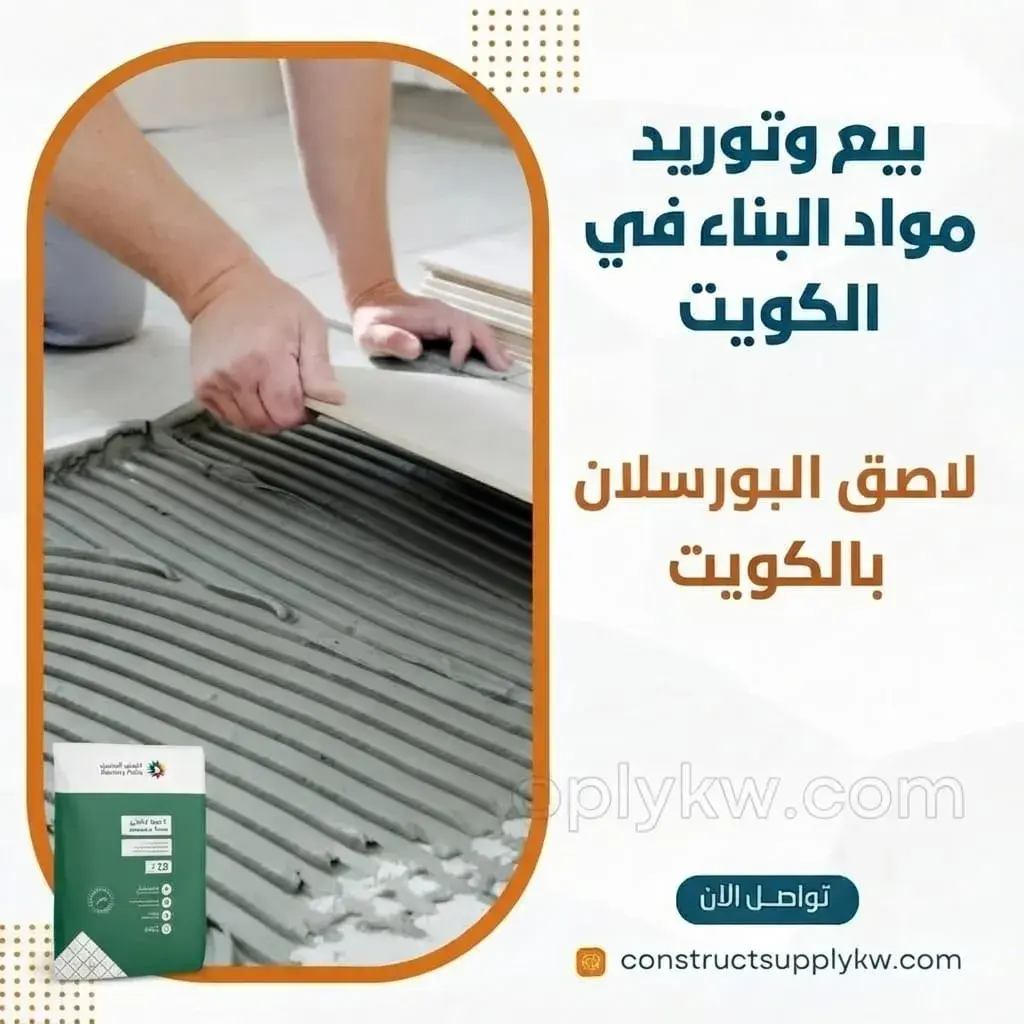
Ceramic tile adhesive is one of the most important materials determining the quality and durability of any tiled surface because it forms the critical bond between the tile and the substrate. Any mistake in selecting the adhesive or applying it improperly directly affects the long-term performance of the entire flooring or wall system. Years ago, conventional cement mortar was commonly used for tile installation, but the evolution of ceramic and porcelain manufacturing, along with the increasing popularity of large-format tiles, has made polymer-modified cementitious adhesives the preferred solution. These advanced products provide significantly higher bond strength, improved flexibility, better resistance to shrinkage, and greater moisture tolerance than traditional mortar. Experience gained from numerous residential and commercial construction projects across Kuwait demonstrates that many tile failures are not caused by poor-quality tiles but by selecting an adhesive that does not match the tile dimensions, substrate characteristics, or installation environment. Professional installers therefore evaluate several technical factors before choosing an adhesive, including tile type, water absorption, installation location, expected moisture exposure, temperature variations, and the available working time during installation. Proper mixing procedures, selecting the correct notched trowel, and respecting the manufacturer's specified open time are equally important because even the highest-quality adhesive will lose much of its performance if installed incorrectly. Consequently, successful ceramic tile installation begins with choosing the correct adhesive long before tile color, design, or finish becomes the primary consideration.
-
Provides stronger bonding than conventional cement mortar in most modern applications.
-
Varies according to tile dimensions, substrate conditions, and installation environments.
-
Depends on proper mixing and application procedures for maximum performance.
-
Helps reduce the risk of future tile debonding.
-
Distributes stresses caused by thermal expansion and contraction more effectively.
-
Suitable for ceramic and porcelain when the correct classification is selected.
-
Requires proper storage to preserve product performance before installation.
-
Delivers the best results when applied by trained professionals.
-
Extends the operational life of tiled floors and walls.
-
Represents one of the most important elements in achieving high-quality finishing work.
Types of Ceramic Tile Adhesive
The types of ceramic tile adhesive available today should never be viewed as interchangeable products because each category has been specifically engineered to satisfy different installation conditions. Some adhesives are intended for interior flooring, while others are formulated to withstand severe outdoor weather exposure. Certain products provide enhanced flexibility for substrates subjected to movement or vibration, whereas others are specifically designed for low-absorption porcelain or large-format tiles. Adhesives also differ in curing speed, bond strength, compatibility with existing surfaces, moisture resistance, and chemical durability. Practical construction experience consistently shows that one of the most common installation mistakes is selecting an adhesive based solely on price without reviewing its technical specifications or intended application. This often results in interior-grade adhesives being used outdoors or low-performance products being applied beneath heavy porcelain tiles, causing failures months after installation. To eliminate such uncertainty, internationally recognized manufacturers classify adhesives according to established technical standards that allow engineers and contractors to select products scientifically rather than relying solely on experience or assumptions. Understanding these classifications not only improves installation quality but also reduces future maintenance costs because selecting the appropriate adhesive from the outset is considerably less expensive than replacing failed tile installations later.
-
Include products designed for floors, walls, interior, and exterior installations.
-
Differ in bond strength, flexibility, and curing characteristics.
-
Classified according to recognized engineering standards.
-
Should never be selected solely on the basis of purchase price.
-
Certain products are specifically designed for large-format tiles.
-
Specialized adhesives are available for existing substrates and wet environments.
-
Performance varies according to actual service conditions.
-
Technical data sheets should always be reviewed before selection.
-
Proper classification significantly reduces installation errors.
-
Improve project quality while minimizing future maintenance requirements.
C1 Ceramic Tile Adhesive
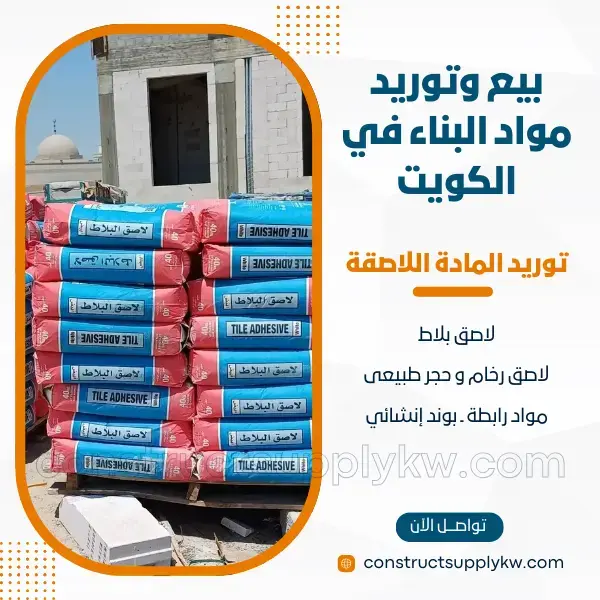
C1 ceramic tile adhesive belongs to the category of standard cementitious adhesives that satisfy the minimum bond strength requirements established by European technical standards. It is generally intended for interior installations where tiles are not subjected to severe mechanical stresses or significant temperature fluctuations. This adhesive performs well when installing conventional ceramic tiles in dry residential and office environments with stable substrates that have been properly prepared before installation. Describing C1 adhesive as "low quality" would be inaccurate because it performs exactly as intended when used within its specified application limits. Problems typically occur only when installers attempt to use it for exterior façades, swimming pools, large-format porcelain, or surfaces experiencing continuous movement and thermal cycling. Practical experience shows that many contractors select C1 adhesives for straightforward residential projects because they offer good workability and cost efficiency. However, they are not the optimal solution for every installation. Professional installers therefore examine the manufacturer's technical documentation carefully to verify approved applications, moisture resistance, recommended tile types, and substrate compatibility before making a final selection. Proper mixing procedures, maintaining the specified adhesive thickness, and avoiding excessive water during preparation are equally important because altering the recommended proportions can reduce bond strength and compromise installation quality over time.
-
Suitable for standard interior installation environments.
-
Designed for conventional ceramic tiles on stable substrates.
-
Meets the minimum bond strength required by recognized standards.
-
Offers an economical solution for straightforward residential projects.
-
Not recommended for large-format tiles or demanding exterior conditions.
-
Requires correct mixing procedures for optimal performance.
-
Depends on proper substrate preparation before installation.
-
Must be applied within the manufacturer's specified thickness range.
-
Performs reliably when used within its intended engineering limits.
-
Supports efficient tile installation in appropriate applications.
C2 Ceramic Tile Adhesive
C2 ceramic tile adhesive is the preferred solution whenever a project demands performance beyond the capabilities of standard adhesives. This classification provides higher bond strength than C1 products and complies with stricter performance requirements established by European standards. It is commonly specified for porcelain tiles with very low water absorption, large-format tiles, exterior wall cladding, floors subjected to continuous traffic, and installations exposed to frequent thermal movement. In Kuwait, where exterior surfaces experience intense solar radiation and significant temperature fluctuations, C2 adhesives have become one of the most widely specified products for modern construction because they are better equipped to withstand demanding environmental conditions when correctly selected and installed. Many C2 products are also polymer-modified to provide additional flexibility, improved moisture resistance, and reduced shrinkage, making them suitable for balconies, kitchens, bathrooms, commercial spaces, and other demanding environments. Practical experience from completed projects consistently demonstrates that using C2 adhesive in high-performance applications significantly reduces the likelihood of tile debonding, hollow spots, and long-term installation failures. Nevertheless, C2 should not automatically be selected for every project simply because it offers higher performance. Adhesive selection must always consider tile type, substrate condition, installation environment, and project specifications. Correct mixing procedures, proper adhesive thickness, suitable trowel selection, and compliance with the manufacturer's open time remain essential for achieving the bond strength that distinguishes C2 adhesives from lower-performance alternatives.
-
Provides significantly higher bond strength than standard C1 adhesives.
-
Suitable for porcelain and large-format ceramic tile installations.
-
Performs reliably under severe thermal and environmental conditions.
-
Commonly used in residential and commercial projects requiring enhanced durability.
-
Available in highly flexible formulations for demanding substrates.
-
Recommended for balconies, wet areas, and exterior applications.
-
Requires proper substrate preparation before installation.
-
Delivers its full performance only when manufacturer instructions are followed.
-
Reduces the risk of long-term tile detachment in demanding environments.
-
Represents a long-term investment in installation quality and durability.
Interior Tile Adhesive
Interior tile adhesive is specifically formulated for installation environments where tiles are protected from direct sunlight, severe weather, and major temperature fluctuations. Because interior floors and walls generally operate under relatively stable conditions, these adhesives prioritize reliable bonding, ease of application, and efficient installation while maintaining excellent finishing quality. They are widely used in living rooms, bedrooms, hallways, offices, and many other interior spaces where environmental conditions remain consistent throughout the year. However, assuming that every interior adhesive is suitable for all indoor areas is a common mistake. Spaces such as bathrooms, kitchens, laundry rooms, and utility areas often require adhesives with improved moisture resistance because they are exposed to higher humidity and intermittent water contact. Adhesive selection must also reflect the characteristics of the tile itself. Conventional ceramic tiles typically require different bonding properties than dense porcelain with extremely low water absorption. Experienced installers therefore evaluate tile dimensions, substrate condition, environmental exposure, and expected service conditions before selecting an interior adhesive. Proper substrate preparation is equally critical. Removing dust, grease, paint residues, and other contaminants while ensuring the surface is level and structurally sound greatly improves adhesive performance. Even premium interior adhesives cannot compensate for poorly prepared substrates, making preparation an essential part of every successful tile installation.
-
Designed specifically for stable indoor environments.
-
Suitable for living rooms, bedrooms, offices, and hallways.
-
Provide efficient installation with excellent workability.
-
Selected according to tile type and substrate characteristics.
-
Require clean, level, and structurally sound substrates.
-
Certain interior spaces require enhanced moisture-resistant products.
-
Help achieve durable, high-quality finished surfaces.
-
Reduce the risk of hollow spots beneath installed tiles.
-
Depend on proper installation procedures for maximum performance.
-
Offer an economical solution for appropriate interior applications.
Exterior Tile Adhesive
Exterior tile adhesive must satisfy considerably higher performance requirements than products intended for indoor installations because outdoor tiled surfaces are continuously exposed to sunlight, elevated temperatures, moisture, rainfall in certain climates, and repeated thermal expansion and contraction. These demanding service conditions require adhesives with stronger bonding capabilities and greater flexibility so that tiles remain securely attached despite continual environmental stresses. In Kuwait, extreme summer temperatures represent one of the most influential factors affecting adhesive selection for external façades, terraces, walkways, and balconies. Professional engineers and contractors therefore recommend certified products specifically developed for local climatic conditions instead of using lower-performance interior adhesives outdoors. Adhesive selection must also consider whether the installation involves ceramic tiles, porcelain, engineered stone, or other finishing materials because each surface possesses different bonding characteristics. One of the most common causes of premature tile failure in exterior applications is the combination of unsuitable adhesive selection and the omission of properly designed movement joints. Successful exterior tiling therefore depends on an integrated installation system including the appropriate adhesive, correct substrate preparation, movement joints, professional workmanship, and compliance with engineering specifications rather than relying solely on adhesive quality.
-
Designed to withstand severe weather and temperature fluctuations.
-
Provide strong bonding for exterior walls and paved surfaces.
-
Offer increased flexibility to accommodate thermal movement.
-
Suitable for ceramic, porcelain, and selected stone installations.
-
Require correctly designed movement joints.
-
Reduce the risk of tile detachment over extended service periods.
-
Depend on proper substrate preparation before installation.
-
Used for façades, balconies, terraces, and outdoor walkways.
-
Should comply with recognized engineering standards.
-
Deliver extended service life in demanding outdoor environments.
Ceramic Tile Installation
Successful ceramic tile installation begins long before the first bag of adhesive is opened because long-term performance depends on a sequence of carefully executed steps rather than on adhesive quality alone. The substrate must be clean, level, structurally sound, and completely free of dust, grease, loose particles, paint residue, or any contaminants that could weaken the bond between the adhesive and the surface. It is equally important to verify that concrete slabs, screeds, or plastered walls have fully cured before installation begins, since excessive moisture may interfere with adhesive performance and curing. On professionally managed projects throughout Kuwait, installers first check the substrate for flatness using appropriate leveling tools, then establish the installation layout to minimize unnecessary tile cuts while achieving a balanced appearance across the entire area. The adhesive should always be mixed according to the manufacturer's specified water ratio because adding excess water can significantly reduce bond strength and increase shrinkage after curing. A notched trowel suitable for the tile size must then be used to spread the adhesive evenly, while only manageable areas should be covered at one time to ensure the adhesive remains within its specified open time. For large-format porcelain or ceramic tiles, the double-spreading method is frequently recommended, with adhesive applied both to the substrate and the back of each tile to maximize coverage and eliminate voids beneath the installation. Proper grout joint spacing must also be maintained, and excessive force should never be used when pressing tiles into position because the objective is to achieve uniform adhesive distribution rather than forcing excessive adhesive out from beneath the tile. Practical experience consistently shows that most tile failures result from installation errors rather than from defects in the adhesive itself, making proper workmanship just as important as selecting a high-quality product.
-
Begin every installation by inspecting and preparing the substrate thoroughly.
-
Mix the adhesive strictly according to the manufacturer's instructions.
-
Select the correct notched trowel based on tile dimensions.
-
Never exceed the specified open working time.
-
Use double adhesive application when recommended for large-format tiles.
-
Maintain consistent joint spacing throughout the installation.
-
Avoid installing tiles over weak or unstable substrates.
-
Keep installation tools clean throughout the working process.
-
Regularly verify alignment and surface level during installation.
-
Recognize that installation quality is just as important as adhesive quality.
Ceramic Tile Adhesive Thickness
The thickness of ceramic tile adhesive is one of the most influential technical factors affecting bond quality and installation durability, yet it remains one of the most misunderstood aspects of tile installation. Many people incorrectly assume that applying a thicker layer of adhesive automatically creates a stronger bond. In reality, every adhesive is designed to perform within a specific thickness range established through laboratory testing and engineering evaluation. The correct adhesive thickness depends on multiple factors, including tile dimensions, substrate flatness, adhesive formulation, and the size of the notches on the application trowel. Smaller ceramic tiles typically require different adhesive thicknesses than large-format porcelain panels, while perfectly level substrates require considerably less adhesive than uneven surfaces. Professional contractors never use tile adhesive to compensate for major floor irregularities. Instead, significant substrate imperfections are corrected first with suitable leveling compounds before the adhesive is applied within its recommended thickness range. Excessively thick adhesive layers may produce uneven curing, excessive shrinkage, prolonged drying times, and inconsistent load distribution beneath the tiles. Conversely, adhesive layers that are too thin may fail to provide complete coverage, increasing the likelihood of hollow spots and reduced bond strength. Skilled installers therefore select the appropriate trowel size, evaluate substrate conditions carefully, and follow the manufacturer's technical recommendations rather than relying on estimation or habit. Maintaining proper adhesive thickness is not simply a matter of installation preference but a fundamental engineering requirement that directly influences the long-term reliability of the finished tile installation.
-
Adhesive thickness should always follow the manufacturer's recommendations.
-
Required thickness varies according to tile size and substrate condition.
-
Tile adhesive should never compensate for major floor irregularities.
-
Proper thickness directly affects bond quality and coverage.
-
Correct trowel selection helps achieve consistent adhesive thickness.
-
Excessive thickness may lead to shrinkage and delayed curing.
-
Insufficient thickness can create voids beneath the tiles.
-
Adhesive thickness depends on proper application technique rather than material quantity alone.
-
Large-format tiles often require special consideration during installation.
-
Proper thickness contributes significantly to long-term installation durability.
Tile Adhesive Consumption
Tile adhesive consumption cannot be defined by a single fixed value because the required quantity varies considerably from one project to another. Several important variables influence adhesive usage, including tile dimensions, substrate condition, surface flatness, adhesive thickness, notched trowel size, and installation technique. Large-format porcelain tiles generally require more adhesive than smaller ceramic tiles, while uneven substrates consume additional material unless leveling work is completed before installation begins. Professional contractors therefore avoid estimating adhesive requirements based on assumptions alone. Instead, they consult the manufacturer's technical data sheets, which specify the average adhesive coverage per square meter according to trowel size and application thickness. A reasonable allowance is then added to account for normal construction waste caused by tile cutting, handling, and minor installation losses without purchasing excessive quantities that remain unused after project completion. One of the most common purchasing mistakes is comparing products solely by the price of each bag. In reality, two adhesives with similar purchase prices may produce significantly different coverage rates, resulting in very different overall installation costs per square meter. Accurate cost evaluation therefore considers product price, expected consumption rate, installation performance, and long-term reliability rather than focusing exclusively on initial purchase cost. Proper planning minimizes waste, improves budgeting accuracy, and ensures sufficient material remains available throughout every phase of the installation without unnecessary interruptions.
-
Adhesive consumption varies according to tile dimensions and substrate conditions.
-
Application thickness significantly influences total material requirements.
-
Trowel size affects adhesive coverage per square meter.
-
Manufacturer data sheets provide the most accurate consumption estimates.
-
A small allowance should be included for normal installation waste.
-
Product comparisons should never rely solely on bag price.
-
Installation technique influences final adhesive consumption.
-
Proper substrate preparation reduces unnecessary material usage.
-
Accurate planning improves budgeting and purchasing efficiency.
-
Correct estimation supports uninterrupted project execution.
Ceramic Tile Adhesive Specifications
The specifications of ceramic tile adhesive provide the primary technical reference for evaluating product quality and determining whether an adhesive is suitable for a particular application. Adhesives should never be selected solely according to brand recognition or purchase price because technical performance varies considerably between products. Important specifications include European classification, initial bond strength, bond performance after water exposure or heat aging, open time, working time, slip resistance for wall applications, flexibility, and compatibility with various ceramic and porcelain tile types. Technical data sheets also identify recommended installation environments, including interior floors, exterior façades, wet areas, and installations involving large-format tiles. On professionally managed construction projects, engineers carefully review these technical properties before approving any adhesive because compliance with recognized standards greatly reduces future installation failures while ensuring compatibility with project requirements. Independent laboratory certifications and product compliance reports also provide valuable confirmation that manufacturing quality remains consistent across different production batches. Practical experience shows that products supported by comprehensive technical documentation allow contractors and engineers to make well-informed purchasing decisions when comparing adhesives with similar pricing. Reading and understanding these technical specifications is therefore not an optional step but an essential part of selecting the correct ceramic tile adhesive for any construction project.
-
Include bond strength and internationally recognized product classifications.
-
Identify the recommended applications for each adhesive category.
-
Specify open time and working time characteristics.
-
Confirm compatibility with ceramic and porcelain tiles.
-
Support objective technical comparison between competing products.
-
Encourage purchasing decisions based on performance rather than price alone.
-
Independent certifications should be verified whenever possible.
-
Help ensure compatibility with specific project requirements.
-
Reduce the likelihood of specification and installation errors.
-
Serve as the primary technical reference for engineers, contractors, and installers.
Conclusion
Selecting the right ceramic tile adhesive is just as important as selecting the ceramic tiles themselves because adhesive performance ultimately determines the durability, stability, and service life of the finished installation. Throughout this guide, we explored the different types of ceramic tile adhesives, the distinctions between C1 and C2 classifications, the characteristics of interior and exterior tile adhesives, essential installation practices, the importance of adhesive thickness, the factors affecting adhesive consumption, and the technical specifications that should always be reviewed before purchasing a product. When a certified adhesive is combined with professional workmanship, proper substrate preparation, and compliance with manufacturer recommendations, the result is a tile installation that delivers excellent long-term performance, minimizes maintenance requirements, and maintains its structural integrity for many years under a wide range of operating conditions.
Frequently Asked Questions
What is the difference between C1 and C2 ceramic tile adhesive?
C1 adhesive is intended for standard interior applications under normal service conditions, while C2 adhesive provides higher bond strength and improved flexibility, making it more suitable for porcelain, large-format tiles, exterior installations, and environments exposed to greater mechanical or thermal stresses.
Can an interior tile adhesive be used outdoors?
No. Interior adhesives are generally not formulated to withstand prolonged exposure to sunlight, severe temperature fluctuations, moisture, and other environmental conditions encountered in exterior applications. Exterior installations require adhesives specifically designed for those demanding conditions.
Does increasing adhesive thickness create a stronger bond?
Not necessarily. Every adhesive is engineered to perform within a recommended thickness range. Applying excessively thick or excessively thin layers may reduce bond quality, create curing problems, and negatively affect the long-term durability of the installation.
How can I estimate the required quantity of tile adhesive?
The required quantity depends on the installation area, tile dimensions, adhesive thickness, substrate condition, and trowel size. The most accurate estimates are obtained by consulting the manufacturer's published coverage rates and allowing a small additional quantity for normal installation waste.
Which specifications should be reviewed before purchasing ceramic tile adhesive?
Important specifications include product classification, bond strength, open time, working time, flexibility, compatibility with the intended tile type, recommended applications, compliance with recognized standards, and independent laboratory certifications confirming consistent product quality.
.webp)
.webp)