The quality of any road or parking area begins with the layers that remain hidden after construction is completed because the subbase and base layers are responsible for carrying structural loads, distributing them safely into the underlying soil, and preventing settlement and pavement failure over time. That is why Base Course aggregate is considered one of the most important materials used in road construction, parking lots, and infrastructure projects. It forms the structural layer that connects the prepared subgrade to the upper pavement system. The long-term performance of this layer depends not only on the quality of the aggregate itself but also on the specified layer thickness, proper compaction, optimum moisture content, and successful field testing. In professional construction projects throughout Kuwait, constructing the Base Course according to engineering specifications is regarded as a critical step for achieving longer-lasting roads, improved structural stability, and significantly lower maintenance costs throughout the pavement's service life.
Base Course Aggregate
.webp)
Base Course aggregate is the primary material relied upon by civil engineers when constructing roads, parking lots, industrial yards, and paved access areas because it forms the structural layer responsible for distributing loads transmitted from asphalt or concrete pavement across a much wider area of the supporting soil. Unlike crushed aggregate used in reinforced concrete production, Base Course material is manufactured using a carefully controlled particle size distribution that allows coarse and fine particles to interlock after compaction, creating a dense and highly stable layer. This engineered gradation minimizes internal voids while maximizing load-bearing capacity and resistance to repeated traffic loading and vibration. In construction projects throughout Kuwait, selecting Base Course material is never based solely on availability. Instead, engineers evaluate laboratory test results verifying compliance with engineering standards covering particle size distribution, crushing resistance, fines content, and the material's ability to achieve the specified field density during compaction. Construction teams also place the material in carefully controlled lifts before compacting each layer individually to prevent weak zones that may remain undetected after paving. Practical field experience consistently demonstrates that many cases of premature pavement settlement originate not from poor asphalt or concrete quality but from improperly constructed Base Course layers or the use of materials that fail to satisfy project specifications. For this reason, Base Course aggregate is widely regarded as the structural backbone of every road because the performance of every pavement layer above depends directly upon the quality of this foundation.
-
It forms the primary structural layer beneath pavement.
-
It distributes traffic loads over a wider soil area.
-
It is manufactured using engineered particle gradation.
-
It achieves high density after proper compaction.
-
It minimizes premature pavement settlement.
-
It is widely used in roads, parking lots, and industrial yards.
-
It undergoes comprehensive quality testing before approval.
-
It is installed in controlled layers for optimum performance.
-
It extends pavement service life significantly.
-
It serves as the true structural foundation of every roadway.
Road Base Layer
The road base layer represents the critical transition between the prepared subgrade and the finished pavement structure, making its function much more important than simply supporting the road surface. Its primary responsibility is to distribute wheel loads efficiently while preventing concentrated stresses from reaching the underlying soil where they could cause settlement, rutting, or long-term structural deformation. Consequently, engineers design the base layer according to project-specific conditions including soil classification, expected traffic volume, vehicle loading, and environmental exposure. Throughout Kuwait, construction of the road base begins only after the natural soil has been properly prepared and its bearing capacity verified through field and laboratory testing. Base Course material is then placed at specified thicknesses and compacted until the required density has been achieved before additional pavement layers are installed. Quality engineers carefully inspect the finished surface elevation because even small irregularities can be transferred into the asphalt or concrete pavement above. Practical construction experience has repeatedly confirmed that investing in a properly designed and constructed road base dramatically reduces future maintenance costs because the completed pavement becomes much more resistant to repeated loading, temperature changes, and environmental conditions without developing premature cracking or settlement. For this reason, the road base layer remains one of the most important structural components in modern pavement engineering despite being completely hidden after construction is complete.
-
It transfers pavement loads efficiently into the supporting soil.
-
It prevents stress concentrations beneath the roadway.
-
It is designed according to traffic and soil conditions.
-
It is installed after proper subgrade preparation.
-
It requires accurate grading and elevation control.
-
It improves long-term pavement stability.
-
It minimizes future cracking and settlement.
-
It prepares the structure for pavement installation.
-
It depends upon continuous quality inspections.
-
It forms the foundation of modern road construction.
Base Course Materials
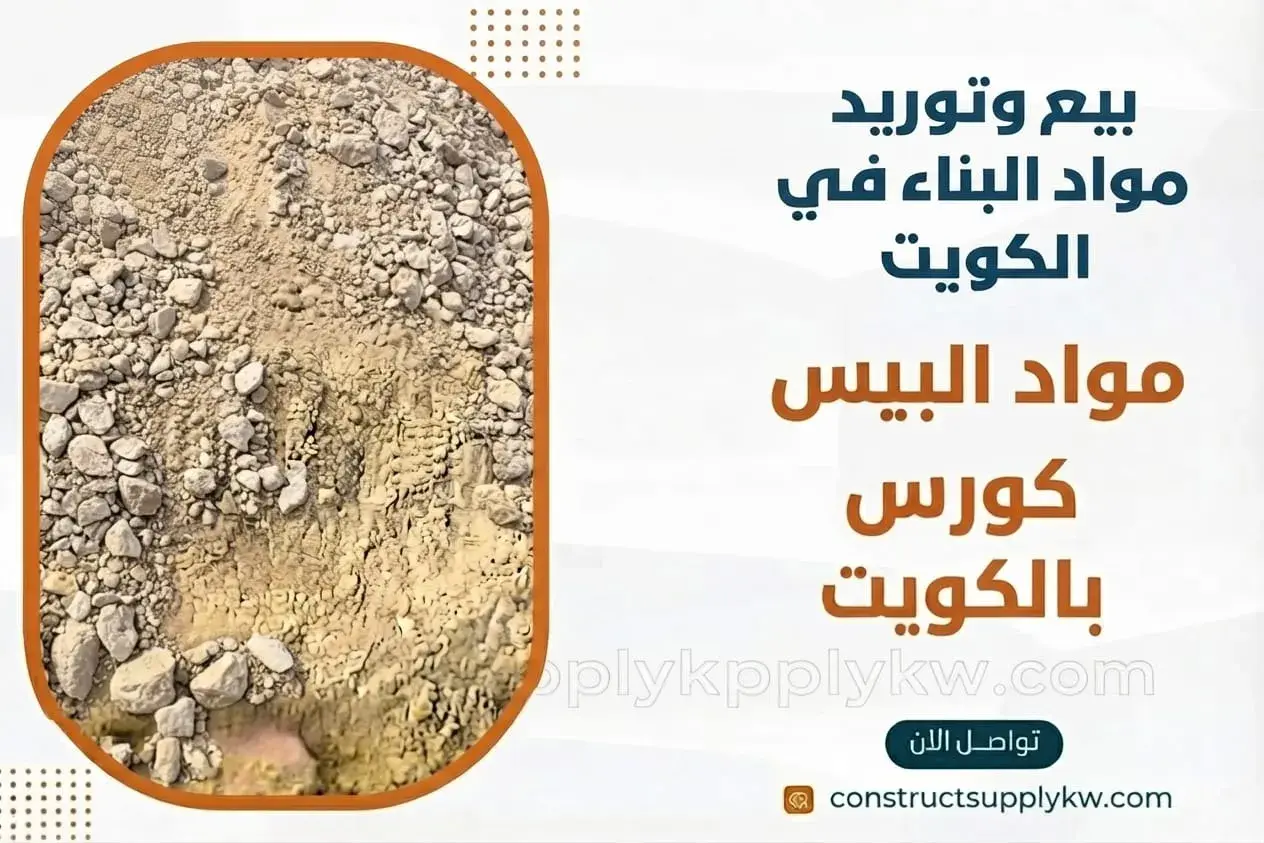
Base Course materials provide the strength and stability required for the structural foundation beneath roads and parking facilities before asphalt or concrete pavement is installed. These materials are never selected randomly because engineering specifications carefully define the proportions of coarse and fine particles necessary to achieve maximum density after compaction. High-quality Base Course combines larger aggregate particles that provide structural strength with smaller particles that fill internal voids while maintaining excellent stability and drainage characteristics. The material must also remain completely free from clay, organic matter, excessive fines, and harmful contaminants capable of reducing compaction efficiency or long-term performance. Professional construction projects require continuous laboratory testing before delivery and throughout construction to ensure material consistency between production batches. Practical experience across Kuwait demonstrates that properly manufactured Base Course materials significantly improve pavement quality while reducing the likelihood of settlement, rutting, and structural deformation caused by weak foundation layers. Consequently, selecting compliant Base Course material is considered an engineering decision that is every bit as important as selecting the pavement system itself.
-
They utilize engineered aggregate gradation for maximum density.
-
They combine coarse and fine particles in balanced proportions.
-
They remain free from clay and harmful contaminants.
-
They provide excellent stability after compaction.
-
They are used beneath roads, parking lots, and industrial facilities.
-
They undergo continuous laboratory quality control.
-
They improve load distribution throughout the pavement structure.
-
They reduce the likelihood of pavement deformation.
-
They maintain long-term structural stability.
-
They represent a fundamental component of transportation infrastructure.
Base Layer Thickness
Base layer thickness is determined through comprehensive engineering analysis that considers soil conditions, geotechnical investigation results, anticipated traffic loads, and the intended function of the roadway or parking facility. There is no universal thickness suitable for every project because residential streets experience very different loading conditions than industrial roads or heavy truck yards. Structural designers therefore rely on geotechnical reports, soil bearing capacity evaluations, and traffic classifications before determining the required Base Course thickness. Whenever greater thickness is required, engineers generally install the Base Course in multiple compacted lifts rather than placing one excessively thick layer because thinner lifts achieve significantly better density and uniform compaction. Professional construction projects throughout Kuwait never proceed to the next pavement layer until engineers verify that both the installed thickness and field density fully comply with project specifications. Practical experience consistently demonstrates that reducing Base Course thickness solely to decrease construction costs often results in expensive settlement, cracking, and pavement failures requiring extensive repairs. Therefore, selecting the correct base layer thickness is not merely an economic decision but a fundamental engineering requirement directly affecting pavement durability and service life.
-
It is determined according to soil investigations and design loads.
-
It varies between residential and industrial applications.
-
It is often constructed in multiple compacted lifts.
-
It improves the effectiveness of field compaction.
-
It is verified throughout construction.
-
It directly influences pavement service life.
-
It minimizes settlement and structural cracking.
-
It follows approved engineering drawings.
-
It reflects anticipated traffic loading conditions.
-
It forms a key element of pavement performance.
Base Course Compaction
.webp)
Base Course compaction represents the most important stage following material placement because even the highest-quality aggregate cannot perform properly unless the required field density has been achieved. Compaction begins by adjusting moisture content to the optimum level because both excessive and insufficient water significantly reduce compaction efficiency. Appropriate compaction equipment is then selected according to project requirements and lift thickness while performing the specified number of roller passes until the target density has been achieved. Continuous field density testing confirms that every section of the layer satisfies project specifications rather than only isolated areas. Throughout Kuwait, quality engineers pay particular attention to compaction because deficiencies at this stage often remain invisible during construction but later appear as settlement, rutting, pavement distortion, or structural cracking after the road enters service. Practical construction experience repeatedly demonstrates that even premium-quality Base Course materials cannot deliver satisfactory performance unless compaction follows recognized engineering procedures. Compaction therefore serves as the critical link connecting material quality with long-term pavement performance.
-
It increases Base Course density to the specified design level.
-
It minimizes aggregate movement under repeated traffic loading.
-
It depends upon optimum moisture content.
-
It requires specialized compaction equipment.
-
It is verified through continuous field testing.
-
It prevents premature pavement settlement.
-
It improves the stability of all pavement layers.
-
It increases the roadway's load-carrying capacity.
-
It represents one of the most important construction activities.
-
It directly determines long-term pavement quality.
Parking Lot Construction
Parking lot construction depends on a properly engineered foundation just as much as it depends on the quality of the finished pavement because parking facilities are subjected every day to repeated loading from vehicles stopping, turning, accelerating, and braking. These loading patterns differ significantly from the continuous traffic loads experienced on roadways, making the performance of the Base Course layer even more important. The Base Course must distribute these concentrated loads evenly across the prepared subgrade while preventing excessive stress from reaching the natural soil beneath. Engineering requirements also vary according to the intended use of the parking area. Private residential parking lots do not require the same structural capacity as commercial parking facilities, logistics centers, industrial compounds, or truck terminals where much heavier vehicles operate daily. In professionally engineered projects throughout Kuwait, construction begins with a complete geotechnical evaluation followed by subgrade preparation, placement of the Base Course aggregate, controlled compaction, and comprehensive quality testing before asphalt or concrete pavement is installed. Practical field experience consistently shows that problems such as localized settlement, standing water, cracked pavement, and uneven surfaces usually originate from deficiencies within the foundation layer rather than defects in the surface pavement itself. Investing in a properly designed and constructed Base Course therefore provides the greatest long-term return because it creates stable parking areas capable of withstanding continuous daily use for many years while minimizing maintenance costs and unexpected structural repairs.
-
It relies on a structurally sound Base Course foundation.
-
It is engineered according to expected vehicle loading.
-
It distributes concentrated wheel loads efficiently.
-
It minimizes localized settlement beneath parking spaces.
-
It improves the long-term performance of asphalt and concrete pavement.
-
It undergoes extensive quality verification before paving begins.
-
It is suitable for residential, commercial, and industrial facilities.
-
It improves drainage when constructed correctly.
-
It reduces long-term maintenance requirements.
-
It extends the operational life of parking facilities.
Internal Road Preparation
.webp)
Internal road preparation requires careful engineering planning long before the first truck delivers construction materials because the quality of internal road networks directly affects traffic flow, user safety, maintenance costs, and the overall functionality of the development. Construction typically begins by removing unsuitable soil where necessary, establishing the required elevations, and performing soil replacement or improvement if recommended by the geotechnical investigation. After the subgrade has been approved, the Base Course is placed at the specified thickness and compacted until the required field density has been achieved. Surface elevations and drainage slopes are carefully controlled to prevent water accumulation because standing water can gradually weaken the supporting layers beneath the pavement. Throughout residential developments, commercial complexes, and industrial projects in Kuwait, engineers require every quality control test to be successfully completed before paving operations begin since correcting defects within the Base Course after pavement installation becomes significantly more expensive and disruptive. Consequently, preparing internal roads correctly involves an integrated sequence of engineering activities beginning with soil investigation and ending only after every structural layer has been constructed according to project specifications. Each stage contributes directly to the long-term durability and reliability of the completed roadway.
-
It begins with detailed geotechnical evaluation.
-
It includes soil replacement whenever required.
-
It depends on specification-compliant Base Course construction.
-
It incorporates proper drainage from the earliest stages.
-
It minimizes future settlement of internal roads.
-
It improves traffic efficiency throughout the development.
-
It supports long-term pavement stability.
-
It relies on continuous field quality testing.
-
It is suitable for residential and commercial projects.
-
It establishes the structural foundation of every internal roadway.
Proctor Test
The Proctor Test is one of the most important engineering tests used before approving a Base Course layer because it establishes the relationship between moisture content and compaction density required to achieve optimum field performance. The objective of this test extends far beyond simply measuring density. Instead, it identifies the Optimum Moisture Content (OMC) at which the aggregate can achieve its Maximum Dry Density (MDD) under standardized compaction energy. When Base Course material is compacted below the optimum moisture level, aggregate particles cannot rearrange efficiently during rolling. Conversely, excessive moisture fills internal voids and reduces compaction efficiency regardless of how many roller passes are performed. Professional infrastructure projects throughout Kuwait rely on Proctor Test results before construction begins, then compare field density measurements against laboratory reference values to verify full compliance with engineering specifications. Engineers also use the test results to determine appropriate lift thickness, construction procedures, moisture conditioning requirements, and the number of compaction passes necessary for successful execution. Practical construction experience consistently demonstrates that ignoring Proctor Test recommendations or estimating moisture conditions visually is one of the leading causes of premature pavement settlement and structural deformation, even when premium-quality Base Course materials are used.
-
It determines the optimum moisture content for maximum density.
-
It serves as the reference for all field compaction testing.
-
It helps engineers select appropriate construction procedures.
-
It reduces the likelihood of Base Course failure.
-
It improves the overall quality of roads and parking facilities.
-
It scientifically defines the relationship between moisture and density.
-
It is required before approving Base Course construction.
-
It improves the efficiency of compaction equipment.
-
It eliminates guesswork during moisture control.
-
It represents one of the most critical quality control tests in pavement engineering.
Soil Bearing Capacity
.webp)
Soil bearing capacity is the fundamental factor upon which every pavement design decision is based because even the highest-quality Base Course cannot compensate for severely inadequate natural soil if the underlying ground has not been properly evaluated and improved. Every road and parking project therefore begins with a geotechnical investigation to determine soil characteristics, load-bearing capacity, settlement potential, and long-term compressibility. Based on these findings, engineers decide whether soil stabilization, replacement, increased Base Course thickness, or modifications to the pavement structure are necessary. Soil conditions vary considerably across different regions of Kuwait, making it inappropriate to apply identical pavement designs without project-specific investigation. During construction, quality control teams continuously monitor the prepared subgrade to ensure it has not been weakened by excessive moisture, disturbance, or inadequate preparation before Base Course placement begins. Practical field experience repeatedly confirms that many recurring pavement failures originate not from deficiencies in the Base Course itself but from untreated weak soils beneath the foundation layer. Evaluating soil bearing capacity is therefore not merely a preliminary engineering exercise but the critical first step that determines the long-term success, stability, and durability of the entire infrastructure project.
-
It governs the design of every pavement layer.
-
It identifies the need for soil improvement or replacement.
-
It directly influences Base Course thickness requirements.
-
It varies according to site-specific soil conditions.
-
It reduces the risk of long-term pavement settlement.
-
It depends upon detailed geotechnical investigations.
-
It supports appropriate structural design decisions.
-
It improves the reliability of roads and parking facilities.
-
It prevents unsuitable construction methods.
-
It represents the starting point of every successful infrastructure project.
Base Course Specifications
Base Course specifications establish the engineering standards required to ensure that the foundation layer performs reliably throughout the service life of roads, parking lots, and paved infrastructure. These specifications extend well beyond aggregate size alone and include particle size distribution, crushing resistance, abrasion resistance, fines content, cleanliness, load-bearing characteristics, and the material's ability to achieve the specified field density after compaction. Consulting engineers also require Base Course materials to originate from approved aggregate sources and undergo continuous laboratory testing to verify consistency between production batches because variations in material quality can produce uneven structural performance across the same project. Professional construction teams further monitor the condition of the material during transportation, storage, placement, and compaction because preserving aggregate quality is equally as important as manufacturing it correctly. When every engineering specification is satisfied, the completed Base Course becomes capable of resisting heavy traffic loading, environmental exposure, and long-term operational demands while substantially reducing maintenance costs and extending pavement service life. Selecting a supplier committed to recognized engineering standards should therefore be viewed as a long-term investment in infrastructure quality rather than simply a purchasing decision based on material price.
-
It complies fully with recognized engineering specifications.
-
It provides excellent crushing and abrasion resistance.
-
It remains free from clay and harmful contaminants.
-
It achieves the required field density after compaction.
-
It undergoes continuous laboratory quality verification.
-
It is supplied from approved aggregate sources.
-
It maintains consistent quality across all production batches.
-
It supports extended pavement service life.
-
It significantly reduces future maintenance costs.
-
It ensures dependable structural performance for every Base Course layer.
Conclusion
Base Course aggregate is the structural foundation upon which roads, parking facilities, and paved infrastructure ultimately depend because it is responsible for distributing traffic loads, stabilizing the pavement system, and supporting every layer constructed above it. Throughout this article, we explored the engineering importance of Base Course aggregate, its role in road and parking lot construction, the influence of layer thickness and compaction quality, the significance of the Proctor Test, the relationship between soil bearing capacity and pavement performance, and the technical specifications that ensure compliance with modern engineering standards. When high-quality materials are combined with proper construction practices, rigorous testing, and continuous quality control throughout every stage of execution, the result is a stronger roadway, more stable parking facilities, and infrastructure capable of delivering reliable performance for decades while minimizing maintenance requirements and life-cycle costs.
Frequently Asked Questions
What is Base Course aggregate?
Base Course aggregate is a well-graded crushed aggregate material used to construct the structural foundation beneath roads, parking lots, and paved areas, where it distributes loads and stabilizes the pavement system.
Why is the Base Course layer important?
It transfers traffic loads safely into the supporting soil, minimizes settlement and pavement cracking, and significantly extends the service life of roads and parking facilities.
How is the required Base Course thickness determined?
The required thickness is established through geotechnical investigations, soil bearing capacity evaluations, anticipated traffic loading, and project-specific engineering design requirements.
Why is the Proctor Test important?
The Proctor Test identifies the optimum moisture content and maximum dry density required to achieve proper field compaction and long-term Base Course performance.
Can Base Course be installed without field testing?
No. Field density tests and quality control inspections are essential for verifying compliance with engineering specifications and preventing future pavement failures.
How does soil bearing capacity affect pavement design?
Soil bearing capacity determines whether soil improvement is necessary, influences Base Course thickness, and directly affects the structural design of every pavement layer.
What are the key specifications of high-quality Base Course?
High-quality Base Course must have engineered particle gradation, excellent crushing resistance, minimal contaminants, consistent production quality, and the ability to achieve the required field density while complying with recognized engineering standards.
.webp)

.webp)