When a construction project reaches its final finishing stage, the smallest details often make the greatest difference between an ordinary installation and a professional finish that remains attractive for many years. Among these details, aluminum corner profiles have become one of the most widely used finishing components for protecting exposed edges
while enhancing the clean architectural lines of both interior and exterior spaces. These profiles are no longer viewed as decorative accessories alone. Instead, they have become functional finishing elements that protect ceramic tiles, porcelain, and natural stone from impact damage while creating smooth, consistent transitions that are easy to clean and maintain. In the Kuwaiti construction market, aluminum corner profiles are available in numerous sizes, colors, finishes, and configurations suitable for residential homes, luxury villas, commercial complexes, hospitals, hotels, and public buildings. As a result, selecting the appropriate profile depends far more on the intended application, material quality, and installation method than on appearance alone. In this article, we explore everything related to aluminum corner profiles, including their applications, profile types, selection criteria, pricing considerations, common installation mistakes, and the practical benefits that make them one of the most reliable finishing solutions available today.
Aluminum Corner Profiles
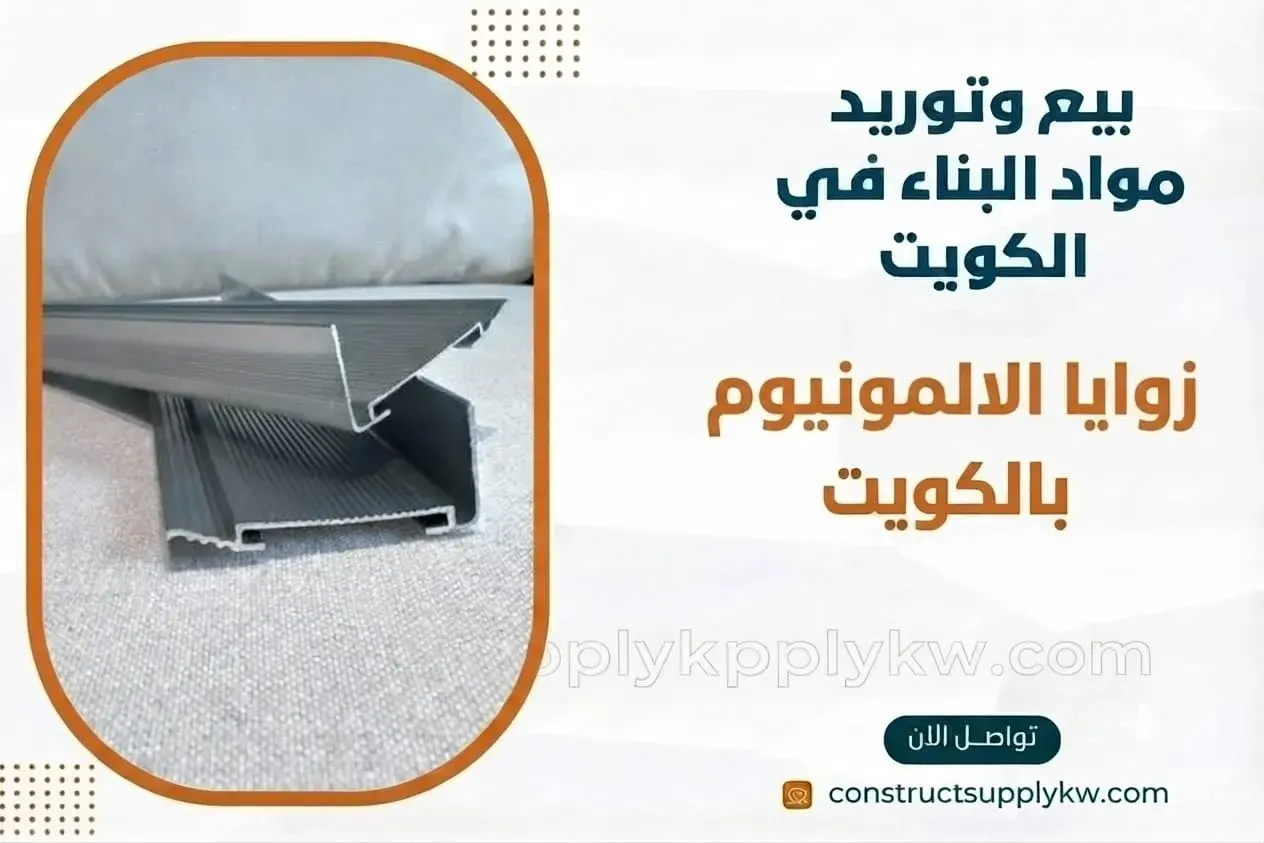
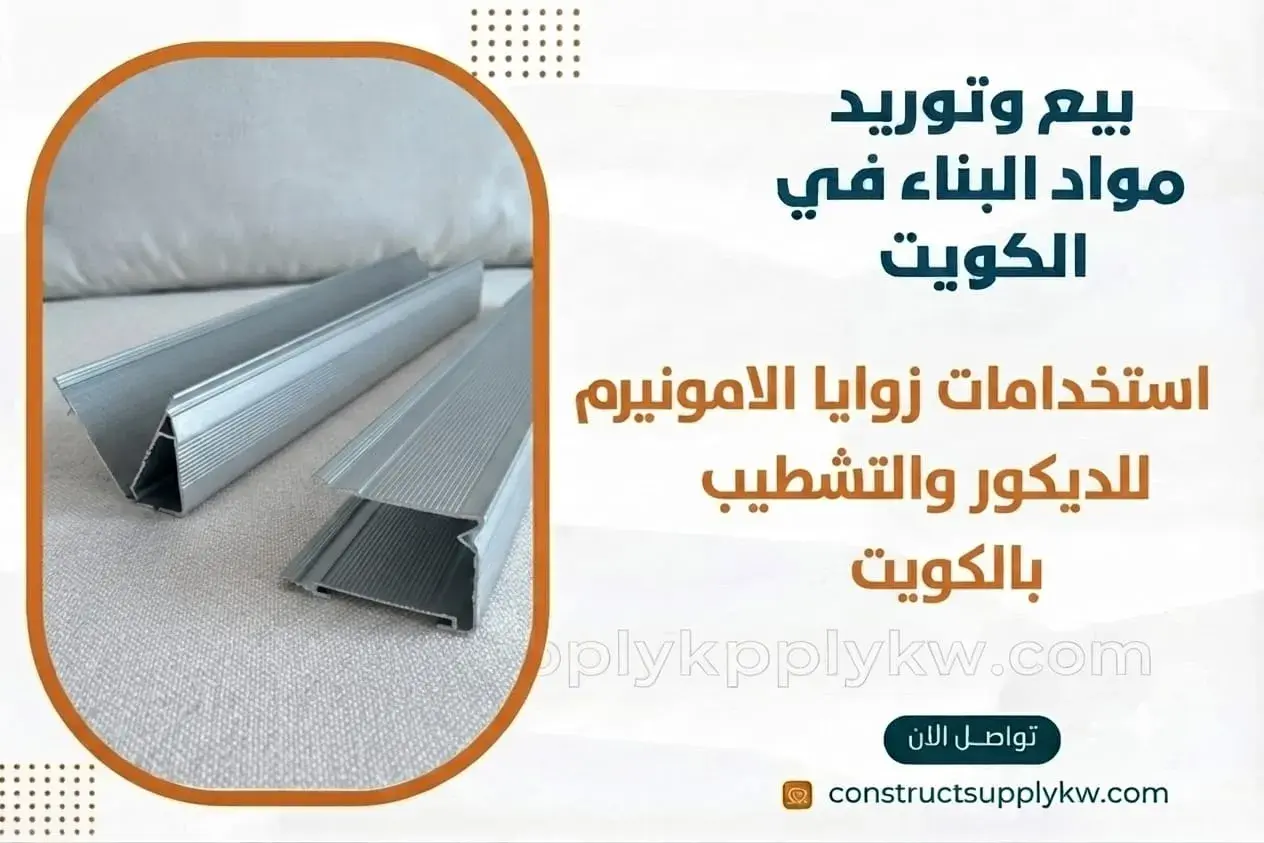
Aluminum Corner Profiles are among the most widely used finishing components in modern construction because they successfully combine visual appeal with long-term functional performance. Their purpose extends far beyond simply covering exposed edges or concealing tile terminations. They provide continuous protection for vulnerable corners against everyday impacts while significantly reducing the likelihood of chipped ceramic, porcelain, or natural stone surfaces during years of regular use. Throughout residential, commercial, and hospitality projects across Kuwait, professional contractors consistently observe that installations using high-quality aluminum corner profiles retain their appearance much longer than traditional finishing methods that rely solely on grout, fillers, or silicone sealants. Aluminum's natural resistance to corrosion and moisture also makes it an ideal solution for kitchens, bathrooms, swimming pool areas, and locations subjected to frequent cleaning or humid conditions. From an engineering perspective, aluminum corner profiles contribute to straighter edges and more accurate architectural lines, particularly when installing large-format porcelain or ceramic tiles where installation precision is especially important. Manufacturing technology has also evolved considerably, making profiles available in matte, polished, brushed, black, bronze, gold, champagne, and silver finishes that complement virtually every contemporary interior design style. Selecting the appropriate aluminum corner profile at the beginning of a project therefore represents an investment in both long-term durability and superior finishing quality rather than simply adding a decorative accessory.
-
Protect exposed tile edges against daily impact damage.
-
Create straight architectural lines with a highly professional appearance.
-
Suitable for interior and exterior applications because of their corrosion resistance.
-
Reduce long-term maintenance caused by chipped tile edges.
-
Available in numerous colors and decorative finishes.
-
Help preserve the visual quality of finished spaces for many years.
-
Commonly specified for residential, commercial, hospitality, and healthcare projects.
-
Easier to clean than many traditional edge-finishing materials.
-
Combine practical performance with refined aesthetics.
-
Considered a fundamental component of premium modern finishing systems.
Aluminum Profile
An Aluminum Profile refers to an extruded aluminum section manufactured in various geometric shapes to serve multiple finishing, protection, and decorative purposes throughout construction projects. These profiles are not limited to tile installations alone but are also widely used in decorative wall systems, suspended ceilings, interior facades, architectural furniture, cabinetry, and numerous other finishing applications. Depending on its intended purpose, an aluminum profile may be produced in L-shaped, T-shaped, U-shaped, square, curved, or more decorative configurations that meet specific architectural requirements. Professional designers and contractors never select profiles based solely on appearance. Instead, they evaluate tile thickness, floor construction, anticipated traffic levels, installation conditions, and the overall design concept before choosing the appropriate profile. Commercial walkways, hospitals, shopping centers, and public facilities often require heavier-duty profiles capable of withstanding continuous pedestrian traffic, whereas lighter residential applications may use less robust sections. Surface finishing quality is equally important because inferior coatings may scratch, fade, or discolor over time, especially in humid environments or locations exposed to direct sunlight. Consequently, selecting aluminum profiles manufactured according to strict quality standards ensures longer service life while preserving the visual consistency of the completed project throughout many years of operation.
-
Manufactured in multiple shapes for different finishing applications.
-
Selected according to tile thickness and intended use.
-
Used in floors, walls, ceilings, furniture, and decorative installations.
-
Improve both installation quality and architectural appearance.
-
Engineering properties vary according to thickness and manufacturing method.
-
Suitable for residential, commercial, healthcare, and hospitality projects.
-
Maintain consistent finishing lines throughout the project.
-
Require precise installation for optimum performance.
-
Available in numerous finishes and color options.
-
Form an essential element of contemporary architectural finishing systems.
Aluminum Tile Corner
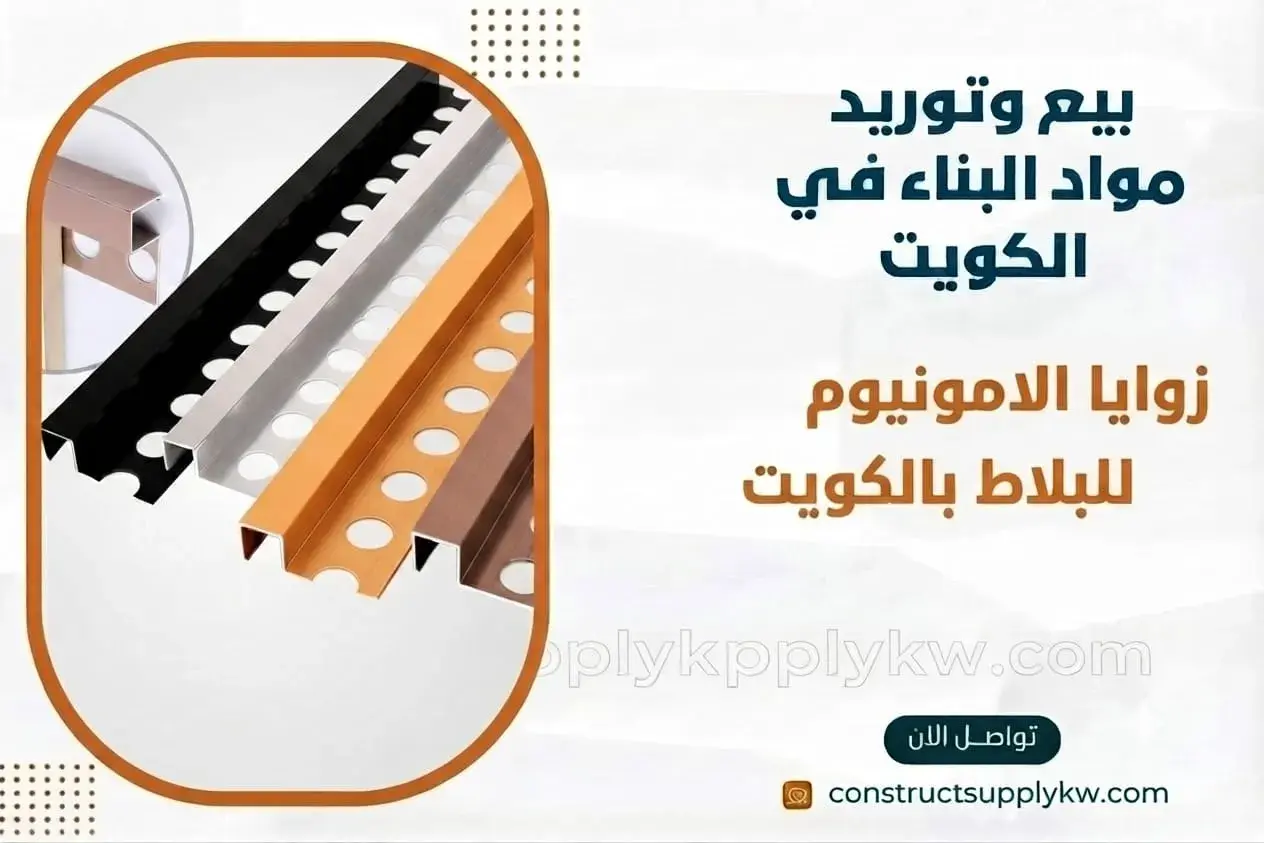
An Aluminum Tile Corner is specifically designed to protect exposed tile edges in locations where continuous pedestrian traffic or frequent contact makes ceramic and porcelain edges particularly vulnerable to damage. For this reason, aluminum tile corners have become standard components in modern construction projects, replacing traditional exposed tile edges that often chip or deteriorate after years of use. Their importance is especially evident in bathrooms, kitchens, staircases, entrances, commercial corridors, and other heavily used spaces. Aluminum tile corners also provide elegant transitions between adjacent materials while concealing minor dimensional differences between tile surfaces and neighboring finishes. Practical experience from construction projects throughout Kuwait demonstrates that selecting a corner profile whose thickness precisely matches the installed tile thickness is one of the most important factors affecting installation quality. Profiles that sit too high or too low relative to the finished tile surface not only compromise the appearance but also become more susceptible to accidental impacts. Material quality deserves equal attention because lower-grade aluminum may dent, deform, or lose its finish after prolonged use. When the correct product is selected and professionally installed, aluminum tile corners become permanent protective elements that preserve the appearance and structural integrity of tiled walls and floors for many years.
-
Protect tile edges from everyday impact damage.
-
Produce elegant transitions between adjacent finishes.
-
Suitable for bathrooms, kitchens, staircases, and corridors.
-
Reduce future repair and replacement costs.
-
Profile thickness should match tile thickness precisely.
-
Improve the quality of the completed installation.
-
Available in numerous sizes for different tile systems.
-
Professional installation produces the best long-term results.
-
Preserve tile edges against wear and accidental damage.
-
Extend the service life of tiled surfaces.
Ceramic Tile Finishing Corners
Ceramic Tile Finishing Corners play a vital role in achieving precise, professional finishes that combine structural protection with visual elegance. Their function extends beyond simply covering the exposed ends of ceramic tiles. They also shield vulnerable tile edges from chipping caused by daily traffic, furniture movement, cleaning equipment, and repeated impact throughout the building's service life. Professional contractors typically select these finishing profiles before tile installation begins rather than after completion because this allows the profiles to become fully integrated into the installation system without requiring later modifications that may compromise quality. Various finishing corner profiles are available for outside corners, transitions between floors and walls, stair edges, and heavy-duty commercial environments where greater durability is required. Throughout Kuwait, designers increasingly specify aluminum finishing corners instead of conventional edge treatments because they provide cleaner architectural details while maintaining their appearance for significantly longer periods. Coordinating the profile finish with surrounding ceramic tiles and adjacent materials is equally important so that the profile becomes a natural design element rather than appearing as an afterthought. When these details are carefully planned and professionally installed, ceramic tile finishing corners contribute significantly to the overall quality, durability, and refinement of the completed project.
-
Produce clean, organized ceramic tile terminations.
-
Protect exposed tile edges from daily damage.
-
Create consistent transitions between adjoining surfaces.
-
Available in designs suitable for modern and traditional interiors.
-
Widely used in residential, commercial, and hospitality developments.
-
Enhance the overall quality of finished spaces.
-
Reduce future maintenance requirements.
-
Best selected before tile installation begins.
-
Profile dimensions should correspond with tile thickness.
-
Add both functional and aesthetic value to construction projects.
Tile Edge Profile
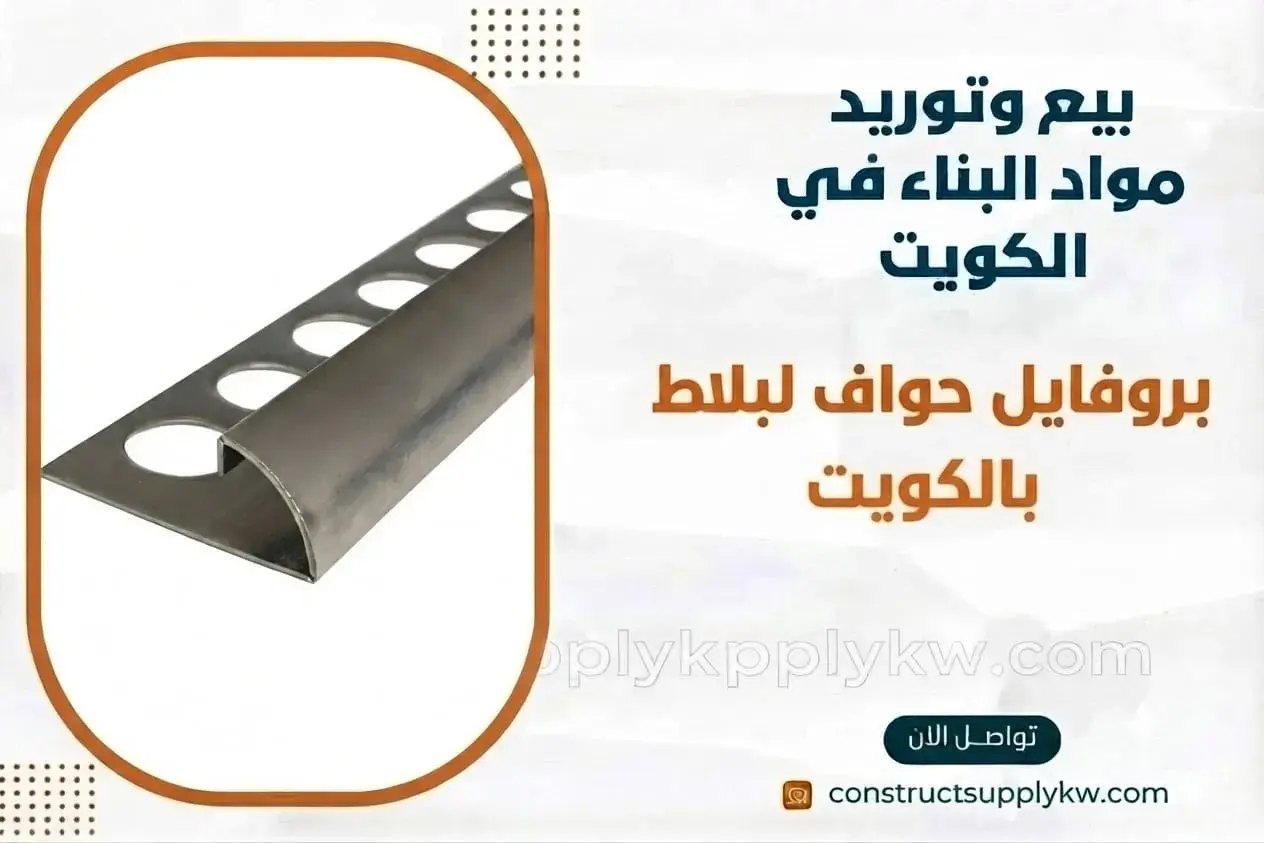
A Tile Edge Profile provides a professional method of finishing exposed tile edges while protecting them from impact and improving the overall appearance of the installation. Compared with leaving tile edges exposed or relying solely on conventional finishing methods, tile edge profiles distribute impact forces across a specially engineered aluminum section instead of allowing them to act directly on the tile itself. They also help accommodate minor differences in floor levels between adjoining materials, creating smoother, safer transitions throughout the building. The appropriate profile depends on the intended application, with commercial facilities and healthcare environments generally requiring heavier-duty profiles than residential spaces. Profiles are available in straight, curved, decorative, and specialized configurations, giving architects considerable design flexibility while maintaining excellent structural performance. Experience from projects across Kuwait consistently shows that premium-quality tile edge profiles resist scratching, discoloration, and wear far better than lower-grade alternatives, especially in high-traffic environments. Consequently, tile edge profiles have become an essential specification in projects that prioritize both long-term durability and architectural excellence.
-
Protect exposed tile edges against impact damage.
-
Create refined, professional floor transitions.
-
Help compensate for minor level differences between flooring materials.
-
Available in multiple shapes for various design concepts.
-
Suitable for high-traffic commercial environments.
-
Minimize damage to vulnerable tile edges.
-
Simplify long-term cleaning and maintenance.
-
Compatible with ceramic, porcelain, marble, and natural stone.
-
Selected according to anticipated traffic conditions.
-
Improve both durability and finishing quality.
Aluminum Stair Nosing
Aluminum Stair Nosing is one of the most practical finishing solutions because it combines structural protection with improved safety in areas exposed to continuous pedestrian traffic. Stair edges naturally experience greater wear than flat flooring surfaces because every step concentrates force directly on the front edge of the tread. Without proper protection, these exposed edges are far more likely to chip, crack, or deteriorate over time. Aluminum stair nosing addresses this issue by covering and reinforcing the leading edge of each step while preserving its architectural appearance for many years. Many systems are also manufactured with integrated anti-slip inserts, making them especially valuable in hospitals, schools, shopping malls, office buildings, hotels, and other public facilities where reducing slip hazards is a priority. Designers also appreciate the wide variety of available finishes, allowing stair nosing to complement ceramic tiles, porcelain, marble, granite, or engineered stone without disrupting the overall design concept. Practical experience from numerous projects demonstrates that investing in quality aluminum stair nosing significantly lowers future maintenance costs because replacing a protective aluminum profile is considerably easier and more economical than replacing damaged stair treads. As a result, aluminum stair nosing has become a standard specification in modern construction projects where durability, safety, and appearance are equally important.
-
Protects stair edges from continuous impact and wear.
-
Improves pedestrian safety through enhanced edge protection.
-
Available with anti-slip inserts for public buildings.
-
Suitable for both indoor and outdoor staircases.
-
Preserves the architectural appearance of finished stairs.
-
Reduces long-term repair and maintenance expenses.
-
Compatible with ceramic, porcelain, marble, and granite stairs.
-
Offered in finishes that match a wide variety of interior designs.
-
Performs reliably in high-traffic commercial environments.
-
Represents one of the most practical modern stair finishing solutions.
Decorative Aluminum Profiles
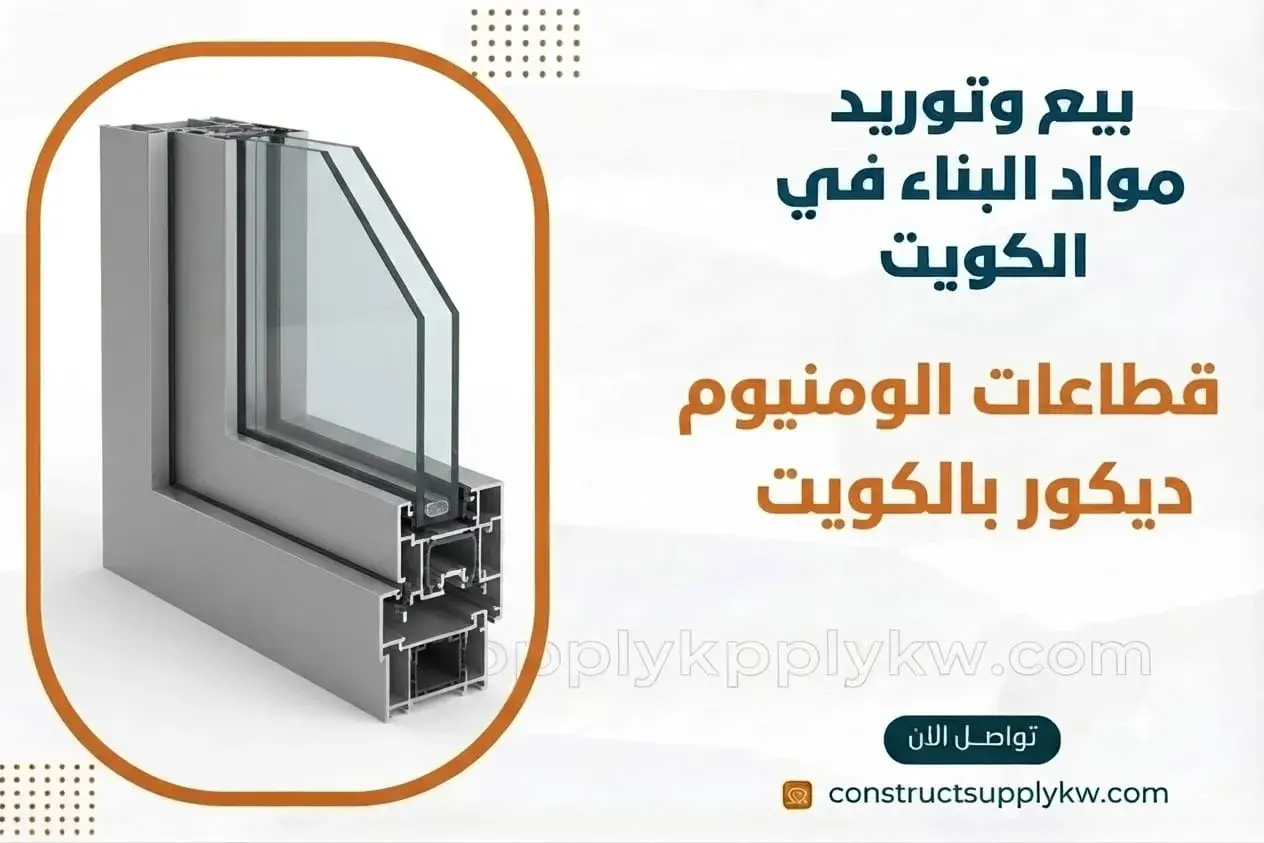
Decorative Aluminum Profiles have become an essential design feature in contemporary interiors because they give architects and interior designers exceptional flexibility to create elegant architectural details without increasing construction complexity. Their applications now extend well beyond tile finishing to include decorative wall panels, feature walls, suspended ceilings, cabinetry, shelving, interior partitions, display units, and numerous architectural accent features. In Kuwait's modern residential and commercial developments, matte black, bronze, champagne, brushed gold, and satin silver profiles have become especially popular because they complement minimalist and luxury interior styles alike. Decorative profiles are manufactured in many shapes, widths, depths, and installation systems, enabling designers to integrate them seamlessly with marble, wood, stone, porcelain, glass, and composite decorative materials. Experience from completed projects consistently demonstrates that premium-quality aluminum profiles retain their finish, color consistency, and dimensional stability significantly longer than lower-quality alternatives that may scratch, fade, or discolor after extended use. Consequently, selecting high-grade decorative aluminum profiles contributes not only to the visual sophistication of a project but also to its long-term durability and reduced maintenance requirements.
-
Add refined architectural detailing to interior spaces.
-
Used in walls, ceilings, cabinetry, and decorative installations.
-
Available in contemporary finishes suitable for luxury interiors.
-
Highlight architectural features with clean geometric lines.
-
Manufactured in numerous shapes for different design concepts.
-
Compatible with marble, wood, porcelain, stone, and glass.
-
Maintain their appearance when high-quality materials are selected.
-
Reduce the need for more complex decorative finishing techniques.
-
Create a modern design identity that remains attractive for years.
-
Represent one of today's most versatile decorative finishing materials.
Protecting Ceramic Tile Edges
Protecting Ceramic Tile Edges is one of the primary reasons aluminum corner profiles have become indispensable in modern finishing systems. Tile edges are naturally the most vulnerable part of any ceramic or porcelain installation because they receive direct impacts from foot traffic, furniture movement, cleaning equipment, and everyday use. In many situations, what begins as a small chip gradually develops into extensive damage that eventually requires complete tile replacement, increasing both maintenance costs and repair time. Professional construction projects therefore incorporate edge protection from the very beginning of the installation rather than attempting repairs after damage has already occurred. Protection requirements also vary according to the intended use of the building. Shopping centers, healthcare facilities, educational buildings, and other high-traffic environments generally require more durable protection systems than private residential homes. Construction specialists consistently emphasize that selecting the appropriate edge profile is just as important as selecting premium ceramic tiles because even the highest-quality tile cannot achieve its expected service life if its exposed edges remain unprotected. When professionally installed, aluminum edge protection systems preserve straight, clean tile edges despite years of continuous use while significantly extending the lifespan of the finished installation.
-
Prevent ceramic tile edges from chipping and impact damage.
-
Reduce long-term maintenance and replacement expenses.
-
Suitable for residential, commercial, and institutional buildings.
-
Preserve straight, clean tile edges throughout years of use.
-
Extend the service life of finished tile installations.
-
Minimize deterioration caused by everyday pedestrian traffic.
-
Contribute to a more refined and professional appearance.
-
Edge protection should be selected according to building use.
-
Help preserve the long-term value of construction finishes.
-
Form an important component of premium finishing standards.
Finishing Internal Corners
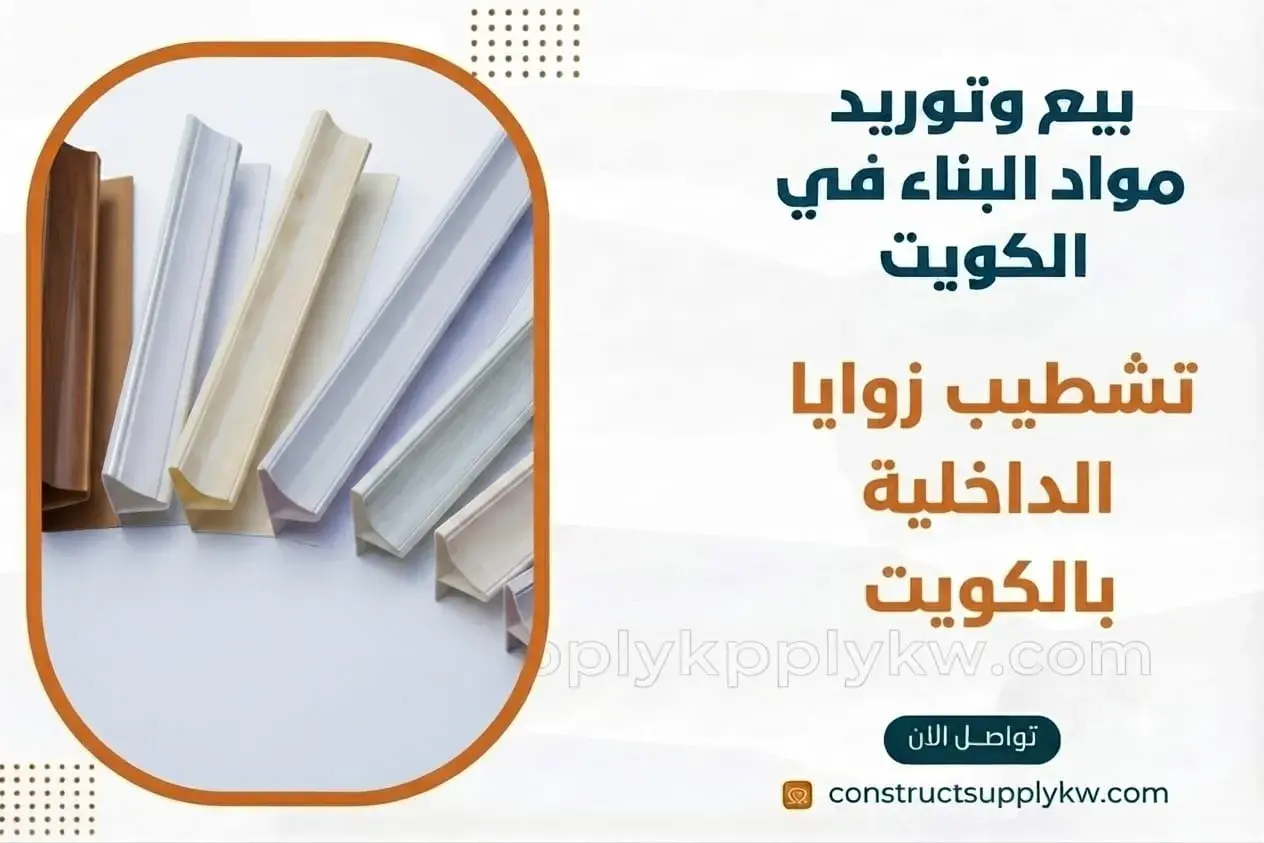
Finishing Internal Corners requires exceptional precision because these intersections directly influence the visual quality and overall craftsmanship of a completed interior. Whether joining tiled walls, connecting floor and wall surfaces, or transitioning between different finishing materials, properly executed internal corners create clean architectural lines while eliminating irregular gaps that often collect dust and dirt. Aluminum corner profiles specifically designed for internal corners provide accurate alignment, protect delicate tile edges, and simplify future cleaning and maintenance. Selecting the appropriate profile depends on the corner geometry, surrounding materials, and the intended design concept, whether ceramic tile, porcelain, marble, natural stone, or decorative wall panels are being installed. Practical experience from high-quality construction projects consistently demonstrates that careful attention to internal corner finishing reflects the overall professionalism of both the contractor and installation team. Although these details may appear minor during construction, they remain highly visible throughout the building's lifetime and significantly influence the perceived quality of the completed space. For this reason, experienced professionals recommend using precision-manufactured aluminum profiles to ensure consistent alignment, durable protection, and an elegant architectural finish that remains attractive for many years.
-
Create clean and precisely aligned internal corner details.
-
Reduce dust accumulation at wall and floor intersections.
-
Improve the consistency of finished architectural lines.
-
Compatible with ceramic, porcelain, marble, and stone finishes.
-
Enhance the overall quality of completed interiors.
-
Protect vulnerable corner edges from long-term damage.
-
Simplify routine cleaning and maintenance.
-
Available in multiple designs for various interior styles.
-
Add a refined professional appearance to every project.
-
Reflect careful attention to construction quality and detail.
Aluminum Finishing Accessories
Aluminum Finishing Accessories include a comprehensive range of corner profiles, transition strips, end caps, joining connectors, expansion profile components, and complementary finishing elements that work together to create a complete finishing system combining durability, functionality, and refined aesthetics. These accessories should never be viewed as minor additions because they directly influence the quality, longevity, and overall appearance of the completed project. In professional construction, every finishing accessory is selected as part of a fully coordinated system to ensure compatibility in dimensions, colors, installation methods, and long-term performance. This integrated approach prevents visible gaps, uneven transitions, mismatched finishes, and installation inconsistencies that often appear when unrelated components are combined. Another important advantage of selecting compatible accessories from the same product family is the ease of future maintenance, repairs, and replacement, since matching components remain readily available throughout the building's lifecycle. Practical experience from construction projects across Kuwait consistently shows that investing in premium-quality finishing accessories during the design and procurement stages prevents many common post-installation problems, including inconsistent colors, poor profile alignment, incompatible dimensions, and premature wear at profile connections. For this reason, aluminum finishing accessories have become an indispensable part of premium architectural finishing systems where both long-term durability and sophisticated appearance are equally important objectives.
-
Complete the entire finishing system with fully compatible components.
-
Include corner profiles, transition strips, connectors, and end caps.
-
Create a consistent appearance throughout the finished project.
-
Minimize installation issues caused by incompatible dimensions.
-
Simplify future maintenance and replacement work.
-
Improve both the functional and visual quality of completed finishes.
-
Best selected as part of one coordinated finishing system.
-
Add long-term value to residential and commercial developments.
-
Suitable for a broad range of architectural finishing applications.
-
Represent an essential component of modern premium finishing solutions.
Conclusion
Aluminum corner profiles and decorative aluminum sections have become indispensable components of modern architectural finishing systems because they successfully combine structural protection, long-term durability, and refined aesthetics within a single solution. Throughout this article, we explored the role of Aluminum Corner Profiles, examined the characteristics of Aluminum Profiles, discussed the applications of Aluminum Tile Corners, explained the importance of Ceramic Tile Finishing Corners, reviewed the advantages of Tile Edge Profiles, highlighted the practical benefits of Aluminum Stair Nosing, presented the versatility of Decorative Aluminum Profiles, demonstrated the value of Protecting Ceramic Tile Edges, explained professional methods for Finishing Internal Corners, and examined the contribution of Aluminum Finishing Accessories to achieving superior installation quality. When premium-quality aluminum products are selected and professionally installed according to recognized construction practices, they significantly extend the service life of finished surfaces, reduce long-term maintenance costs, preserve architectural appearance, and provide lasting value for residential, commercial, hospitality, and institutional projects. This combination of durability, precision, and visual refinement explains why aluminum finishing systems continue to be among the most widely specified solutions in today's construction and interior design industry.
Frequently Asked Questions
Are aluminum corner profiles better than traditional exposed tile edge finishes?
In most modern construction projects, yes. Aluminum corner profiles provide continuous protection for exposed tile edges while also creating a cleaner and more professional architectural appearance. Traditional exposed tile edges remain considerably more vulnerable to chipping, cracking, and long-term deterioration under everyday use.
Can aluminum corner profiles be used with every type of tile?
Yes. Aluminum corner profiles are manufactured in a wide variety of sizes and configurations suitable for ceramic tiles, porcelain, marble, granite, and many other finishing materials. The most important requirement is selecting a profile whose dimensions accurately match the thickness of the installed material.
How should I choose the correct color for aluminum finishing profiles?
The profile finish should complement the surrounding flooring, wall finishes, and interior design concept. Popular choices include satin silver, matte black, brushed gold, bronze, and champagne finishes, allowing the aluminum profile to blend naturally into the overall architectural design.
Do aluminum profiles require regular maintenance?
Generally, very little maintenance is required. Routine cleaning with appropriate non-abrasive cleaning products is usually sufficient to preserve their appearance. Harsh abrasive cleaners should be avoided because they may damage the surface finish over time.
What is the single most important factor affecting the quality of aluminum finishing systems?
Three equally important factors determine the overall quality of an aluminum finishing installation: the quality of the aluminum material itself, selecting the correct profile size for the intended application, and professional installation by experienced specialists. Even the highest-quality product cannot achieve optimum performance if the wrong dimensions are selected or if installation is carried out incorrectly.
.jpeg)