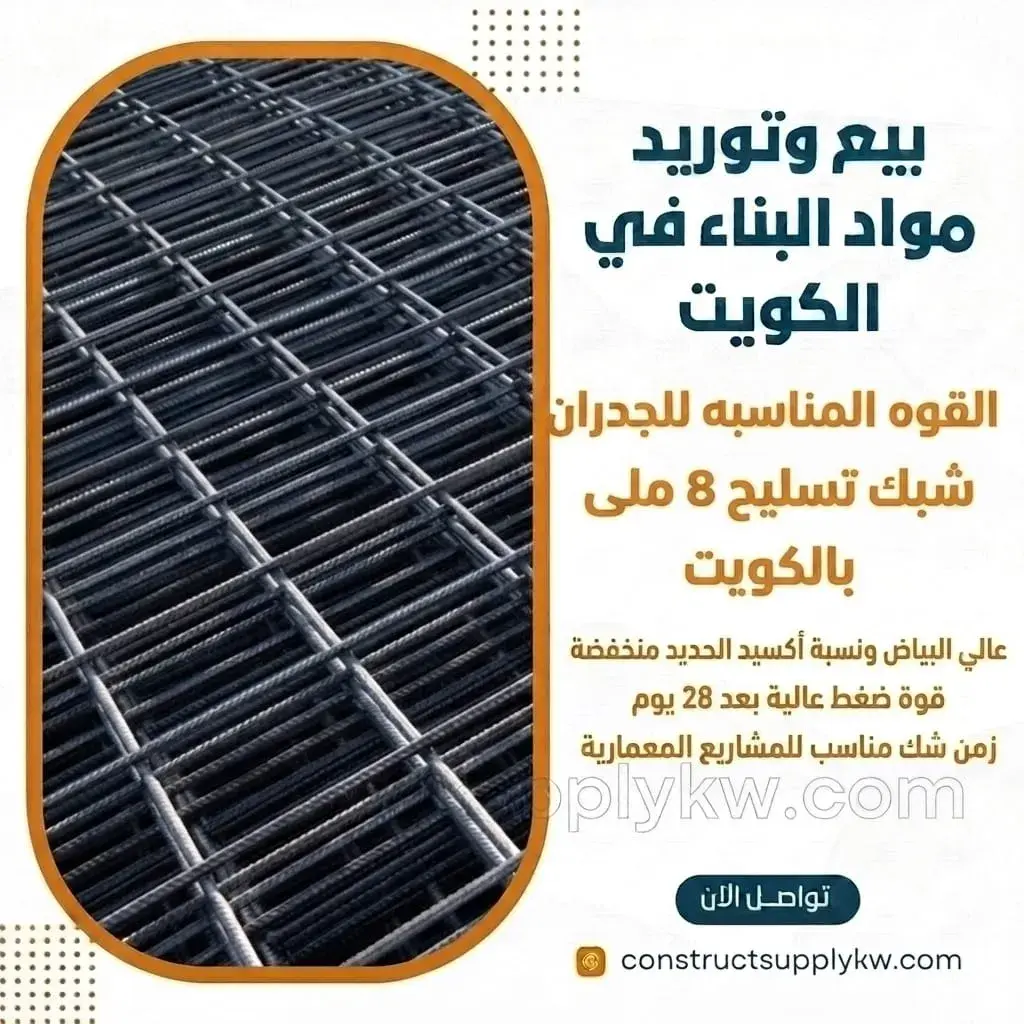
8 mm reinforcement mesh is widely used in structural applications that require greater load-carrying capacity than smaller wire diameters, making it one of the preferred reinforcement sizes for concrete walls, roof slabs, and structural elements that demand evenly distributed steel reinforcement while maintaining fast installation and high construction quality. Selecting this mesh involves much more than simply choosing a larger wire diameter. Engineers must also evaluate tensile strength, welding quality, wire spacing, installation methods, and the compatibility of the reinforcement mesh with the structural design requirements of the project. In this article, we explore the key characteristics of 8 mm reinforcement mesh, its primary applications in concrete walls and roof slabs, the engineering factors that influence its performance, and the technical criteria that help engineers and contractors select the most appropriate reinforcement mesh according to approved structural standards.
8 mm Reinforcement Mesh
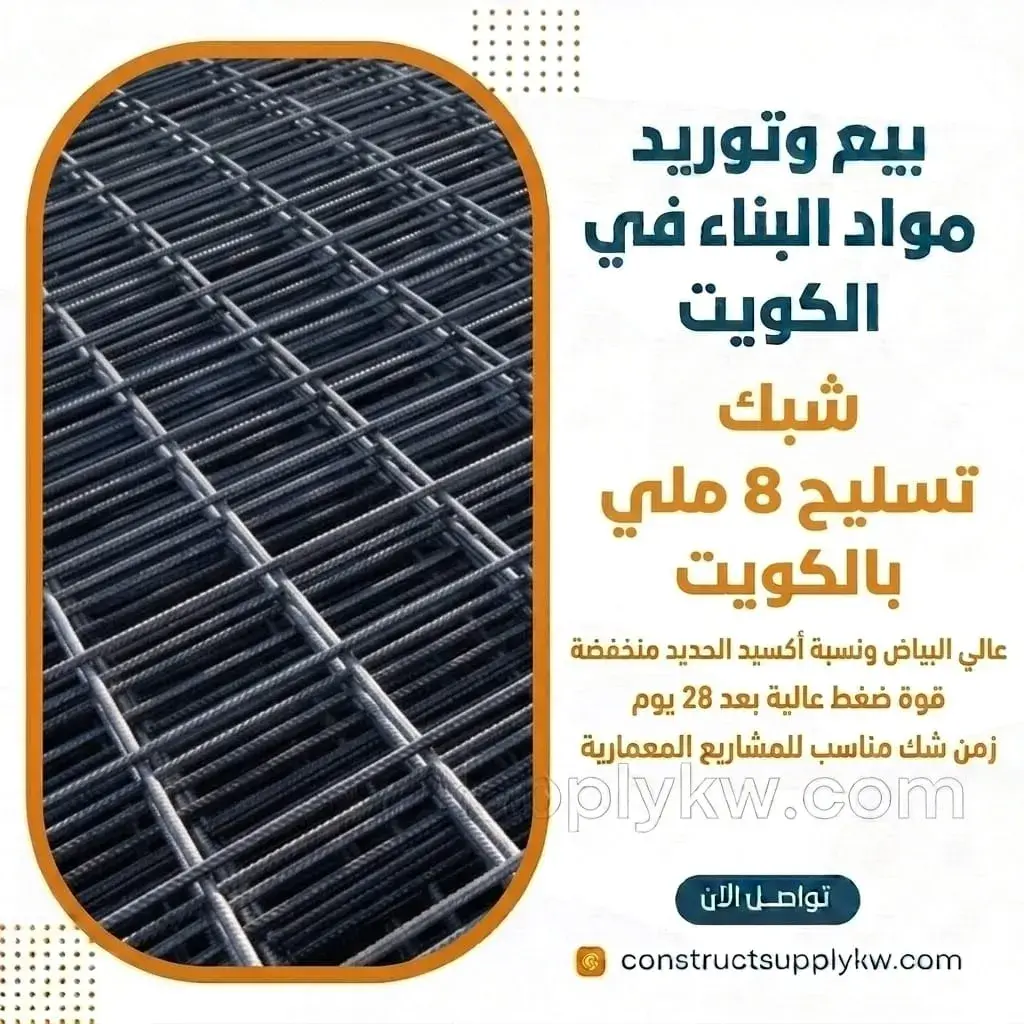
8 mm Reinforcement Mesh represents a higher-capacity reinforcement solution compared with lighter mesh sizes commonly used for certain floor applications because it provides a greater quantity of reinforcing steel within the concrete element while maintaining uniform reinforcement distribution in every direction. For this reason, it is frequently specified in projects that require increased resistance to structural loads or improved control of cracking caused by operational stresses, concrete shrinkage, and temperature variations. This mesh is manufactured from high-strength steel wires that are electrically resistance welded in fully automated production lines to guarantee dimensional accuracy and consistent weld quality at every intersection. Practical experience from residential and commercial construction projects throughout Kuwait demonstrates that 8 mm reinforcement mesh provides an excellent balance between structural strength and construction efficiency, particularly for projects requiring reinforcement across large surface areas. The use of prefabricated reinforcement sheets also minimizes inconsistencies in reinforcement placement compared with individually assembled reinforcing bars, resulting in higher overall construction quality. Nevertheless, engineers emphasize that selecting 8 mm reinforcement mesh does not mean it is universally superior to other mesh sizes. Instead, it is chosen because it best satisfies the specific structural requirements identified through detailed engineering calculations, while other projects may require either smaller or larger wire diameters depending on their design criteria.
-
Provides a greater quantity of reinforcement than lighter mesh sizes.
-
Improves the structural resistance of reinforced concrete elements.
-
Maintains highly uniform reinforcement distribution throughout the structure.
-
Suitable for projects requiring rapid construction progress.
-
Manufactured using precision electrical resistance welding.
-
Reduces reinforcement distribution errors during installation.
-
Must always be selected according to structural engineering calculations.
-
Suitable for residential, commercial, and industrial applications.
-
Improves construction quality across large reinforced areas.
-
Overall performance depends on manufacturing quality and proper installation.
8 mm Steel Mesh
8 mm Steel Mesh provides contractors with a highly practical reinforcement solution that combines structural efficiency with installation simplicity because it arrives on site ready for placement without requiring the extensive cutting and tying operations associated with conventional reinforcement methods. The uniform arrangement of reinforcing wires within the mesh distributes structural loads more consistently throughout the concrete, improving the overall performance of reinforced concrete elements when installed according to engineering specifications. The 8 mm wire diameter also provides greater load resistance than smaller mesh sizes, making it appropriate for specific structural applications determined by the design engineer. Practical construction experience demonstrates that the quality of steel mesh should never be judged solely by wire diameter. Product quality also depends on steel grade, weld integrity, sheet dimensions, and compliance with recognized engineering standards. Consequently, purchasing reinforcement mesh from reputable suppliers that provide comprehensive technical certifications forms an essential part of successful project execution because any deviation from required specifications may compromise construction quality or create delays during engineering inspections and material approval procedures.
-
Significantly reduces reinforcement preparation time.
-
Provides consistent reinforcement distribution throughout concrete.
-
Manufactured with greater dimensional accuracy than manually assembled reinforcement.
-
Must fully comply with approved structural drawings.
-
Performance depends upon the quality of the steel used.
-
Weld integrity should always be verified before installation.
-
Suitable for projects requiring high construction productivity.
-
Simplifies transportation and placement on site.
-
Helps reduce reinforcement material waste.
-
Best obtained from certified and reputable suppliers.
Reinforcement Mesh for Concrete Roof Slabs
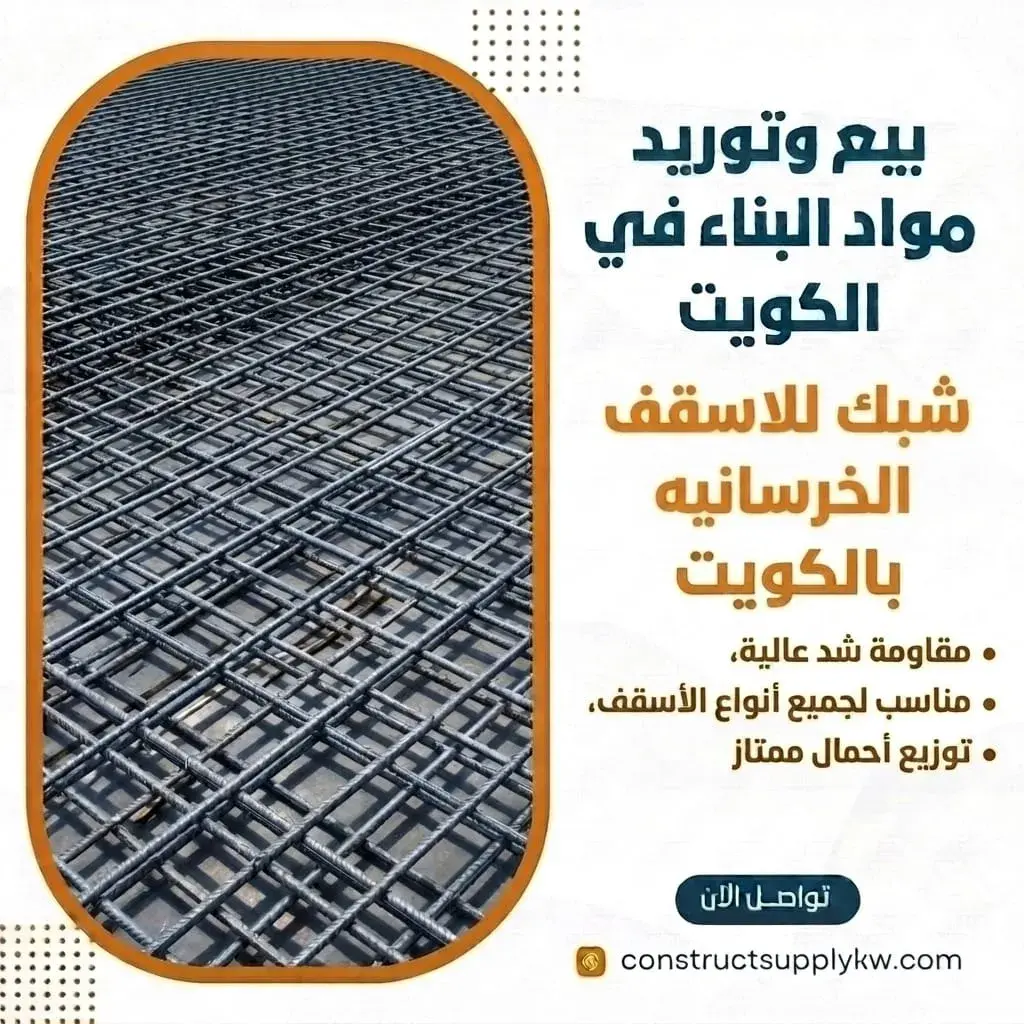
Reinforcement Mesh for Concrete Roof Slabs is widely used in roof slab systems designed to accommodate welded reinforcement mesh according to structural calculations because it provides highly uniform reinforcement distribution throughout reinforced concrete slabs while minimizing the inconsistencies often associated with manual reinforcement installation. Throughout their service life, roof slabs are subjected to multiple types of stresses including permanent loads, live loads, concrete shrinkage, and thermal movement. Consequently, reinforcement must be distributed accurately to ensure dependable long-term structural performance. Eight millimeter reinforcement mesh allows contractors to cover large slab areas rapidly while maintaining precise wire spacing, reducing construction time and improving workmanship quality. However, successful use of reinforcement mesh in roof slabs depends not only on the product itself but also on accurate positioning using reinforcement chairs, maintaining the specified concrete cover, and executing reinforcement overlaps exactly as detailed in the structural drawings. Practical field experience throughout Kuwait consistently demonstrates that careful attention to these construction details significantly improves roof slab quality while reducing the likelihood of future repairs or structural maintenance.
-
Provides highly uniform reinforcement throughout roof slabs.
-
Reduces construction time for reinforced concrete slabs.
-
Minimizes inconsistencies associated with manual reinforcement installation.
-
Requires proper support using reinforcement chairs.
-
Performs best when specified concrete cover is maintained.
-
Suitable for large slab areas when approved by structural design.
-
Simplifies reinforcement placement during construction.
-
Improves workmanship quality for reinforced concrete slabs.
-
Selection should always follow structural engineering calculations.
-
Contributes to the long-term stability of reinforced concrete roof systems.
Reinforcement Mesh for Concrete Walls
Reinforcement Mesh for Concrete Walls provides balanced reinforcement distribution throughout reinforced concrete wall systems, particularly in structural elements requiring effective resistance to tensile stresses and concrete shrinkage while maintaining uniform steel placement in both horizontal and vertical directions. Concrete walls differ significantly from floors and slabs because they may function as load-bearing walls, shear walls, retaining walls, or reinforced partition walls depending upon the specific structural design of the project. Consequently, reinforcement mesh type and wire diameter cannot be standardized across every application. Eight millimeter reinforcement mesh is used in many wall systems whenever structural calculations confirm its suitability, helping accelerate reinforcement installation while reducing the time required to prepare walls before concrete placement. The uniform geometry of welded mesh also produces greater installation accuracy than individually placing reinforcing bars across extensive wall surfaces. Practical construction experience throughout Kuwait demonstrates that securely fixing reinforcement mesh inside wall formwork while maintaining the specified concrete cover directly contributes to stronger, more durable wall construction and significantly reduces problems that may otherwise appear after formwork removal or during long-term service.
-
Provides uniform reinforcement distribution within reinforced concrete walls.
-
Suitable for numerous wall applications approved by structural design.
-
Accelerates reinforcement preparation before concrete placement.
-
Maintains consistent spacing between reinforcing wires.
-
Requires accurate positioning inside wall formwork.
-
Preserves specified concrete cover when correctly installed.
-
Improves construction quality for large reinforced wall systems.
-
Minimizes errors associated with manually assembled reinforcement.
-
Must always be installed according to approved engineering drawings.
-
Contributes to the long-term durability of reinforced concrete walls.
Mesh Wire Diameter
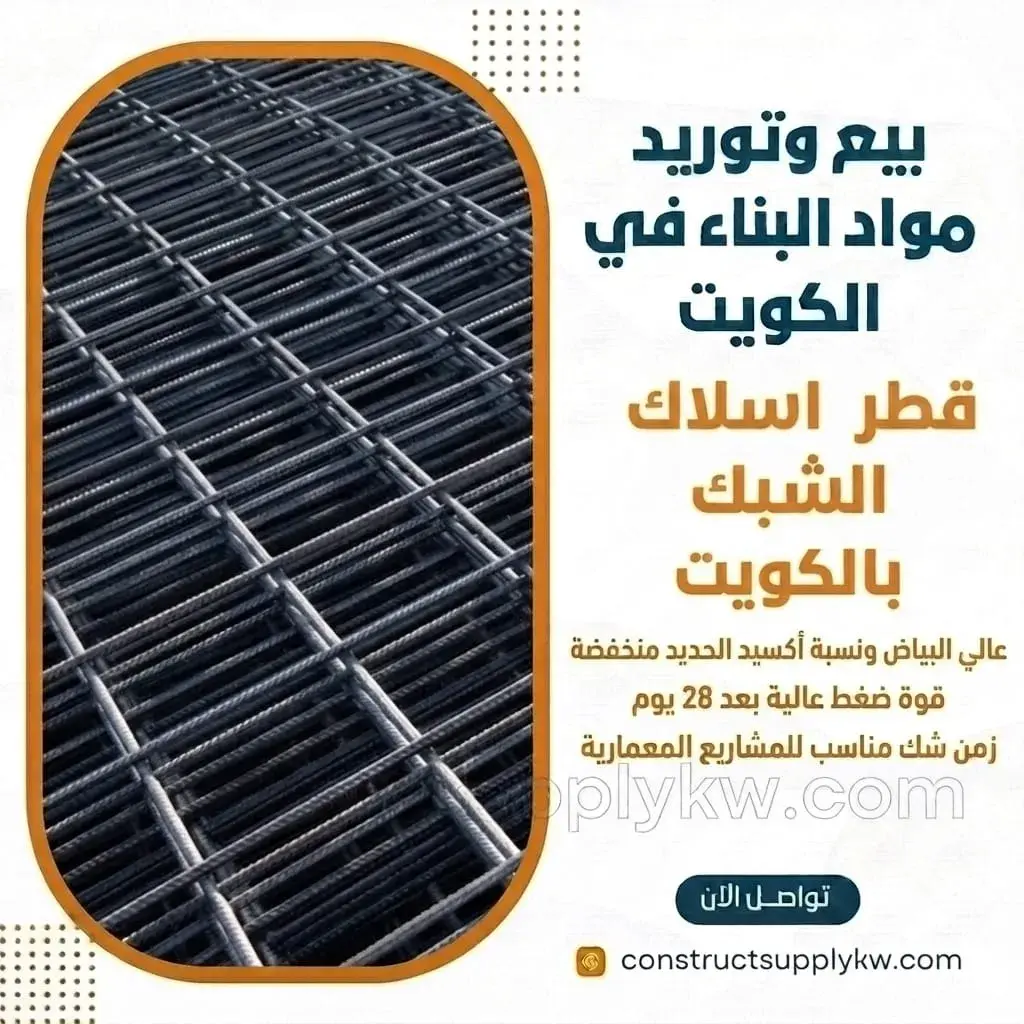
Mesh Wire Diameter is one of the most influential factors governing the structural performance of reinforcement mesh because it directly determines the quantity of reinforcing steel incorporated into the mesh and its ability to satisfy the structural demands of the reinforced concrete element. Nevertheless, selecting a larger wire diameter does not automatically produce a superior reinforcement system because every project is governed by detailed engineering calculations specifying the appropriate wire diameter together with mesh spacing, sheet dimensions, and total reinforcement requirements. Consequently, 8 mm wire diameter is appropriate for certain applications while smaller or larger diameters may be more suitable for other structural systems. Engineers also verify that the delivered wire diameter exactly matches the values specified in manufacturer certificates and structural drawings because even slight deviations can affect the actual reinforcement quantity incorporated into the structure. During material acceptance procedures, engineers routinely measure wire diameter using precision measuring instruments rather than relying solely on visual inspection, ensuring that reinforcement complies fully with project specifications and contributes to safe, high-quality construction.
-
Determines the quantity of reinforcement contained within the mesh.
-
Directly influences the structural capacity of reinforcement.
-
Must be evaluated together with all other mesh specifications.
-
Should always match approved structural drawings.
-
Verified during on-site material inspections.
-
Influences the overall weight of reinforcement mesh.
-
Works together with wire spacing to achieve structural performance.
-
Determined exclusively through engineering calculations.
-
Must correspond with manufacturer technical documentation.
-
Represents one of the primary quality control parameters before installation.
Mesh Tensile Strength
Mesh Tensile Strength reflects the quality of the steel used to manufacture reinforcement mesh and its ability to resist tensile forces transferred through reinforced concrete during service conditions. Tensile strength does not imply that reinforcement mesh alone carries all structural loads. Instead, it describes the mechanical properties of the reinforcing steel and its compliance with structural engineering specifications and applicable building codes. Steel wires undergo comprehensive laboratory testing during manufacturing to determine tensile strength, yield strength, and elongation before reinforcement products are approved for commercial distribution. Practical engineering experience consistently demonstrates that reinforcement products supplied with certified laboratory test reports provide significantly greater confidence in material quality than uncertified products whose mechanical properties remain uncertain. Engineers also recognize that weld quality is equally important because reinforcement mesh depends upon the integrity of every welded intersection to perform as a complete structural system. Consequently, purchasing reinforcement mesh from trusted manufacturers represents an investment in structural safety rather than merely a purchasing decision based upon price.
-
Measures the mechanical quality of reinforcing steel.
-
Verified through certified laboratory testing.
-
Must comply with structural engineering codes.
-
Helps ensure dependable structural reinforcement performance.
-
Should always be confirmed through manufacturer certifications.
-
Cannot be evaluated through visual inspection alone.
-
Works together with weld quality to ensure complete performance.
-
Increases confidence in certified reinforcement products.
-
Directly influences the reliability of reinforced concrete structures.
-
Represents a critical factor when selecting a reinforcement supplier.
Welded Reinforcement Mesh
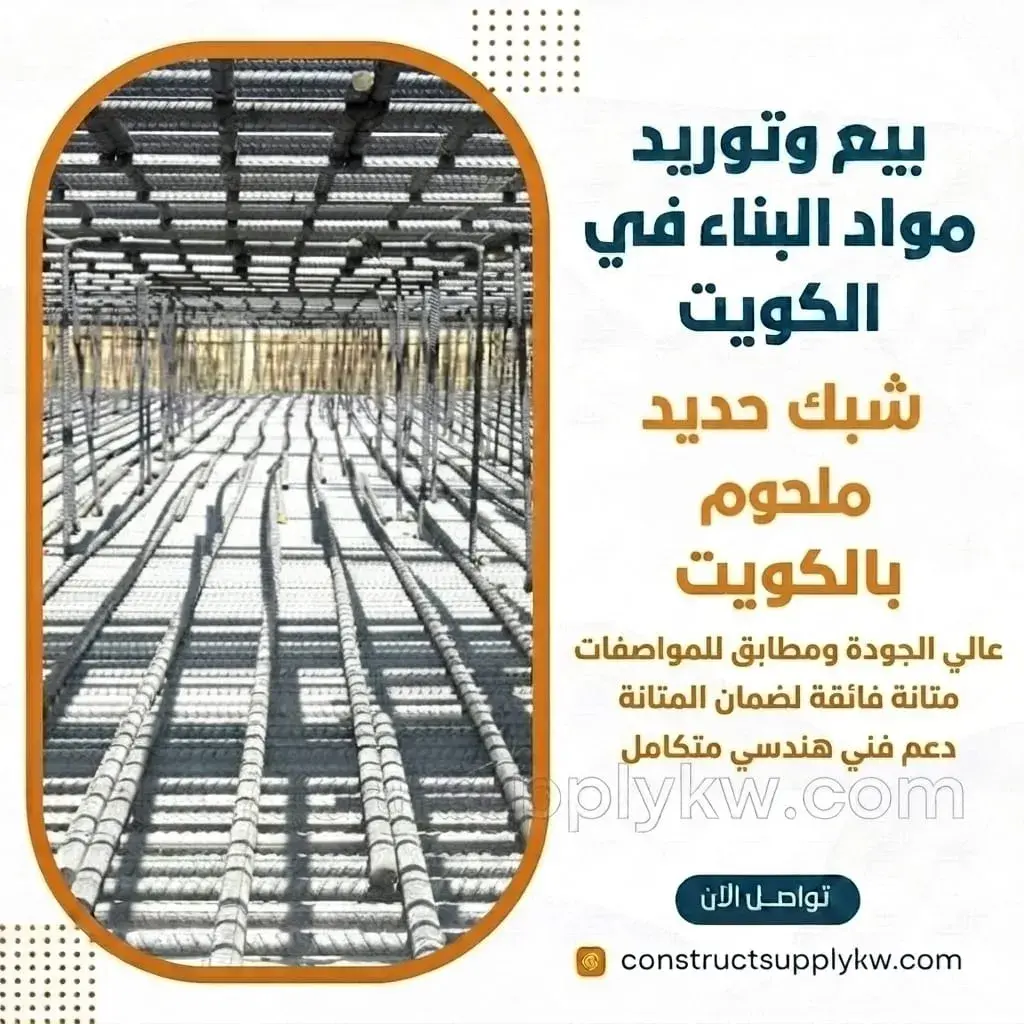
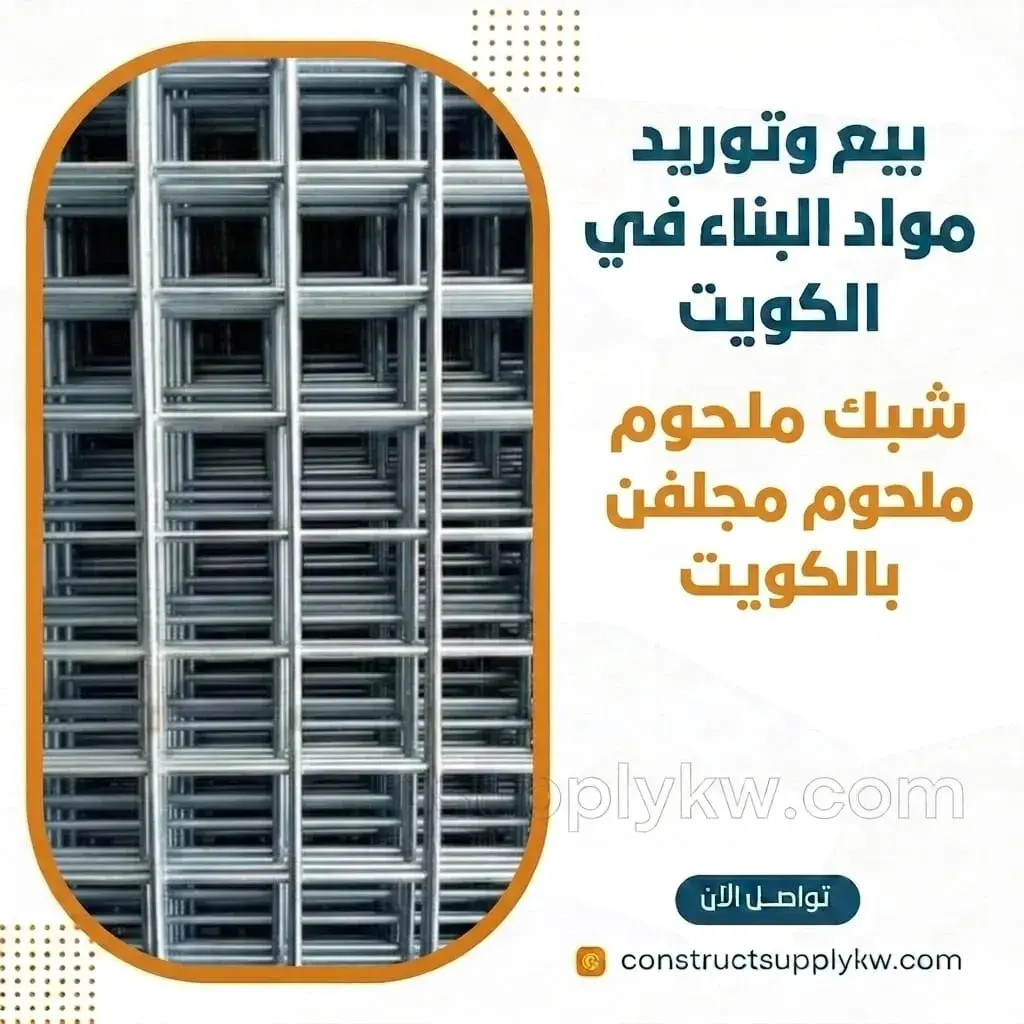
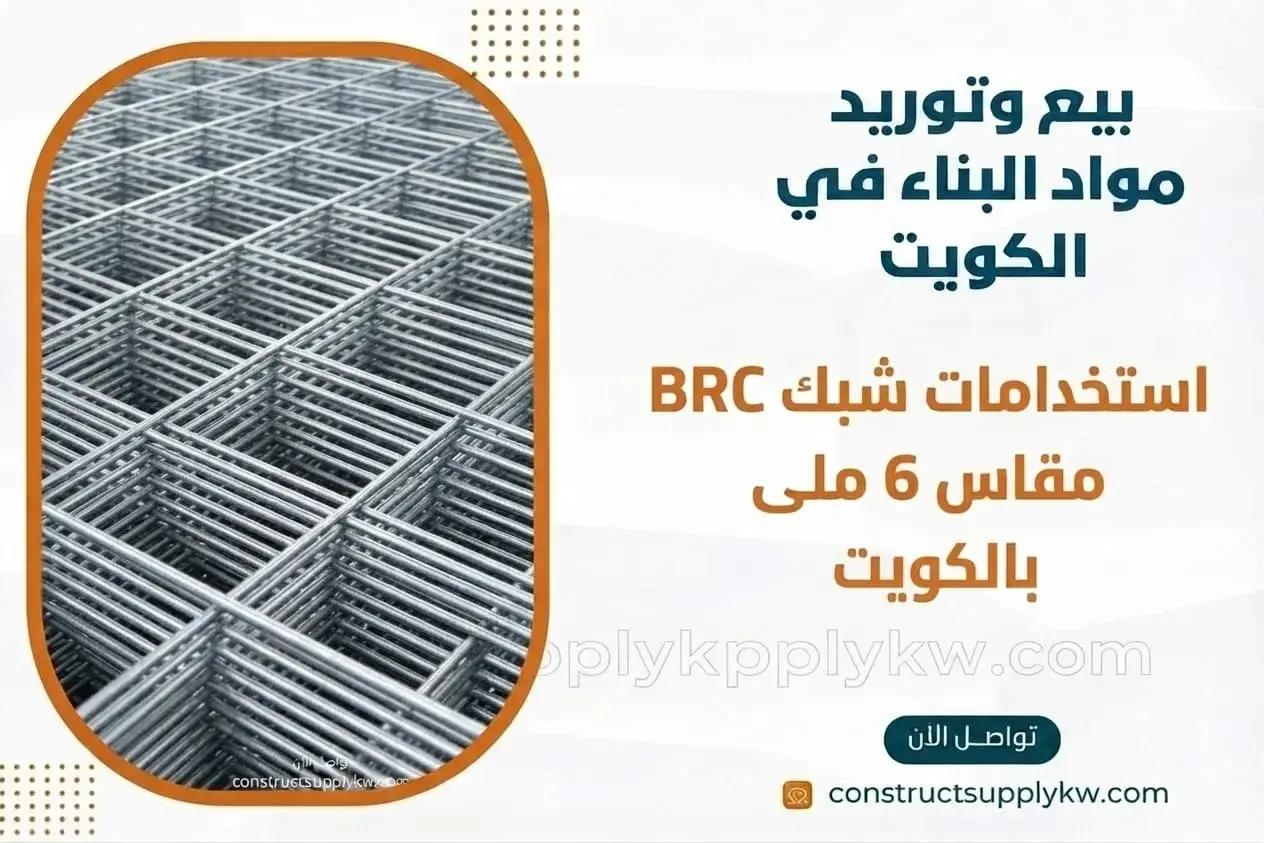
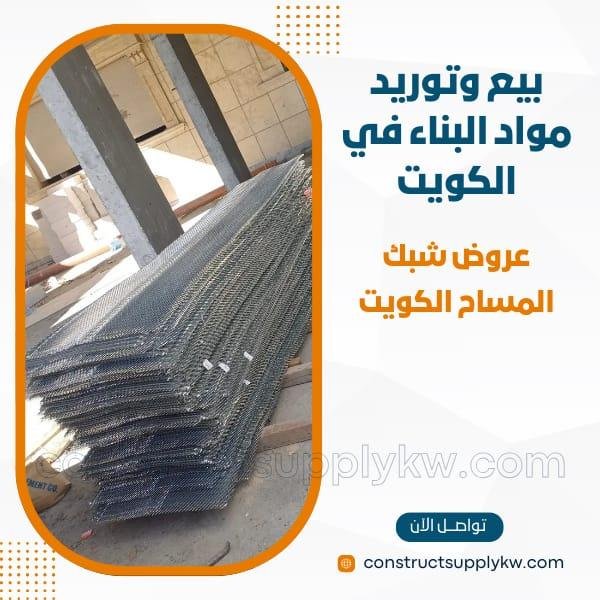
Welded Reinforcement Mesh provides prefabricated reinforcement sheets manufactured under tightly controlled factory conditions, producing dimensional accuracy and consistency that are difficult to achieve through manually assembled reinforcement on construction sites. This manufacturing precision simplifies installation while significantly reducing construction time, especially for projects involving repetitive reinforced concrete elements or extensive reinforced surfaces. Prefabricated mesh also minimizes measuring and manual tying operations, increasing construction productivity while reducing errors caused by inconsistent reinforcement placement. However, the overall quality of welded reinforcement mesh depends upon several important factors including steel quality, weld integrity, dimensional accuracy, and proper storage and transportation before installation. Field experience consistently demonstrates that maintaining sheet alignment and preventing damage during handling preserves reinforcement quality and eliminates many installation problems that could otherwise occur during placement inside reinforced concrete formwork.
-
Manufactured under controlled factory conditions for maximum precision.
-
Significantly reduces reinforcement installation time.
-
Minimizes errors associated with manual reinforcement assembly.
-
Ideal for projects covering large reinforced areas.
-
Requires careful storage to preserve sheet alignment.
-
Performance depends upon steel quality and weld integrity.
-
Simplifies transportation and installation procedures.
-
Improves productivity for construction teams.
-
Delivers highly consistent reinforcement distribution.
-
Represents one of the most widely used prefabricated reinforcement systems in modern construction.
Reinforcement Mesh Distribution
Reinforcement Mesh Distribution directly affects the structural efficiency of reinforced concrete because even the highest-quality reinforcement mesh cannot perform properly if it is not positioned according to approved structural drawings. The objective of reinforcement distribution is to ensure that reinforcing steel reaches every location requiring tensile resistance while maintaining uniform spacing between reinforcement wires and preventing unnecessary concentrations of steel in isolated areas. Distribution methods differ between roof slabs, walls, and other reinforced concrete elements according to structural loading conditions and engineering design requirements. Contractors must therefore follow the installation details specified by the structural engineer and avoid unauthorized field modifications that could alter reinforcement performance. Practical construction experience throughout Kuwait demonstrates that many reconstruction projects result not from poor reinforcement quality but from incorrect mesh distribution, inadequate overlap lengths, or reinforcement displacement during concrete placement. Successful reinforcement systems therefore depend upon combining high-quality reinforcement products with precise installation and careful positioning throughout every stage of construction.
-
Must always follow approved structural engineering drawings.
-
Ensures reinforcement reaches every critical structural location.
-
Promotes balanced stress distribution throughout reinforced concrete.
-
Requires overlap lengths specified by structural design.
-
Prevents reinforcement deficiencies within concrete elements.
-
Requires continuous supervision during installation.
-
Distribution methods vary between walls, slabs, and other structures.
-
Maintains consistent spacing between reinforcement sheets.
-
Reduces cracking caused by improper reinforcement placement.
-
Represents a fundamental factor in reinforced concrete quality.
Applications of 8 mm Reinforcement Mesh
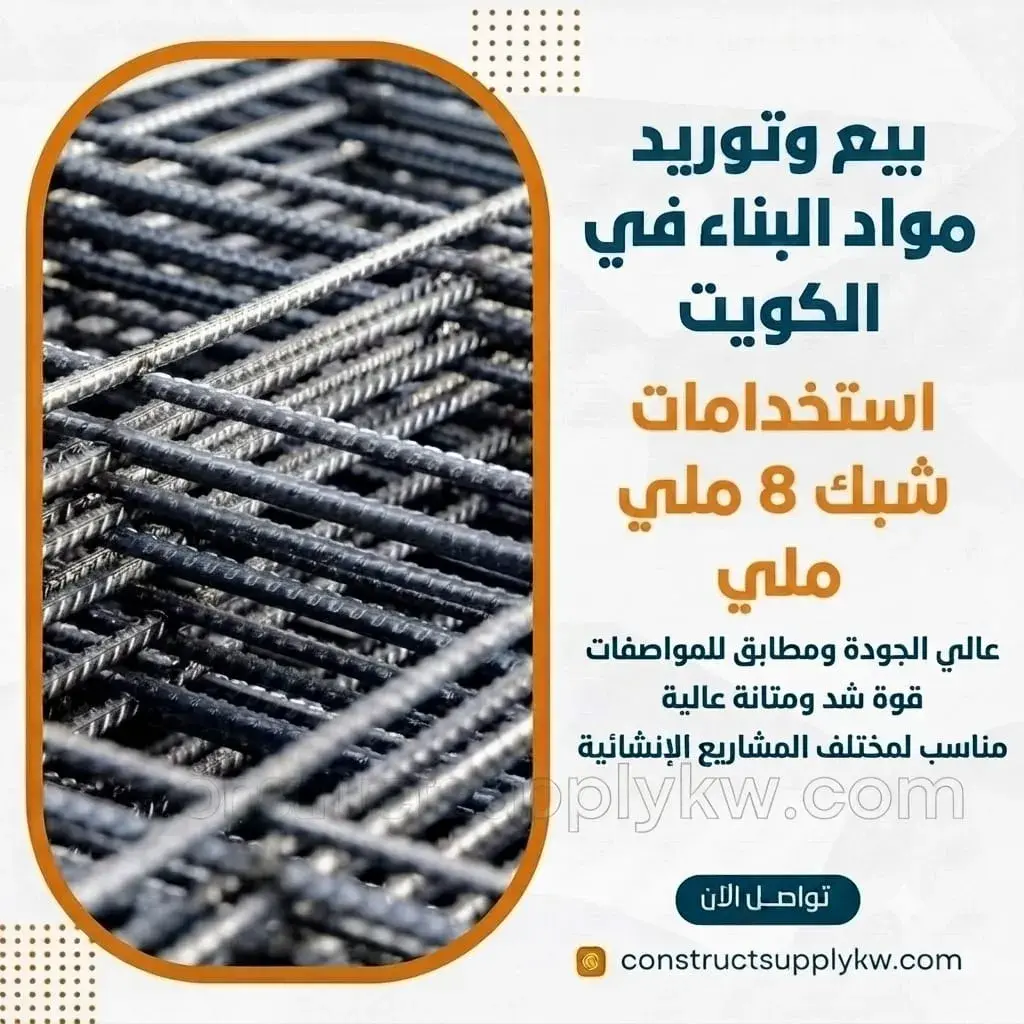
Applications of 8 mm Reinforcement Mesh extend across numerous structural systems requiring greater reinforcement capacity than lighter mesh sizes. It is commonly specified for reinforced roof slabs, concrete walls, structural slabs, and various reinforced concrete elements approved by structural engineering calculations. The selection of this mesh size depends not only upon the structural element itself but also on design loads, member dimensions, project requirements, and applicable engineering codes. Contractors benefit from its ability to accelerate construction while maintaining highly uniform reinforcement distribution because prefabricated sheets arrive ready for installation without the extensive preparation associated with manually assembled reinforcement. Construction projects throughout Kuwait demonstrate that 8 mm reinforcement mesh has become increasingly common within residential and commercial developments seeking consistent reinforcement quality together with improved construction efficiency. Nevertheless, maximum structural performance can only be achieved when installation fully complies with engineering specifications concerning concrete cover, reinforcement overlaps, support chairs, and positioning throughout the construction process.
-
Used for roof slabs and concrete walls according to structural design.
-
Suitable for reinforced concrete elements requiring greater reinforcement capacity.
-
Accelerates construction schedules.
-
Reduces dependence on manually assembled reinforcement.
-
Provides highly uniform reinforcement distribution.
-
Selected according to structural loads and engineering calculations.
-
Widely used in residential, commercial, and industrial construction.
-
Requires installation that fully complies with engineering specifications.
-
Improves the quality of reinforced concrete construction.
-
Delivers optimum performance when applied in appropriate structural applications.
Reinforcement Mesh Specifications
Reinforcement Mesh Specifications provide the engineering foundation upon which reinforcement approval decisions are based because they define every technical characteristic required to ensure compatibility with structural designs and applicable engineering codes. These specifications include steel grade, wire diameter, wire spacing, sheet dimensions, weld quality, tensile strength, yield strength, manufacturing accuracy, and certified laboratory testing documentation. Visual appearance alone is never sufficient for evaluating reinforcement quality. Instead, engineers carefully review all technical documentation and compare every specification against project requirements before approving reinforcement for installation. Professional construction projects throughout Kuwait routinely inspect delivered reinforcement by verifying technical certificates, measuring dimensions, and confirming that no transportation damage or deformation has occurred before installation begins. Following these quality control procedures significantly reduces construction risks while giving contractors and project owners greater confidence that the reinforcement system fully satisfies the structural requirements upon which the building has been designed.
-
Specifications define every technical characteristic of reinforcement mesh.
-
Include steel grade wire diameter and wire spacing.
-
Establish weld quality and manufacturing accuracy requirements.
-
Supported by certified laboratory testing.
-
Must always be reviewed before material approval.
-
Allow objective comparison between different products.
-
Reduce the likelihood of using non-compliant reinforcement.
-
Improve construction quality throughout the project.
-
Increase confidence in reinforced concrete safety.
-
Serve as the primary reference when selecting reinforcement mesh.
Conclusion
8 mm Reinforcement Mesh provides an outstanding balance between structural strength and construction efficiency for numerous reinforced concrete walls, roof slabs, and structural elements requiring accurate and consistent reinforcement distribution. Throughout this article, we examined the characteristics of 8 mm Reinforcement Mesh, the advantages of 8 mm Steel Mesh, the applications of Reinforcement Mesh for Concrete Roof Slabs, the benefits of Reinforcement Mesh for Concrete Walls, the importance of Mesh Wire Diameter, the role of Mesh Tensile Strength in evaluating reinforcement quality, the advantages of Welded Reinforcement Mesh, the engineering principles governing Reinforcement Mesh Distribution, the major Applications of 8 mm Reinforcement Mesh, and the essential Reinforcement Mesh Specifications that should always be reviewed before procurement and installation. When certified reinforcement products are combined with professional installation that strictly follows approved structural drawings under qualified engineering supervision, reinforced concrete elements achieve exceptional durability, structural stability, and reliable long-term performance throughout their service life.
Frequently Asked Questions
Is 8 mm reinforcement mesh suitable for every concrete wall and roof slab?
No. The appropriate reinforcement mesh size is determined by structural calculations, anticipated loads, and project-specific engineering requirements. Engineers should always follow the structural design rather than selecting reinforcement based solely on previous experience.
Can 8 mm reinforcement mesh replace every type of conventional reinforcing bar?
No. Certain reinforced concrete elements require individual reinforcing bars, localized reinforcement, or specialized detailing that welded reinforcement mesh alone cannot provide. Structural engineering calculations determine the correct reinforcement system for each application.
Why is weld quality important in welded reinforcement mesh?
High-quality welds maintain accurate wire spacing during transportation and installation while preserving the dimensional stability of the reinforcement sheet exactly as manufactured, ensuring consistent structural performance.
How can reinforcement mesh compliance with specifications be verified?
Compliance is verified by reviewing manufacturer certifications, laboratory testing reports, wire diameter measurements, sheet dimensions, weld integrity, and confirming that every technical property matches the approved structural drawings and project specifications.
Does poor reinforcement mesh distribution affect concrete structural performance?
Yes. Incorrect reinforcement distribution, inadequate overlap lengths, reinforcement displacement during concrete placement, or improper positioning can significantly reduce structural performance even when the reinforcement mesh itself fully complies with engineering specifications.